Botulism
Really Corrupt
- Joined
- Jun 19, 2023
- Messages
- 435
- Thread Author
- #1
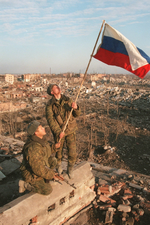
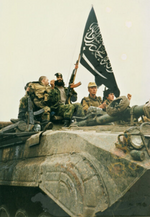
"Like lions, we stood side-by-side with our foreign overlords... We wept when their alien soldiers left our land, we sneered when the demonic Russian bastards colluded with our own flesh and blood in the mountains... And most importantly of all? We screamed in righteous anger when the so-called 'Lions of Resistance'' slayed our families and took revenge upon us...Killing our children, defiling our wives, and using their ape-like claws to grip and tear at our protection of the city...Trying to break the National Salvation Movement's aegis and to forever shatter the seal which we've created for a New Caucasus...
Yet you still resisted...! My good, faithful, loyal comrades of Chechnya, Dagestan, Bashkortostan, and more...You still committed the sins of Lot, you still gave information to the foreign pigs, and you still kept us from achieving immortality, under the will of Allah...
What is going to be done to you?"
- Unidentified Mullah, Grozny, Chechnya, 2005. Words preceding the last purge and mass-deportations of Chechens to numerous other cities.


Alongside various other names, like the Chechen Mob, Islamic Brotherhood, Tatar Mob, etc...
The Muslims of Russia have always had a mixed relationship with their oppressors. As Afghanistan's portal storms complicated the civil war, thousands, even millions of refugees fled north into Central Asia, causing a domino effect. Kazakhs, Uzbeks, Turkmen, and Afghans joined the growing throng of Russians in overcrowded cities and rural regions, finding cheap labor in factories, service jobs, and the criminal underworld.
The Chechen War was still raging, and in these chaotic times, riots, people's uprisings, the ongoing Islamic insurgency, intense intrigue and political development forced Muslims to shed their cultural differences -- even before the occupation, you were no longer looked at as a Tatar, Circassian, Chechen, or Kazakh -- simply a believer, by most.
After the Occupation, these feelings only intensified and localized -- Muslims across the Former USSR were very connected to their communities, and being broken up and sent across the world caused major discontent. For those who survived the horrors of the Early Occupation, a culture developed among some of the Tatars, Chechens, Arabs and others that was similar to the Russian Bratva. Some mingled with the rebels and became ordinary resistance cells, some stayed independent and continued their own criminal activities under the shroud of heavy bribes, and others began the path of solidifying their status as pro-Combine enforcers and disruptors of any foreign Rebel plans...
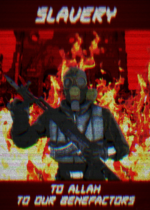
The Loyalist Ikhwan of Russia are not organized or connected amongst each other, and as such it is more of a concept, an idea, than one solidified group. Any group of militant Muslims could theoretically be considered an 'Ikhwan', no matter their affiliation or ethnic background. All that is required is a militant entwinement of their Muslim backgrounds with loyalty to the Combine that freed them from the Russian yoke, the Combine that massacred their friends and enemies alike, and the Combine that supposedly vanquished the unbelievers from the holy land, and allowed everyone of Arabia and the Orient to freely pilgrimage from there to Mecca in a heartbeat. To a Chechen, Tatar, or Bashkir living in the farthest, coldest part of the world, who could ever disprove this propagandist's pipe dream?
To be 'loyal' isn't always to be prim and proper. The men of Siberia realize this. They need to live and eat too, and what is the point of playing the bureaucratic game dominated by foreigners? The Loyalist Ikhwan group together and seek legitimacy from Loyalist party-bosses and apparatchiks, using a mix of beliefs, money, and brute force to pull others to their side.
For the Loyalist Ikhwan, belief is what ties them together, but it doesn't force them to be bigoted. Opportunism is rife with these near-species traitors, and gangs of Chechen and Tatar thugs choose to do the dirty work for almost anyone who has power in the Combine system. The Loyalist Ikhwan do the dirty work that not even Civil Protection would choose to do, and in the slums of City Three, Chechen and Tatar gang-members either die hard on the streets or amass power, positions of leadership and become de-facto militia leaders. It is a natural, spontaneous process that is entirely up to the ambition and drive of each Ikhwan gang's members.
POSITIONS IN IKHWAN GANGS, AND TERMINOLOGY
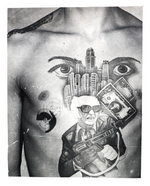
Though not mandatory and with some objections by the more fundamentalist gang-members, many older brothers who spent time in prison are adorned with tattoos, signifying their rank and status among younger followers.
Russian serves as a lingua franca amongst brothers though in cases where the gang is mostly Chechen, Tatar, etc. The terms found in their languages will be overtly used.
Ikhwan Gangs are typically led by a 'Pakhan', a term borrowed from Russian criminal culture. A Pakhan's trusted seconds are usually 'Vory', or Thieves (Singular is 'Vor') with every other member of the gang simply being referred to as a brother, or 'Brat'. Depending on the level of radicalization of the group, this could be subject to change. The more Islamic Ikhwan gangs are known to name their leaders after feudal terminology, with some being nicknamed 'Emir' or 'Sultan'.
An Ikhwan's leadership is very informal until established, with elders or ambitious young men holding the abilities to push their comrades in whatever direction over simply calling someone a 'boss' on Day One.
The title of Pakhan is earned by amassing a legend, status, and wealth, not given to just some random slummer.
Occasional business and work with almost any sort of group is tolerated by brothers, however, too much open collaboration with resistance cells could get you marked as a 'kafir' (infidel) or the more humiliating 'suka' (bitch) by your comrades. A punishment as lenient as a harsh beating, or a violent death could soon follow.
Though not mandatory and with some objections by the more fundamentalist gang-members, many older brothers who spent time in prison are adorned with tattoos, signifying their rank and status among younger followers.
Russian serves as a lingua franca amongst brothers though in cases where the gang is mostly Chechen, Tatar, etc. The terms found in their languages will be overtly used.
Ikhwan Gangs are typically led by a 'Pakhan', a term borrowed from Russian criminal culture. A Pakhan's trusted seconds are usually 'Vory', or Thieves (Singular is 'Vor') with every other member of the gang simply being referred to as a brother, or 'Brat'. Depending on the level of radicalization of the group, this could be subject to change. The more Islamic Ikhwan gangs are known to name their leaders after feudal terminology, with some being nicknamed 'Emir' or 'Sultan'.
An Ikhwan's leadership is very informal until established, with elders or ambitious young men holding the abilities to push their comrades in whatever direction over simply calling someone a 'boss' on Day One.
The title of Pakhan is earned by amassing a legend, status, and wealth, not given to just some random slummer.
Occasional business and work with almost any sort of group is tolerated by brothers, however, too much open collaboration with resistance cells could get you marked as a 'kafir' (infidel) or the more humiliating 'suka' (bitch) by your comrades. A punishment as lenient as a harsh beating, or a violent death could soon follow.
MEMBERSHIP
The size of Vladivostok's Ikhwans will be determined mostly by player output and interest in the idea.
No set leaders or people you have to obey, let it come naturally; to the strongest.
Last edited: