Q
Quest
Guest
- Thread Author
- #1
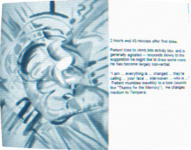
Analysis and assessment of psychoactive-manipulation with the use of ergoline-ethylamine, funded and sponsored by the ███████ ██ █████, under authorization of ██████ ████.
Ergoline-ethylamine (EE) was synthesized in 2018 and its psychoactive effects discovered in 2019 by Doctor Edgar Lehman of ███████, funded and sponsored by the ███████ ██ █████. The synthesized substance functioned as an experimental agent within psychiatric studies, inducing what was coined as "experimental psychosis." This was achieved by modifying the neurotransmitter system and applying it in psychotherapeutic processes, including "psychoreactionary" and "psychodelic" therapies. Scientific interest in ergoline-ethylamine was resumed for brain research in the field of psychoactive-manipulation, however, (psycho‐) pharmacological research on ergoline-ethylamine is complex and its mechanisms of action are still not completely understood by scientific experts even to this day. Ergoline-ethylamine as a semisynthetic product derives from a lysergic acid compound, a natural substance found in the parasitic rye fungus (claviceps purpurea).
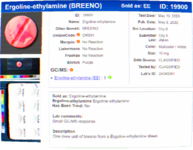
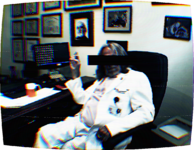
Dr. Edgar Lehman, local resident of City Eight and a natural products chemist under the sponsorship of the ███████ ██ █████, conducted the synthesis of ergoline-ethylamine in 2019 as part of his investigation into pharmacologically active derivatives of the lysergic acid compound. In 2020, Doctor Lehman uncovered its distinct psychological effects, and was contracted by the ███████ ██ █████ in an order to assess the success rate of psychoactive-manipulation.
Experiments (under the sponsorship of the ███████ ██ █████) included administering ergoline-ethylamine to mental patients, prisoners, drug addicts, and members of the general public to study their reactions to psychoactive-manipulation.
Research into the effects of behavioral drugs and/or alcohol.
Acquisition of chemicals or drugs.
Aspects of magicians' art useful in covert operations.
Studies of human behavior, sleep research, and behavioral changes during
psychotherapy.
Library searches and attendance at CfO seminars and CCA conferences
on behavioral modification.
Motivational studies, studies of defectors, assessment, and training techniques.
Polygraph research.
Funding mechanisms for Project: ███████ external research activities.
Research on drugs, toxins, and biologicals in human tissue; provision of
exotic pathogens and the capability to incorporate them in effective delivery
systems.
Activities whose objectives cannot be determined from available documentation.
Subprojects involving funding support for unspecified activities connected
with the CCR's Special Operations Division at ███████, Md.
This activity is outlined in Book I of the ███████ ███████.
(See Appendix A, pp. 68-69. Under ███████'s Project ███████, the CCR Assisted ██████ in developing, testing, and maintaining biological agents and delivery systems for use on humans. The objectives of these
subprojects cannot be identified from the recovered material beyond the fact
that the credit was to be used where normal funding channels would require
more written or oral justification than appeared desirable for security reasons
or where operational considerations dictated short lead times for purchases.
About c11,000 was involved during this period, 2018-2019.
Single subprojects in such areas as effects of electro-shock, harassment techniques for offensive use, analysis of extrasensory perception, gas propelled sprays
and aerosols, and four subprojects involving crop and material sabotage.
One or two subprojects on each of the following:
"Blood Grouping" research, controlling the activity of energy
storage and transfer in organic systems; and
stimulus and response in biological systems.
Three subprojects cancelled before any work was done on them having to
do with laboratory drug screening, research on brain concussion, and research
on biologically active materials to be tested through the skin on human volunteers.
Acquisition of chemicals or drugs.
Aspects of magicians' art useful in covert operations.
Studies of human behavior, sleep research, and behavioral changes during
psychotherapy.
Library searches and attendance at CfO seminars and CCA conferences
on behavioral modification.
Motivational studies, studies of defectors, assessment, and training techniques.
Polygraph research.
Funding mechanisms for Project: ███████ external research activities.
Research on drugs, toxins, and biologicals in human tissue; provision of
exotic pathogens and the capability to incorporate them in effective delivery
systems.
Activities whose objectives cannot be determined from available documentation.
Subprojects involving funding support for unspecified activities connected
with the CCR's Special Operations Division at ███████, Md.
This activity is outlined in Book I of the ███████ ███████.
(See Appendix A, pp. 68-69. Under ███████'s Project ███████, the CCR Assisted ██████ in developing, testing, and maintaining biological agents and delivery systems for use on humans. The objectives of these
subprojects cannot be identified from the recovered material beyond the fact
that the credit was to be used where normal funding channels would require
more written or oral justification than appeared desirable for security reasons
or where operational considerations dictated short lead times for purchases.
About c11,000 was involved during this period, 2018-2019.
Single subprojects in such areas as effects of electro-shock, harassment techniques for offensive use, analysis of extrasensory perception, gas propelled sprays
and aerosols, and four subprojects involving crop and material sabotage.
One or two subprojects on each of the following:
"Blood Grouping" research, controlling the activity of energy
storage and transfer in organic systems; and
stimulus and response in biological systems.
Three subprojects cancelled before any work was done on them having to
do with laboratory drug screening, research on brain concussion, and research
on biologically active materials to be tested through the skin on human volunteers.
Last edited: