Welcome!

By registering with us, you'll be able to discuss, share and private message with other members of our community.

SignUp Now!

Atlassu's Constant Staff Abuse.

ozymandias

Radio Bob Approved
Protector
Joined
Feb 6, 2024
Messages
257
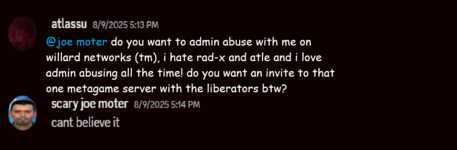
The legend of Atlassu Staff has echoed through the corridors of Willard HL2RP for ages — or at least since last Tuesday. Known to some as an administrator, to others as a divine force of chaos, Atlassu wields his powers with the grace of a man who has never once read the staff handbook. While most players grind for hours to earn their weapons, Atlassu simply spawns them in with godlike confidence. Witnesses claim he types “/give_ar2” faster than a citizen can say “Loyalty Points.” Some even insist he doesn’t use commands at all — the guns simply manifest out of respect.

1761485413615.png
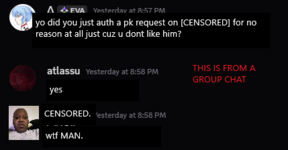
But Atlassu’s influence doesn’t stop at weaponry. No, his true domain lies within the dark art of PK requests. Cross him once — maybe you gave him attitude in OOC, maybe you existed within a five-meter radius of him for too long — and your character’s fate is sealed. PK authorized. No appeal. It’s rumored that Atlassu’s power is so immense that PK requests approve themselves in fear of what might happen if they don’t.
1761485531641.png

And then there’s his approach to roleplay — a unique fusion of failRP and powergaming so advanced it could be considered performance art. To Atlassu, roleplay rules aren’t restrictions; they’re mere suggestions. Why play one character when you can simultaneously embody a rebel, a scientist, and a Combine soldier — all within the same scene? To call it immersion-breaking would be an understatement. It’s more like immersion obliteration.


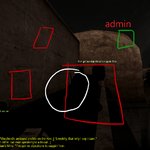
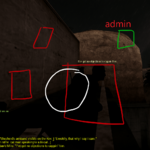
Of course, no discussion of Atlassu would be complete without addressing the ever-growing allegations of cheating. Reports suggest uncanny precision in firefights, miraculous survivals, and suspiciously convenient lag spikes during critical moments. Some call it cheating. Others call it skill. Perhaps Atlassu isn’t breaking the rules — perhaps the server simply bends reality to accommodate his will. Here's an image from Atlassu's point of view.1761485939672.png

Yet, despite the chaos, there’s an undeniable charm to the madness. Love him or hate him, everyone knows his name. He is the final boss of Willard HL2RP, the man who turns serious RP scenarios into cinematic comedies. Atlassu doesn’t just play the game — he is the game. And deep down, every player knows that without him, the server logs would be shorter, the events less dramatic, and the memes far less entertaining.


I would love to see a personal explaination by @atlassu
 
-1
you didn't spell my name right fucking loser
you don't capitalize the first 'a'
 
1761486221165.png
Guys wtf is this aimbot , atlassu has fucking aimbot why isnt he banned. why is he on staff
 
GUYSSSS stappp itttuhhhh he didnt do NOTHING WRONG
 
The legend of Atlassu Staff has echoed through the corridors of Willard HL2RP for ages — or at least since last Tuesday. Known to some as an administrator, to others as a divine force of chaos, Atlassu wields his powers with the grace of a man who has never once read the staff handbook. While most players grind for hours to earn their weapons, Atlassu simply spawns them in with godlike confidence. Witnesses claim he types “/give_ar2” faster than a citizen can say “Loyalty Points.” Some even insist he doesn’t use commands at all — the guns simply manifest out of respect.
View attachment 48964
But Atlassu’s influence doesn’t stop at weaponry. No, his true domain lies within the dark art of PK requests. Cross him once — maybe you gave him attitude in OOC, maybe you existed within a five-meter radius of him for too long — and your character’s fate is sealed. PK authorized. No appeal. It’s rumored that Atlassu’s power is so immense that PK requests approve themselves in fear of what might happen if they don’t.
View attachment 48965

And then there’s his approach to roleplay — a unique fusion of failRP and powergaming so advanced it could be considered performance art. To Atlassu, roleplay rules aren’t restrictions; they’re mere suggestions. Why play one character when you can simultaneously embody a rebel, a scientist, and a Combine soldier — all within the same scene? To call it immersion-breaking would be an understatement. It’s more like immersion obliteration.


Of course, no discussion of Atlassu would be complete without addressing the ever-growing allegations of cheating. Reports suggest uncanny precision in firefights, miraculous survivals, and suspiciously convenient lag spikes during critical moments. Some call it cheating. Others call it skill. Perhaps Atlassu isn’t breaking the rules — perhaps the server simply bends reality to accommodate his will. Here's an image from Atlassu's point of view.View attachment 48987


Yet, despite the chaos, there’s an undeniable charm to the madness. Love him or hate him, everyone knows his name. He is the final boss of Willard HL2RP, the man who turns serious RP scenarios into cinematic comedies. Atlassu doesn’t just play the game — he is the game. And deep down, every player knows that without him, the server logs would be shorter, the events less dramatic, and the memes far less entertaining.


I would love to see a personal explaination by @atlassu
This was all made with complete AI btw, even the cheats image was changed by AI.
 
As someone who is great friends with atlassu, we have never metagamed together, not even once1761504618115.png
 

Concerning Atlassu and His Power Abuses within the Mechanics of Willard Networks Roleplaying Game, on Half-Life Two Roleplay within Garry’s Mod


Abstract
The figure of Atlassu within Willard Networks, a Half-Life 2 roleplaying server on Garry’s Mod, represents a compelling case study of symbolic authority and performative governance in digital communities. While often described by participants in terms of “power abuses,” these behaviors function primarily as narrative and mythic devices that structure the roleplay environment. This paper examines Atlassu’s role through the lens of classical Greek philosophy, including the works of Plato and Aristotle, and modern theories of digital governance and performative power (Foucault, Taylor, and Gordon). By situating Atlassu within a framework of mythic authority and community theatre, the essay demonstrates how digital roleplaying spaces enact, simulate, and interrogate real-world political structures while maintaining a space of imaginative play.


Introduction


Digital roleplaying communities, such as Willard Networks, offer complex simulations of governance, hierarchy, and social interaction. Within these spaces, certain figures emerge as central to the creation and maintenance of community narratives. Atlassu, a staff member of the Half-Life 2 roleplay server, embodies a particularly striking example of this phenomenon. Players often describe Atlassu’s interventions in terms of “power abuses” and authoritarian control. Yet, from an academic perspective, these actions are best understood not as literal misconduct but as performative acts that structure the player experience and dramatize authority.


Classical Greek philosophy provides a valuable lens through which to analyze this dynamic. Plato’s Republic emphasizes the role of the philosopher-king, a figure who rules not for personal gain but to maintain order within the polis (Plato 342–343). Aristotle, in Politics, similarly highlights the ethical and practical dimensions of leadership, noting that rulers must balance the demands of law, custom, and civic cohesion (Aristotle 128). When applied to a digital environment, these frameworks suggest that Atlassu’s actions, while severe in appearance, function to establish narrative cohesion, enforce community norms, and cultivate a mythic persona that structures player engagement.


Atlassu and the Performance of Power


Atlassu’s “power abuses” within Willard Networks can be interpreted as performative enactments of authority. Drawing upon Foucault’s notion of the “microphysics of power,” these actions serve as symbolic gestures through which hierarchy and control are both enacted and observed (Foucault 139). The banning of players, the unilateral modification of narrative arcs, and other interventions create a structured environment in which authority is both visible and consequential. Within this framework, Atlassu’s persona operates not merely as an administrative agent but as a dramaturgical figure: a digital sovereign whose presence is experienced as both narrative and spectacle.


Eric Gordon’s concept of play as governance further elucidates this phenomenon. Gordon argues that “the boundary between play and governance is porous; power itself becomes a form of play” (Gordon 112). In the Willard Networks community, Atlassu’s rule exemplifies this dynamic. Authority is exercised not solely to regulate behavior but to generate tension, encourage engagement, and maintain narrative suspense. Players’ perception of “abuse” functions as a mechanism that heightens immersion, demonstrating how simulated authoritarianism can serve as a structural device within participatory digital spaces.


Digital Sovereignty and the Greek Polis


The structure of Willard Networks, and the role of Atlassu within it, bears conceptual parallels to the Greek polis. In Plato’s Republic, the philosopher-king governs with the objective of creating harmony among citizens, using wisdom and insight to mediate competing interests (Plato 342–343). Atlassu’s interventions, while dramatized as authoritarian, serve a similar mediating function in the roleplay context. By enforcing rules and modifying narrative structures, Atlassu stabilizes social hierarchies and prevents disorder, ensuring that the server operates as a cohesive ecosystem of interaction.


Aristotle’s analysis in Politics emphasizes the ethical and performative dimensions of rulership. Leaders must navigate tensions between strict enforcement and the cultivation of communal trust, recognizing that authority functions both as a practical tool and as a symbolic representation of civic order (Aristotle 128–130). In a digital setting, Atlassu’s mythic persona encapsulates this duality. Players accept, resist, and mythologize his actions, creating a participatory feedback loop in which authority is simultaneously exercised and negotiated. In this sense, Atlassu functions as both ruler and narrative device—a digital analog to the ethical and performative obligations described by Aristotle.


Mythic Leadership and the Aesthetics of Authority


Beyond the ethical and structural dimensions, Atlassu’s role can be analyzed as an instance of mythic leadership. Greek tragedy and philosophy frequently explore the tension between human action and symbolic representation. Heraclitus’ observation that “character is destiny” (Heraclitus, frag. 119) resonates with Atlassu’s narrative function: his “character” as a stern, mythic authority shapes the experiential reality of the server community. Similarly, the dramatic exaggeration of Atlassu’s “atrocities” serves a ritualistic function, producing collective narratives and reinforcing communal identity, echoing Aristotelian notions of catharsis in Poetics (Aristotle 145).


The performative aesthetics of Atlassu’s authority also align with T. L. Taylor’s work on online gaming communities. Taylor notes that visible authority figures stabilize social boundaries and generate communal identity, highlighting the interplay between symbolic power and participant engagement (Taylor 85). In the Willard Networks server, Atlassu’s mythic persona accomplishes precisely this: his narrative interventions create a shared experience of tension, conflict, and resolution, reinforcing both the lore of the Half-Life universe and the emergent social order of the server.


Conclusion


The figure of Atlassu in Willard Networks demonstrates the complex interplay of narrative, authority, and myth within digital communities. While players often describe his actions as “power abuses,” these behaviors function primarily as symbolic and performative devices that structure participation and narrative flow. Classical Greek philosophy provides a framework for understanding these dynamics: Plato’s ideal rulers mediate social order, Aristotle emphasizes the performative and ethical dimensions of authority, and Heraclitus underscores the constitutive role of character.


Modern theories of digital governance and performative play (Foucault, Gordon, Taylor) further illuminate the mechanisms by which authority is enacted, observed, and mythologized within online roleplaying environments. Atlassu’s persona exemplifies the digital enactment of sovereignty, demonstrating how narrative, spectacle, and symbolic control can coexist with participatory, creative engagement. In sum, Atlassu’s “abuses” are less literal transgressions than essential components of a structured, immersive, and philosophically resonant digital community.


Works Cited


Aristotle. Politics. Translated by Benjamin Jowett, Dover Publications, 2000.


Aristotle. Poetics. Translated by S. H. Butcher, Dover Publications, 1997.


Foucault, Michel. Discipline and Punish: The Birth of the Prison. Translated by Alan Sheridan, Vintage Books, 1995.


Gordon, Eric. The Meaningful Play of Digital Spaces: Social Interaction in Virtual Worlds. Routledge, 2010.


Heraclitus. Fragments. Translated by T. M. Robinson, University of Toronto Press, 1987.


Plato. Republic. Translated by G. M. A. Grube, revised by C. D. C. Reeve, Hackett Publishing, 1992.


Taylor, T. L. Play Between Worlds: Exploring Online Game Culture. MIT Press, 2006.
 

Concerning Atlassu and His Power Abuses within the Mechanics of Willard Networks Roleplaying Game, on Half-Life Two Roleplay within Garry’s Mod


Abstract
The figure of Atlassu within Willard Networks, a Half-Life 2 roleplaying server on Garry’s Mod, represents a compelling case study of symbolic authority and performative governance in digital communities. While often described by participants in terms of “power abuses,” these behaviors function primarily as narrative and mythic devices that structure the roleplay environment. This paper examines Atlassu’s role through the lens of classical Greek philosophy, including the works of Plato and Aristotle, and modern theories of digital governance and performative power (Foucault, Taylor, and Gordon). By situating Atlassu within a framework of mythic authority and community theatre, the essay demonstrates how digital roleplaying spaces enact, simulate, and interrogate real-world political structures while maintaining a space of imaginative play.


Introduction


Digital roleplaying communities, such as Willard Networks, offer complex simulations of governance, hierarchy, and social interaction. Within these spaces, certain figures emerge as central to the creation and maintenance of community narratives. Atlassu, a staff member of the Half-Life 2 roleplay server, embodies a particularly striking example of this phenomenon. Players often describe Atlassu’s interventions in terms of “power abuses” and authoritarian control. Yet, from an academic perspective, these actions are best understood not as literal misconduct but as performative acts that structure the player experience and dramatize authority.


Classical Greek philosophy provides a valuable lens through which to analyze this dynamic. Plato’s Republic emphasizes the role of the philosopher-king, a figure who rules not for personal gain but to maintain order within the polis (Plato 342–343). Aristotle, in Politics, similarly highlights the ethical and practical dimensions of leadership, noting that rulers must balance the demands of law, custom, and civic cohesion (Aristotle 128). When applied to a digital environment, these frameworks suggest that Atlassu’s actions, while severe in appearance, function to establish narrative cohesion, enforce community norms, and cultivate a mythic persona that structures player engagement.


Atlassu and the Performance of Power


Atlassu’s “power abuses” within Willard Networks can be interpreted as performative enactments of authority. Drawing upon Foucault’s notion of the “microphysics of power,” these actions serve as symbolic gestures through which hierarchy and control are both enacted and observed (Foucault 139). The banning of players, the unilateral modification of narrative arcs, and other interventions create a structured environment in which authority is both visible and consequential. Within this framework, Atlassu’s persona operates not merely as an administrative agent but as a dramaturgical figure: a digital sovereign whose presence is experienced as both narrative and spectacle.


Eric Gordon’s concept of play as governance further elucidates this phenomenon. Gordon argues that “the boundary between play and governance is porous; power itself becomes a form of play” (Gordon 112). In the Willard Networks community, Atlassu’s rule exemplifies this dynamic. Authority is exercised not solely to regulate behavior but to generate tension, encourage engagement, and maintain narrative suspense. Players’ perception of “abuse” functions as a mechanism that heightens immersion, demonstrating how simulated authoritarianism can serve as a structural device within participatory digital spaces.


Digital Sovereignty and the Greek Polis


The structure of Willard Networks, and the role of Atlassu within it, bears conceptual parallels to the Greek polis. In Plato’s Republic, the philosopher-king governs with the objective of creating harmony among citizens, using wisdom and insight to mediate competing interests (Plato 342–343). Atlassu’s interventions, while dramatized as authoritarian, serve a similar mediating function in the roleplay context. By enforcing rules and modifying narrative structures, Atlassu stabilizes social hierarchies and prevents disorder, ensuring that the server operates as a cohesive ecosystem of interaction.


Aristotle’s analysis in Politics emphasizes the ethical and performative dimensions of rulership. Leaders must navigate tensions between strict enforcement and the cultivation of communal trust, recognizing that authority functions both as a practical tool and as a symbolic representation of civic order (Aristotle 128–130). In a digital setting, Atlassu’s mythic persona encapsulates this duality. Players accept, resist, and mythologize his actions, creating a participatory feedback loop in which authority is simultaneously exercised and negotiated. In this sense, Atlassu functions as both ruler and narrative device—a digital analog to the ethical and performative obligations described by Aristotle.


Mythic Leadership and the Aesthetics of Authority


Beyond the ethical and structural dimensions, Atlassu’s role can be analyzed as an instance of mythic leadership. Greek tragedy and philosophy frequently explore the tension between human action and symbolic representation. Heraclitus’ observation that “character is destiny” (Heraclitus, frag. 119) resonates with Atlassu’s narrative function: his “character” as a stern, mythic authority shapes the experiential reality of the server community. Similarly, the dramatic exaggeration of Atlassu’s “atrocities” serves a ritualistic function, producing collective narratives and reinforcing communal identity, echoing Aristotelian notions of catharsis in Poetics (Aristotle 145).


The performative aesthetics of Atlassu’s authority also align with T. L. Taylor’s work on online gaming communities. Taylor notes that visible authority figures stabilize social boundaries and generate communal identity, highlighting the interplay between symbolic power and participant engagement (Taylor 85). In the Willard Networks server, Atlassu’s mythic persona accomplishes precisely this: his narrative interventions create a shared experience of tension, conflict, and resolution, reinforcing both the lore of the Half-Life universe and the emergent social order of the server.


Conclusion


The figure of Atlassu in Willard Networks demonstrates the complex interplay of narrative, authority, and myth within digital communities. While players often describe his actions as “power abuses,” these behaviors function primarily as symbolic and performative devices that structure participation and narrative flow. Classical Greek philosophy provides a framework for understanding these dynamics: Plato’s ideal rulers mediate social order, Aristotle emphasizes the performative and ethical dimensions of authority, and Heraclitus underscores the constitutive role of character.


Modern theories of digital governance and performative play (Foucault, Gordon, Taylor) further illuminate the mechanisms by which authority is enacted, observed, and mythologized within online roleplaying environments. Atlassu’s persona exemplifies the digital enactment of sovereignty, demonstrating how narrative, spectacle, and symbolic control can coexist with participatory, creative engagement. In sum, Atlassu’s “abuses” are less literal transgressions than essential components of a structured, immersive, and philosophically resonant digital community.


Works Cited


Aristotle. Politics. Translated by Benjamin Jowett, Dover Publications, 2000.


Aristotle. Poetics. Translated by S. H. Butcher, Dover Publications, 1997.


Foucault, Michel. Discipline and Punish: The Birth of the Prison. Translated by Alan Sheridan, Vintage Books, 1995.


Gordon, Eric. The Meaningful Play of Digital Spaces: Social Interaction in Virtual Worlds. Routledge, 2010.


Heraclitus. Fragments. Translated by T. M. Robinson, University of Toronto Press, 1987.


Plato. Republic. Translated by G. M. A. Grube, revised by C. D. C. Reeve, Hackett Publishing, 1992.


Taylor, T. L. Play Between Worlds: Exploring Online Game Culture. MIT Press, 2006.
What kind of fucking prompt did you put in for this
 
Back
Top