

- Joined
- Dec 18, 2020
- Messages
- 928
- Thread Author
- #1
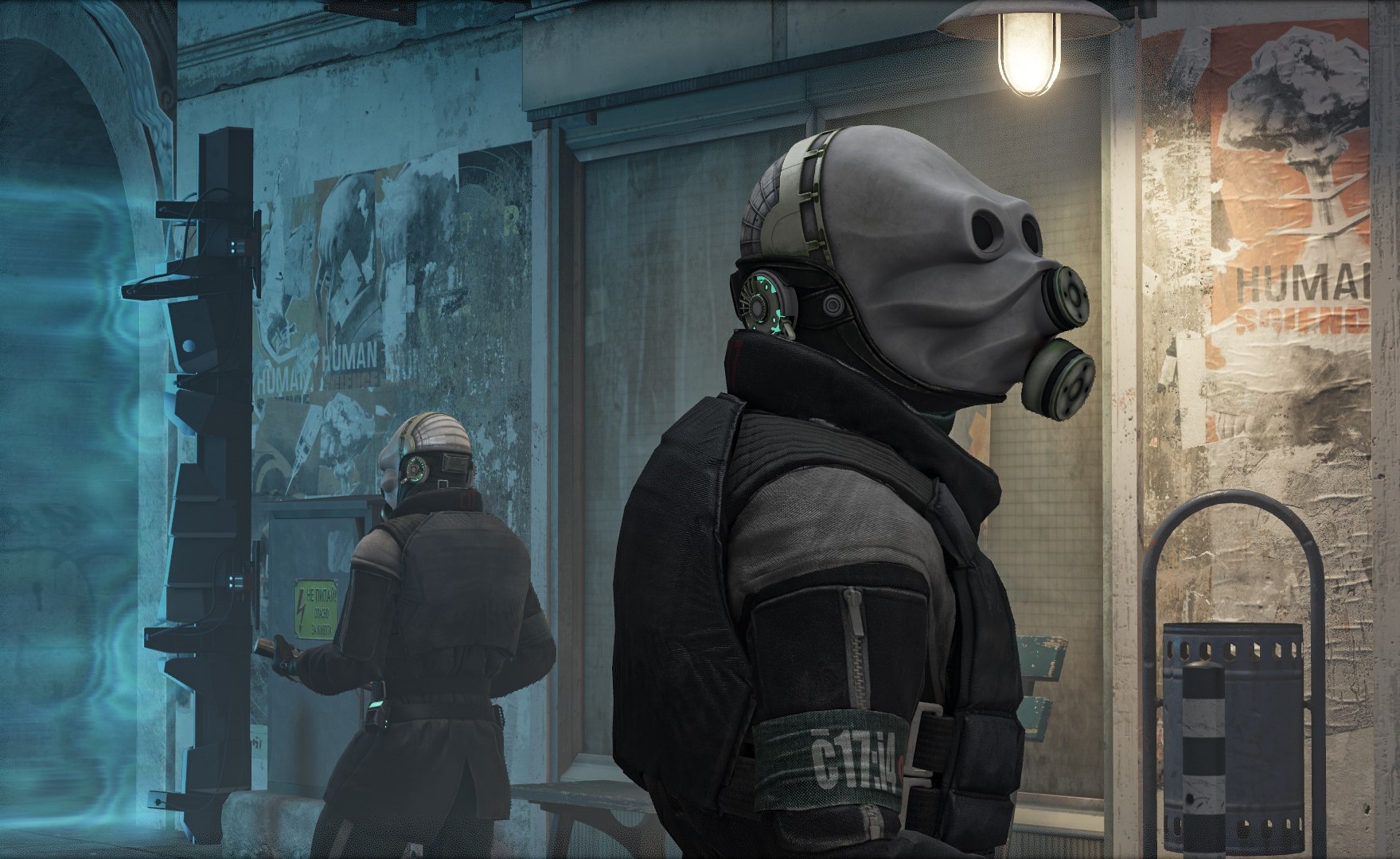
DISTRICT LORE
City Thirteen

City 13, Paris.
City 13 is an Administrative hub governing the former French region. What was once a bustling location filled with culture and dense urban life has now been reshaped into another urban centre for the human population. Established early in the occupation by the United Nations and largely skipped over during the Seven-Hour War, it today serves as Sector 4’s largest urban centre, its skyline defined by France's once-iconic Eiffel Tower.
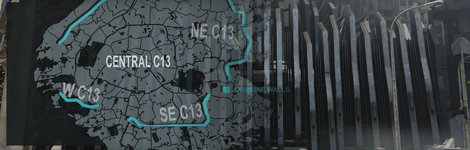
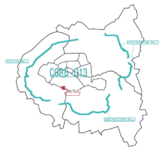
Within City 13’s scope are several districts—eleven core districts numbered 0 to 10, plus the outer Northeast, Southeast, and West territories—all designed to accommodate as many people as possible and collectively governed by the city’s ruling technocratic apparatus, the Security Council, and its ministries, which act on behalf of its UN-appointed Administrator.
Residential districts are tightly controlled and monitored, while industrial and commercial areas are in constant pursuit of productivity and commerce; older districts too damaged in the Seven-Hour War were abandoned, the Arc de Triomphe now serving as a cordoned-off headstone for Paris.
All of these districts work in unison, moving materials and workers across the sector region. Each district is overseen by an overseer, appointed by the city’s administration, a figure whose job is to ensure the Combine's rule is not overstepped or trifled with.
District 0
District 0— the bureaucratic nerve center of City 13. It is here that both the Security Council and City Administrator reside, alongside the central command for Civil Protection, the ministries, and the rest of the occupational apparatuses. It is here that most administrative housing also resides.
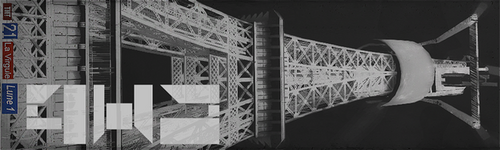
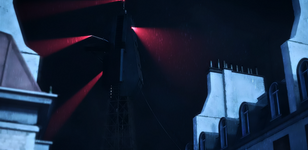
The Eiffel Tower, once the Iron Lady of Paris, is no more; once a beacon of science and modern ingenuity, under the Combine, it serves as the metal exoskeleton for a large, encompassing watchtower, an ever-looming eye over the sky.
The district is heavily fortified. Because any attack on District 0 could constitute a decapitation strike if successful, the district is routinely patrolled and guarded, restricting all inbound and intra-district travel. Residency within District 0 for the average citizen is subject to strict scrutiny and surveillance, save for administrative personnel and the most ardent of loyalists.
District 1
Spanning an area the size of three districts, the district serves as the city's dumping ground, a bottleneck where populations were crammed together after the Seven Hour War. Born from the merger of five Parisian arrondissements, historic buildings either rot away, choked by overpopulation, or are stripped by desperate inhabitants. Dozens of densely packed Haussmann buildings line the streets, populated by gangs, creating an open-air ghetto.
Under internal pressure, the city created the Mutual Prosperity Agreement between Districts 1 and 7 to facilitate aid from District 7 to District 1 while offloading some of the excess population. Though initially successful, aid would either disappear into gangs and black markets or be squandered by district officials as the population continued to climb, growing higher as district power diluted and gangs took increasing control of the streets.
In November 2007, the last semblance of order tore apart, as precincts and Governors alike became impotent overnight. Street by street, lawlessness descended upon the district; gangs that once kept a low profile began surfacing publicly, increasingly co-opted by a weakened administration to maintain the slightest bit of control, and supplies that once flowed freely from Seven stopped completely as the district was placed under quarantine for upwards of a year.
Elsewhere, across City 13, news of the district’s collapse sparked unrest across the districts, as Red Winter and its aftermath paralyzed the City Administration—an event District 1 remained absent from, in part due to an alliance between the Governors and the gangs—resulting in a reluctant administration unwilling to interfere for fear of more deaths.
District 2
While other areas of the city may have their uses independent of one another, District Two does not have the privilege of standing on its own.
Given its geographical position and lack of economic factors, it has been relegated to being a link between the core and outer districts: in other words, the border where the Combine's complete and unquestionable authority ends. Serving as a glorified depot for all the other territories of the city to exchange both materials and members of the workforce, it is remarkable for its dull and tranquil existence.
The citizenry in its streets face few issues apart from the working of machinery, the screeching of the railway and a dull routine that slowly numbs the mind over time. Its transport infrastructure has required significant repairs since the establishment of City Thirteen, leaving little in question about the daily trains that come and go.
District 3
District 3 is one of the few places in City 13 that still resembles a "normal" city, albeit a drab and lifeless one. It's the district of stability. Here, the buildings are neither dilapidated nor clad in metal; they are old Parisian buildings whose balconies have been bricked up and whose facades have been repainted in an administrative gray.
It's utterly calm. There are none of the shouts of District 1, nor the factory noise of District 2. The streets are clean, swept every morning. The streetlights work properly. It's a place devoid of surprises and soul, where silence is an unspoken rule respected by all.
District 4
Within District 4 lies a massive Xenian infestation, the origins of which remain a closely guarded secret. Residents of Eastern District 1 sometimes report hearing strange noises at night, not combat, but the sounds of otherworldly voices and howls.
The circumstances that led to District 4’s spontaneous collapse remained largely unknown—some believed it resulted from an unseen invasion from the sewers or a general moment of shortsightedness by the Combine guarding the city walls. Regardless of the reason, the resulting fear of its overnight fall contributed partly to the events that later became known as Red Winter.
Today, a massive containment wall stands in its place, closely guarded by Synth forces. Occasionally, rumours persist about what's on the other side, some believing a Combine experiment, others something worse. Whatever it is, the Synths ensure nothing passes in or out of the condemned district.
District 5
Initially rebuilt as an industrial zone to help supply the city with heavy industry and manufacturing, District 5 would be plunged into violent disarray during the Red Winter riots.
What followed would prove immensely devastating. Unlike other districts, District 5’s riots were particularly devastating. After rioters had publicly ousted their administration, many had taken to the district’s warehouses and factories to hold out as citywide Judgment Waiver went into effect, believing that the enemy would fall short of targeting its own industry.
Instead, Synths tore through the warehouses in search, damaging vital industry, as they mowed down hundreds of unsuspecting rioters while trapping thousands more beneath its rubble.
When the dust cleared, half the district lay in ruins, most of it industrial, its capabilities halved overnight.
As punishment, the district was placed under harsh military rule, blamed for its catastrophic losses and the riots in general. Harsh quotas were imposed upon the surviving residents, alongside strict military rule, stripping the district of its administration. Residents were either arrested or forced into labour and given two options: meet the district’s quota or rebuild.
Now, a year later, the District partially remains covered in debris, the bullet holes having only just recently begun to be filled in.
District 6
After the riots, District 6 was one of the few Districts to remain relatively unharmed, as most had already retreated indoors by the time Judgment Waiver was declared. Most of the District's infrastructure remained intact, aside from a few minor inconveniences. The occupants of the District would also suffer minimal punishment from the riots due to their lack of involvement and compliance.
As time passed after Red Winter, the District would slowly repair the important infrastructure using local materials gathered from outside the City. Once the central centres were repaired, the District's local administration would coordinate trade and business with other Districts.
With these trade deals, the District would continue to grow, expanding its already vast residential area into a large hub for citizen occupation. It is not uncommon for citizens here to be conscripted into a mobile workforce, moving to different Districts for a set period, then returning home.
District 8
Unlike most other Districts, District 8 was the site of a disastrous social experiment: a superficial renovation of the District that drew primarily on the citizens of District 1 to house the newly opened District. This led to socio-status deteriorating at an alarming rate, with crime and unsanitary conditions transforming the District into a slum, an extension of District 1.
Due to the crumbling nature of the city’s socio-status, a judgment waiver came into effect, quelling any rioting almost immediately. After the judgment waiver ended, the City Administration decreed that travel between Districts was to be much more regulated and scrutinized.
District 7
District 7 is a thriving commercial hub for the District's residents. The Administration’s financial focus has enabled the District to prioritize trade contracts and to lower taxes on imported goods.
In early 2005, seeing the District's early commercial prosperity, the Security Council enacted the Mutual Prosperity Agreement to help stabilize nearby District 1 by transferring some of District 7's resources and aid to District 1 while also offloading some of District 1's excess population.
Short-term, the treaty proved all but successful. Over time, however, as the population grew in District 1 and so did its upkeep, District 7 began to suffer from a severe supply shortage as more and more resources were diverted to District 1, while citizens from District 1 continued to arrive by the dozen, adding further strain to the District's already strained supply chain.
Around this time, local organizations like the Harmony Collective materialized to help alleviate the district's deteriorating social and economic conditions to little avail.
By late 2007, protests emerged across the streets, triggered by District 1's collapse. Elsewhere, the Administration's lack of early retaliation emboldened citizens across the city to rally, culminating in sporadic riots and becoming a months-long period of unrest known as Red Winter.
Eventually, when it became clear that the unrest wouldn't fizzle out and was instead catalyzing further riots, Synths would be called and, supported by Civil Protection, would brutally suppress the protests, ending Red Winter.
Following the events of Red Winter, the Harmony Collective would take majority control of the District's political systems and use its remaining reserves, including substantial aid from the Union Bureau of Credits' reconstruction funds, to oversee reconstruction and begin the District's journey back toward recovery.
District 9
Close to District 0, District 9 is another world. The sidewalks are cleaned, the trees still exist.
Some say that once you leave for the 9th, you never come back. Not because you're dead, but because you no longer want to see the filth of the rest of the world. The inhabitants of the 9th have clean water, clothes without holes, and the right to walk in parks.
However, this perfection comes at a price: ruthless social demands.
In this district, having even a single Verdict to one's name is extremely frowned upon. A simple Civil Code sanction, however trivial it may be in other sectors, is considered here to be an indelible mark of infamy. A loyalist with a record tainted by a single verdict instantly becomes a suspect, even an outcast in the eyes of his peers, because he has shattered the illusion of perfect order.
The district's distinctive feature lies in its Joint Representatives, Twins. A bureaucratic anomaly tolerated by the Administrator of City 13. They are said to finish each other's sentences and govern with terrifying efficiency but unsettling courtesy. They are the image of the "Perfect Symbiosis" advocated by the Combine.
District 10
District 10 functions as the city's primary inter-city rail and logistics hub, connecting the former North and East stations into a vast central depot. It is here that crowded passenger trains ferry relocating citizens and where Combine Razor Trains, hauling freight, prisoners, and other things, dock.
Upon arriving, new arrivals are processed, sorted, and shipped out by rail to one of eleven districts. Here, Civil Protection is omnipresent, checking documents in every corridor—yet cargo, as an asset, itself is often overlooked.
Because of this, hundreds of tonnes of illegal goods pass through its service tunnels each year, serving as the city's eminent funnel, as Civil Protection and profit-driven administrators overlook their routes, reaching black markets and, eventually, into the hands and pockets of those very same administrators.
Non-Corplex Territories — Northeast
The largest of the Non-Corplex territories, the northeastern territories are as destroyed as the others. Much of the urban architecture has long been flattened and is steadily being reclaimed by nature, with the 10 km-wide Northeastern Wall lying at its edge.
It is also where the city's imports and exports travel via the Northern line, first into District 10, then onward to the rest of the city's districts, with numerous Combine and semi-autonomous communities scattered along the way.
Here, most residents persist through smuggling, small-scale agriculture, and trade with the city, falling loosely under Combine authority, which can grow stronger or weaker the farther you are from either the core or the Northeastern wall.
Non-Corplex Territories — Southeast
Within the Southeast territories lies a zone almost entirely abandoned by city authority. Here, the Combine's influence is particularly thin; stopped short by the passing Reine, the Southeastern Wall instead took shape along the river's path, leaving the remainder of the Southeastern territories underdefended.
As a result, the land beyond the Seine is nothing but a sprawl of canals and urban decay, loosely populated and left relatively untouched by the Combine's grasp. Within its territory, infestations run rampant, with notices of a particularly medium-sized Antlion hive forming along its periphery.
The zone past the walls is mostly unpopulated, save for the occasional Combine-controlled settlement and Synth patrol, which serve as an occasional reminder that only the Combine determines what is and isn't theirs.
Non-Corplex Territories — West
Once a region rife with urban sprawl radiating outward from Paris proper, it is now all but destroyed by the Western Wall's march, with miles of debris in every direction.
Now, all that remains are pockets of industry strategically spared and enveloped by the wall's direction, acting as much as the city's primary industrial force.
Here, residents live small lives in self-contained neighbourhoods and areas spared around its industry, with the remaining locations pending reconstruction, hoping to expand the pockets of industrialization and increase the city's resources and housing.
It is said that once the region and its development have fully matured, it will be assimilated into the city proper, joining its core as three additional numbered districts.
The Security Council
The Security Council is the technocratic body responsible for maintaining order, security, and the rule of law within City 13. Formed in 2004, they primarily consist of technocrats and political appointees, serving as the most senior administrative body in City Thirteen after the City Administrator, tasked with overseeing various city affairs, including Civil Protection, on their behalf.
The Security Council is composed of six members, limited to eight-year terms, four of whom are directly appointed by the City Administrator, with the remaining chosen from among ten District nominations. The Security Council is responsible for all Ministerial and District appointments, including Overseers, as well as Civil Protection.
Currently, most functions of the Security Council is delegated to the lower assemblies instead, with the Security Council only occasionally gathering for important and city-wide actions.
City 13 Administration
In the aftermath of the Seven-Hour War, much of Earth and its pre-existing administrations had been left desolate and as victims of the whims of their occupier. When Breen was given his carte blanche to negotiate how he pleased, the terms included a complete remaking of Earth’s pre-existing power structure and the creation of a Combine-backed, global collaborationist government under the puppet of the United Nations.
Nations were systematically dissolved; on maps, borders never changed, but the factories making them did. In the UN, the seats of fallen nations became vacant, while the remainder were steadily co-opted and brought beneath the Combine's fold to be managed by the UN.
In their stead, the city-states were born. While not uniquely a Combine idea, formed from a mix of necessity and practicality when the countryside, overrun by portal storms and Xen, could no longer be sustained, and it was more convenient to relocate humanity to large, protected citiesl, the cities served as a handful of Earth’s remaining urban zones to serve as bastions for its remaining population, safe from Xen’s influence and within the Combine’s own.
What followed was a process that had begun steadily before the war. A mass exodus from the countryside began as conditions grew more dangerous and national authority eroded. Under the Combine, this process was swiftly expedited under threat and comfort until most of humanity had relocated to the cities, where, once arrived, they could not easily leave.
City Administrations, formed from the remnants of governments and Breen-appointed loyalists around 2004, were created alongside their City Administrators and slowly began to take their place. By 2007, the UN began gradually withdrawing from the cities, with local control projected to fall under complete control of their City Administrators and the IGA by 2009.
For City 13, this meant control had fallen to Richard Pelletier, a UN-appointed technocrat who had been a leading figure behind the scenes, presiding over the occupation and reorganization of City 13. A native Parisian, he established the city’s Security Council and first ministries, delegating his powers to a technocratic decision-making body while taking a more back-seat role.
As a result, City 13 lacks the propagandistic flair, cult of personality, and repression of some other cities, opting instead for a more laid-back, representative approach to maintain stability and relieve systemic pressure through more peaceful outlets without threatening the regime.
Over time, as City 13’s population bloomed, the Security Council itself, through delegation and letting go, would form the District Administrations, semi-autonomous and sometimes democratic sub-polities that would form the crux of local governance, with the Security Council itself focusing on only the most salient issues.
The Eiffel Tower
In 2005, large scaffolding and tents were erected around the Eiffel Tower as the surrounding area was fortified and sealed off, with the Esplanade and Champ de Mars becoming off-limits to city residents. Even so, little could hide what was happening.
Week by week, Parisians watched as Combine architecture crept up the Eiffel Tower's scaffolding, past the protective tents; layer by layer, a large, brutalist, cylindrical watchtower rose atop its summit, transforming its iconic shape.
By the time it was completed, the Eiffel Tower had been stripped of its 19th-century design; white and red lights shone from its spotlights as they circled Paris, passing through blinded windows as a watchful gaze descended on the city's skylines. The Iron Lady of Paris had become a citadel in the heart of City 13.
Though access to the Champ de Mars had eventually been restored, the Esplanade and Eiffel Tower never were.
The Citadel Spire
At the edge of District 1 stands the Citadel, a hulking, omnipresent spire that towers over the city, standing at 2km tall and extending deep into Earth's crust. Surrounding the citadel on all sides is a half-kilometre-wide crater and a perimeter of Combine Walls. The spire, though incomplete, stands as a testament to the sheer permanence of the Combine, etched across the sky as the single-most damning indictment of their rule.
Because the citadel is incomplete, it lacks self-sufficiency and relies entirely on local power grids for survival, even for the most minute operations.
As a result, when active, the citadel causes frequent citywide power outages for residents, sometimes lasting upwards of forty hours, while a busy skyline filled with mechanical shrouds, modules, and plating carried by helicopters moves to and from the citadel.
While mostly inactive in the skyline, nearby residents hear a perpetual drone as the citadel and its exterior grow. Its shifting hull periodically emits a seismic aftershock whenever it or its core is activated, sometimes randomly, sometimes to mark a milestone in its development, and other times as a reminder to citizens to toe the line.
Imagine a boot stamping on a human face— forever.
The Combine Walls
Within the Greater City 13 area, three large Combine Walls surround central City 13, each spanning more than ten kilometres. Built in early 2005 as a testament to Combine ingenuity and might, the walls were once a single continuous barrier enveloping the core districts, keeping humans in and Xen fauna out.
Since then, the walls have expanded outward, marching across the former area of the Greater Paris Metropolis, pushing the city's borders outward. The walls would splinter and divide, then rejoin to envelop old industrial and residential zones, while crushing everything else.
As the walls grew increasingly stretched, they would eventually split into three separate segments with gaps between them, pausing at the midway mark. There, they would sit, just shy of the entire former Greater Paris Metropolis original borders, each wall about ten kilometres wide and surrounding the city core on three sides.
Between the city walls, Synths and occupational forces patrolled the gaps, filling them with strategically placed barriers, checkpoints, and defences, using unaffected infrastructure to create a network of corridors and chokepoints to secure the gaps.
New zones would be partitioned in the newly claimed areas, with new districts on either side of the wall, past City 13 proper, established within the Greater Paris Metropolis area, though to mixed results.
Currently, the walls stand along the far edge of City 13’s horizon, unused until called upon. While stationary for now and shielding the city from outside threats, they can just as easily reverse, retracting further and further inward until the entire city and its population are completely crushed should the city ever rebel.
La Santé Prison
La Santé Prison is the city’s primary detention centre for local, long-term incarceration and re-education. Located in the Parisian prison of the same name, the French government used it as a large-scale facility to house criminals and anti-regime dissidents, a status it would retain after the Combine occupation seized it following the Seven-Hour War.
Since then, the prison has undergone a radical retrofitting of early Combine technology and architecture, a post-war underground railroad for the transit and relocation of prisoners, and several repurposed annexes housing the prison's newly created re-education suites.
Where temporary holding cells and nexuses handle small-time offenders, La Santé receives those it intends to keep, incarcerating problematic dissidents and disappearing them into its halls.
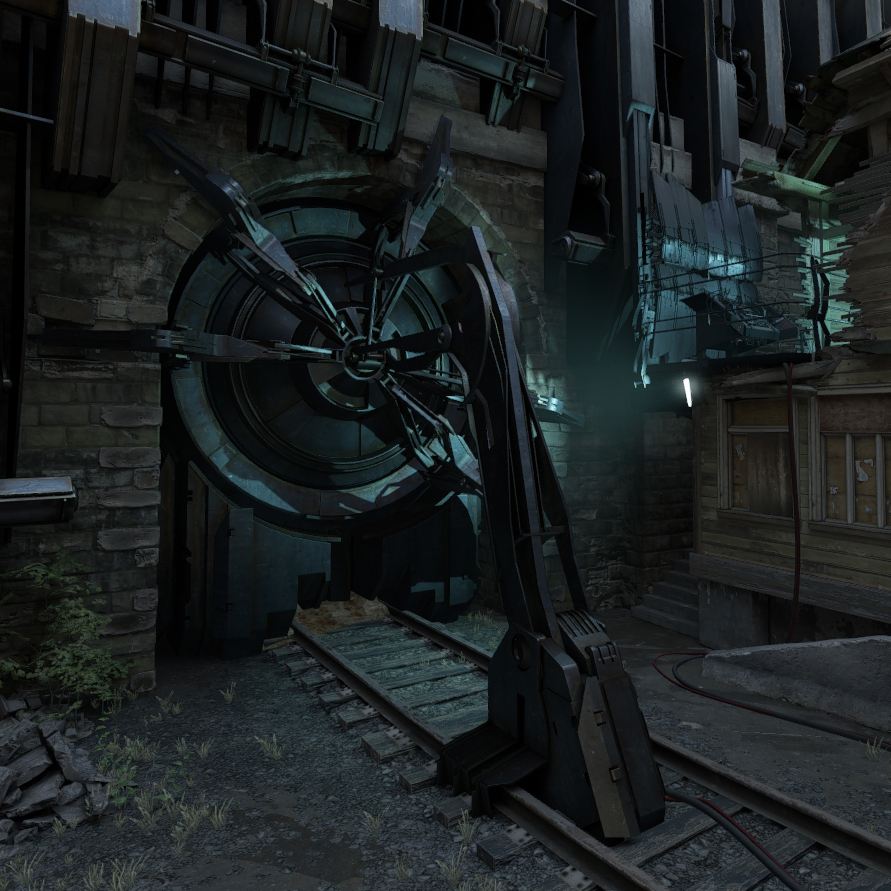
District 7's Quarantine Zone
Along the margin of District 7 is a small quarantine zone containing Xen infestation and other alien threats, spanning several streets and resting along the perimeter of District 7, surrounded by sealed buildings and barriers.
At its entrance, a large mechanical hatch blocks the main entrance, preventing unauthorized passage to and from the quarantine zone and keeping most of its fauna contained. Despite that, the quarantine occasionally lapses, with Xenian fauna slipping by, either through a damaged wall or old underground passages that have yet to be discovered.
The Quarantine Zone is currently under heavy lockdown, even to District officials.
Promotion Day
Promotion Day was an outbreak of conflict within the Civil Protection in July of 2008. As a result of internal dissatisfaction with the Captaincy and newly established protocols intended to assimilate into the wider Combine network, it saw several stations within most districts break out into open rebellion. While most local attempts were dealt with peacefully, a few instances saw skirmishes break out between the rebelling and loyalist officers.
The Sides and their Figures
Contrary to popular perception, Promotion Day was more than just a mere coup. Caused by thousands of boiling issues - some of ideological and others of material origin - directed at Civil Protection and its captaincy, it saw a sizable coalition of several stations form to push back against their newly assigned overseers. While they may have gained an early tactical advantage through surprise, their successes were ultimately thwarted by the captaincy's superior coordination, and thus, Promotion Day, too.
CAPTAIN MAXIMILIEN LARUE
The personification of the "new blood" captaincy, namely to the mutineers, due to his appearance: brash, corrupt and uncaring. Regarded as a fierce politician capable of carrying out any task, no matter how brutal, he is theorized to have been the one presiding over the post-Promotion Day purges.
SERGEANT-AT-ARMS BURBRIDGE
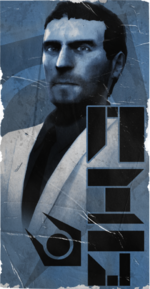
The most well-known insurgent of Promotion Day, his fame stemming from the fact that he had never surrendered to the Captaincy. Viewed as an honest, plain and capable man by those who had met him, he acquired a following in both his station and in certain civilian circles. In the first hours of Promotion Day, he and his cadre took to disarming loyalist officers and setting up roadblocks within the streets so that other mutineers and civilians could move unimpeded while sections of the city were cut off.
When a convoy of the Captaincy's reinforcements was stopped at one of the barricades, a gruelling gunfight known as the Battle of the Crossing occurred. Lasting from midday to morning, it is said that the Captain's men were routed after some rebellious citizens took to harassing them. The overall count reads that about twenty officers have died and seven of Burbridge's men, who all had candles lit for them by the Sergeant-At-Arms himself.
After the failure of Promotion Day, Burbridge gathered a fistful of his followers and fled to places unknown - vowing to never bend the knee. Since then, numerous reports from both civilians and Civil Protection indicated that he and his band are still active and hostile. This has led to his image remaining relevant and a symbol of rebellion: all across Paris, alleyways with graffiti depicting his bearded face have sprung up, and tributes to both him and his officers can be seen in the shadier ends of the city.
Mutual Prosperity Agreement
Born during a period of inter-district partnerships in the early stages of reconstruction after the occupation began, the Mutual Prosperity Agreement was a trade agreement enacted by the City 13 Security Council between Districts 1 and 7 to stabilize District 1 at District 7's expense.
District 1, severely lacking in rations yet overflowing with raw manpower, would provide District 7 with workers in exchange for sorely needed food, drinks, and medicine. What followed was the gradual bleeding of food, medicine, and wealth from District 7 to District 1, as citizens from District 1 flooded across the border, straining the district's already strained stockpiles.
For District 1, the treaty proved insufficient as chronic mismanagement, population growth, and internal issues led to the evaporation of all internal authority as the district collapsed. Despite the M.P.A., District 1 never stopped growing and soon collapsed beneath its own weight.
From there, the M.P.A. would virtually cease to exist. However, even in death, its legacy would spark unrest in District 7 as citizens, still fed up with years of economic exploitation over the treaty's methods and prompted by nearby collapses, took to the streets in protest; soon, riots would spread across Districts 5, 6, and 8, beginning the events of Red Winter before ending in a bloody conclusion.
In the aftermath, the Mutual Prosperity Agreement would be formally dissolved and forgotten. District 7, free from the Mutual Prosperity Agreement, would be allowed to lick its wounds and rebuild its wealth. District 1, spared from both the riots and the suppression campaign, would be left alone to prepare for a more elevated purpose.
Red Winter
Although France avoided the worst excesses of destruction from the Combine's arrival, it had still felt the Seven Hour War's second most fatal consequence: the collapse of logistics. Overnight, thousands of government organs and companies evaporated with almost no contenders to fill the empty space left. This led to the collapse of the wider state and even segments of Paris itself, leaving millions to fend for themselves with no assistance from the outside.
While the situation improved over the years, such as a network of railways being established around the newly proclaimed City Thirteen, the local logistics were still shaky, and several districts were facing immense difficulties. This eventually led to District One collapsing into anarchy, followed by a chain of unrest across Districts 7, 8, 6, and 5, as well as the abandonment of District 4.
Mutual Prosperity Agreement
After the war, communication between locales was a complicated affair and oftentimes broke down due to unforeseen factors. District-to-district trade was meagre and wracked by countless difficulties, whether decaying infrastructure or supply hijacking, and was generally unreliable. Under pressure from the Security Council, Districts 1 and 7 formed the Mutual Prosperity Agreement to stabilize the overpopulated district: District 7 would accept District 1’s undesirables and unaccounted-for population while sending it supplies.
This, in turn, should have allowed District 1 to recover while having fewer mouths to feed. It never did. As mismanagement and internal rot grew more apparent, and new citizens arrived faster than they could be relocated, District 1 became more isolated and more reliant on the Agreement.
District 1 Collapse
In November, the last semblance of order tore apart. What was the culmination of months of material difficulties and overpopulation resulted in the evaporation of both Precinct Satellite’s and the Governors’ authority. Despite District 7's aid easing the district's overpopulation, the district never stopped growing. Local gangs, previously considered contained and beneath the peacekeeping organization, were significantly empowered in return for their assistance in putting down any riots that may spring up in the future.
Thus, even if District 1 suffered no significant riots, merely protests, it still succumbed to its internal issues. Citizens who fled the anarchy early on found the way back blocked as a quarantine was imposed. Exports from Seven were unilaterally stopped, putting the Mutual Prosperity Agreement in its coffin.
Elsewhere, word of District 4’s infestation and evacuation would shock the city's core, panicking citizens and adding to an already tense city undercurrent.
Beginning of the Red Winter
Following the collapse or fall of nearby Districts, and general economic anxieties, a series of protests sprang up in the streets of District Seven. Initially starting as a workers’ strike caused by a workplace accident, it snowballed into general unrest within a matter of days. On Wednesday, it was merely dissatisfied CWU members. By Saturday, it was half the district.
Civil Protection, still disorganized and weakened by Promotion Day, would not clear the crowds. This led to a considerable number of officers refusing to come onto shift, while the rest either hesitated at the masses or withdrew to the positions they still held. After a week and a half, the District Administration quietly departed - hours before an angry crowd broke into their offices and occupied them temporarily.
In District 0, moderates in the Security Council pleaded with the Combine not to intervene, but to give the precincts time and trust to pacify the unrest on their own—the price of intervention, they argued, being the more bitter pill to swallow.
While protests in the rest of the core were occurring due to similarly dire economic conditions, they were truly emboldened by the seizure of District 7's offices. Seeing it as both a signal and, more importantly, an open display of the Combine’s weakness, crowds tested their precincts, and some began to riot, growing bolder with each passing day. By now, violence had become more frequent, but still petered out by morning.
Judgement Waiver
As weeks stretched on, it became clear to all that the unrest would not tire itself out. Individual violence catalyzed into riots which no longer passed by morning. With some District Administrators threatened and others blocked in, the situation grew so dire that even the safety of City Administrator Pelletier was questioned, resulting in the derisive nickname of “The First and Last Administrator.”
Initially formed to track the fighting during Promotion Day, the overwhelmed Civil Protection made its first public use of the sociostability index. As the streets unravelled, the Combine's patience grew just as thin and, having lost confidence in the local precincts’ ability to control the riots on their own, issued an ultimatum to Pelletier and his Security Council: agree to a judgment waiver proposed by Civil Protection Captaincy and activate the Synths.
It was a nearly unanimous and lengthy affair of consolidating Civil Protection precincts and activating the synthetic garrisons of City Thirteen on behalf of the Combine. The first joint deployment of synthetics and Civil Protection was in the last days of December, resulting in a bloody cleanup in several core districts - now referred to as the “New Year’s Massacres” - that choked out unrest for good.
Within days, the Combine reasserted its authority through all means possible: surrendering rioters were imprisoned in the La Sante prison, resisting ones were executed, and turncoats were pardoned. District by district, crowds broke. Thousands were killed, with the count still unknown; the majority killed by synth deployments.
Aftermath
City Thirteen after the riots is nigh unrecognizable. The City Administration, mortified by the spiral of chaos that occurred under its watch, elected to curtail certain civil liberties that were tolerated up until this point. Likewise, the Captaincy’s efforts at reforming the Civil Protection into a centralized and cohesive organization doubled, with mixed results.
The bloodshed perpetrated by the Combine forces had driven masses of citizens away from its arms. Many lost the stomach and will to accept the clamp, with some opting to go underground and dedicate themselves to a long-term struggle against the occupiers at all costs. Others lowered their heads and dared not to question the Global Authority, the image of a synth invoking a paralyzing fear.
District 1 was left untouched by the riots and synths in turn, largely due to the Governors’ willingness to employ the gangs to prevent any bloodshed that might occur. When questioned about it in a public interview, Administrator Pelletier stated that there were plans for District 1 and that the lack of riots was admirable.
District 7, however, suffered the brunt of the chaos. Avenues were left thrashed, buildings ransacked, the Nexus partially destroyed, and the local precinct non-existent. The damages were immensely costly and catastrophic, with the new Administration falling into debt almost immediately as they began a grand project of reconstruction district-wide.
Due to the collapse of logistics in the city and the virality of its infestation, District 4 was abandoned to its fate a few weeks into the Red Winter. This only further added fuel to the fire, with some rioters believing that if the Combine was willing to abandon both Districts 1 and 4, their own district would be next on the chopping block.
Richard Pelletier
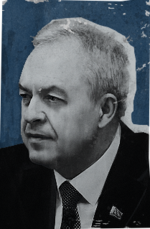
As City 13’s Administrator and a native of Paris, Richard Pelletier could be considered the most powerful man in all of Thirteen. Previously serving under the French Ambassador to the UN, Jean-David Levitte, shortly before the Seven-Hour War, and succeeding him shortly thereafter, he gained the Administrator role in 2004 during the occupation and reorganization of Paris, presiding over the city's administration as a technocratic figure behind the scenes.
An enigmatic man, he has consistently shown great flexibility and a willingness to cooperate with the Security Council and District Administrations throughout his tenure, cementing his reputation as a sensible and deferential leader, even if unpopular because of his role. Though still relatively unknown, he is known to be open-minded and professional, a stark contrast to some others in the IGA, especially among City Administrators, and welcomes any suggestion or proposal without fear.
He especially shone during the catastrophic events of the Red Winter, when even he himself was not safe from the threat the rioting populace posed.
With Civil Protection and the Precinct Satellites still weakened from the Promotion Day incident, his most definitive action came when, under pressure from the Combine, he led the Security Council, at the behest of the City 13’s Captaincy, to apply a citywide Judgment Waiver, leading to the death of thousands, but at the cost of restoring order and restoring IGA faith in his ability.
A humanist, a technocrat, and a UN loyalist, he prioritizes preserving humanity above all quintessential equations and resents any loss of life. Despite that, he is unafraid to dirty his hands and maintain a tight shackle on life if survival means toeing the Combine's line, should it warrant it.
Milada Drsna
Once a far cry of a bygone era that still refuses to bargain soul for power, Milada Drsna is the unpopular governor who resides within District One. Trapped in the headquarters of the United Nations at the time of the sheer terror invasion of New York at the point of the Seven Hour War, he was kept alive not out of mercy.
As the transitionary period continues its merciless effort to bring down the old world, his bureaucratic and humanitarian expertise serves this purpose. Despite his open defiance and being declared a virtual impostor, he is consistently publicly humiliated and stripped of his titles on an occasional basis. However, Milada refused to be a rubber stamp for forced relocations, ration cuts, and the erasure of cultural identities. The previous UN Liaison for the Security Council desires to build meaning and purpose through local autonomy and civilian government.
Despite being reduced to a low-level clerk or "Head Janitor," as Captain Barbier put it, the Administration lacks the content to remove him from the equation for scapegoating. He views the preservation of basic human dignity, represented through a fair trial, where his humanity is seen as a tool to control local populations through comfort or pragmatism.
The Civil Workers' Union
The Combine first attempted to run these enterprises with quasi-slave labour, forcing citizens to work in these industries against their will or else lose their spot in one of Earth’s few urban centres. The result was disastrous, with low output, constant death and injury of workers, and more than a handful of open revolts.
The Union of the modern day is an integral part of the lives of almost every citizen under the Combine regime. Being a member of the Workers Union allows you not only to work in their factories, but also provides a sense of community and protection against some of the worst of Civil Protection’s transgressions. They often have their own housing blocks, and can even be seen as a way to improve one’s social credit to gain even more status within society.
These new industries met their quotas quickly, leaving unused industrial capacity or excess materials that could not be utilized. The new bosses recommended that private enterprises for light industry be reintroduced, with the CWU selling materials to said new industries. The collaborator’s argument was sound: humans want for things the Combine may not see as useful, but are required to keep the populace subservient. Light industries could fulfill these needs without wasting any of the CWU’s time or energy by producing finished goods. And the CWU could generate revenue for the cities' budgets, which were now beginning to strain with the reintroduction of currency.
That being said, the Civil Workers Union is still an organization that is subservient to the stronger will of the Combine. And with that, they often find themselves in a precarious balance that has many local chapters walk the tightrope between rebellion and obedience: Many Civil Workers Union chapters have less-than-legal smuggling operations to traffic illicit goods and extra supplies into their stockpiles.
They are unique in the fact that they are their own enterprise, not loyal to the greater cause of the rebellion, but not exactly willing to kowtow to the local civil protection forces either if they prove to be too overbearing in their policing of their factories.
The Civil Medical & Research Union
Following the disastrous consequences of the Seven-Hour War, medical facilities were a necessity to help sustain human life as its backbone, something to keep people moving and working on various construction projects within the newly forming urban centers across the globe. Those with the skills to perform surgical interventions, practice medicine and diagnose simple illnesses were in high demand, their knowledge deemed valuable for sustaining life.
The prevention of disease was paramount to ensure stability in population centers. An outbreak of menial bacterial infections was capable of spreading faster among dense crowds, especially for those of the lesser classes living in dank, cold and desolate conditions. Much like cattle on a farm, inoculations were required to prevent a vast spread of many mundane, yet easily overlooked illnesses.
For the first six months, medical personnel such as doctors, nurses, surgeons, porter staff and many more were requested at the beck and call of the first city administration. With the help of the newly formed workers' union, they rebuilt medical clinics across this new dictatorship, salvaging any equipment they could find from derelict hospitals. Most of what was found required extensive repairs, damaged by explosions, pulse rifle bullets and intense fire outbreaks.
First Year
City 17 became a pioneer, leading the world along a new path of medical order. The Civil Medical Union, abbreviated by many to the C-M-U, was born from smouldering ashes like a phoenix, glistening proudly against a backdrop of death and despair whilst seemingly enshrouded by shadows of deceit. Continued existence was far from assured; many believed that life as they knew it might once again rise to walk alongside them. Little did they know about what lay behind this facade; the cover of this book, judged from a distance far enough away to hide away dark and cold realities.
Breen ushered in some of the world's greatest doctors and surgeons to work within his designated city as his aides and knowledge base. Although Breen himself was a man of science, the opinions of those he chose to stand by his side offered advice, dispensing their knowledge to help enhance his own. Their task was to rebuild the world's medical facilities inside new population centers, as a means to ensure the health and well-being of any and all workforces. The human species is frail, subject to fatigue and at great peril when faced with extreme conditions, only supported by expert defence or, in this case, medical interventions.
Progress was slow to start, as was the building of urban centers. Key structural buildings were selected in each city to serve as a base of operations. These facilities offered the chance for skilled individuals to run their city's medical facilities, hire people from any background they wished and maintain the well-being of its working-class citizens.
This was a key ingredient to Breen's plan. The working class, people working for the workers' union, were the backbone of this new society. Many citizens fell into line and followed instructions from civil protection, though there were those who continued to cling to the old world's ways and fight against the systems put in place. A method of control through medicine was conceptualized. Humans fall ill through viral or bacterial means and thus would seek medical assistance to ensure their recovery. One of Breen's aides suggested using this as leverage, a means of control over the population by offering services to those who showed loyalty, whilst shunning those that defied the new world order. This was universally agreed between Breen and all his aides, before being pushed through legislation and sent to every urban center across the globe.
Second Year
Several new urban centers began to rise from the ashes of war. Medical centers within these populated areas thrived, with doctors, nurses, surgeons and other medical staff applying and taking jobs within their ranks. One city of note, City Eight, proposed a new and interesting idea. Their plan was cunning, not to mention ruthless, through a measure of control not yet seen anywhere else.
Up until this point, those who became unwell and sought medical aid simply arrived at their designated clinic and made a request. Staff assessed the incoming patients for viability, judging their work ethic and loyalty before allowing treatment entry, or sending them away. City Eight began a trial to enhance their control through forced viral outbreaks among their community. Strains of things such as pneumonia, the black plague, and whooping cough would periodically be released and allowed to spread among its population.
Citizens, of course, began to fall ill and seek medical aid, though the few or many, depending on the districts affected, were either turned away for lacking in loyal duties to their benefactors or offered treatments. Administration members housed in high-tier housing or nexus grounds were unaffected or given antidotes to these outbreaks ahead of time, allowing them to continue working unabated.
This newfound scheme proved advantageous and became a standard around the world. Secrecy was key to its successful implementation, calling for a hidden written policy between directors and civil administration members. Medical staff were kept in the dark to prevent information from slipping out to the population, yielding acceptable results in several cities.
Third Year
By now, the medical union had become a staple across the globe with hundreds of clinics or hospitals, governed by the overarching hand of the CMU. As time went on, several new types of xenian viral agents began to show themselves, an evolution of fungus and fauna from the xenian border worlds. A handful of urban centers began to face these outbreaks without warning and without scientific expertise to seek answers. This called for changes within the system and a new branch for experimentation, changing the medical union behind the scenes.
Hushed whispers among administration members helped to expedite new political legislation, enabling the scientific community to begin building a research branch within their designated cities. Citizens were blinded to the changes; a shroud of misdirection and deceit kept their new conception away from the public eye. Doctors with the necessary skills and deemed educated enough were plucked out from their medical ranks, before being plunged into new laboratories under orders to accelerate scientific endeavours.
Over several months, many personnel had been selected in private before being relocated to other districts or cities for training. Paper trails were left open to the public, showcasing these individuals with full disclosure as to their individual circumstances and relocations, often citing how their skills were required elsewhere, without revealing the true nature.
In secret and among those who truly knew, this new brand medical and research union began to work on human experiments. Orders came down from the benefactors themselves, handed to Breen and filtered through the system, before reaching city-level directors and administration. Their goal was to push the human mind and body to their absolute limits to see what possibilities lay ahead. Other species became a necessary backbone of this operation, their DNA, blood and other parts crucial to an end goal not yet fully realized.
Present day
Many years have passed since the medical union's initial inception and development. Cities across the world now had fully functioning and well-staffed medical centers, offering care and assistance to those who showed loyalty to the system. Research into many different concepts was also underway, a top-secret project already rolled out globally.
Depending on the city, training centers were built to educate those who wished to pursue a life in medicine. Books became available throughout these centers, their inscriptions transcribed from old-world training manuals or educational videos, along with present-day doctorate expertise. Broadcasts showcased the importance of medically trained citizens in the hopes of accelerating interests, along with posters to compound their effects.
Research behind closed doors became a thing of the past as the civil medical and research union took the world stage, accepting their newfound name and purpose. Classified projects remained shrouded in secrecy to maintain cohesive order, though rebellious members of society began to seek out these dark horse lies to lay bare for all to see.
The Red Cross
In the midst of reconstruction efforts and integration with the new regime, one organization took the moral high ground above war profiteers and politicians vying for a seat of power under the Combine: Croix-Rouge française (the French Red Cross). Humanity was left with a fickle semblance of selflessness and humanitarianism, but they refused to die and rejected integration for as long as they possibly could.
Its nationwide members consisted of paid roles; however, the volunteer corps spearheaded its efforts. They became nomads, roaming from district to district to provide relief and aid to victims of the Seven Hour War; moving debris, searching for lost or injured persons, and, above all, supplying food and water to the malnourished and dehydrated.
The National President of the French Red Cross, Marc Gentilini, would've otherwise resigned if not for the Black Mesa Incident, which practically obligated him to remain. Staffers in the United Nations rumoured that Gentilini conversed frequently with UN Representatives, pleading that the Red Cross be considered in any negotiations for integration. While the Red Cross never truly died off, most of its surviving members found themselves in management or advisory positions in various medical roles, chiefly in the Civil Medical Union.
The Harmony Collective
Founded in 2005 by Florian Zaborski, Céline de Villiers, and Karl Söderberg, the Harmony Collective (Collectif d’Harmonie) is a civic and political organization operating within District 7.
Initially dedicated to assisting District 7 amid economic turmoil and deteriorating social conditions triggered by the Mutual Prosperity Agreement with District 1, the Collective acted as the district's humanitarian foundation, providing critical supplies and food where the administration couldn’t.
As the Mutual Prosperity Agreement continued to funnel resources away from District 7 and toward District 1 to prop up the failing district, the Collective would privately assemble its own stockpile, unaffected by the M.P.A., to maintain the district’s failing stability as conditions grew increasingly dire.
In November 2007, when District 1 finally caved, the crash broke District 7, which had been forced to aid the troubled district with food and medicine at the cost of its own security since its inception. The resulting catastrophe left District 7 short of food and medicine for its own people, with most of it sent to District 1 rather than to its own facilities, leaving its clinics and distribution centers thoroughly drained. News of the collapse, combined with District 4's abandonment, dwelled heavily among residents. After months of deteriorating social conditions and starvation, the district would erupt into all-out protest following a workplace incident, culminating in overnight riots as local administrative officials eventually fled and quarantined the district.
During the chaos, rioters stormed the administrative centers and, separately, raided the Collective’s headquarters, where founder Florian Zaborski and Céline de Villiers would either be slain by the mob or go missing, with Karl Söderberg escaping.
When the unrest eventually spilled into other districts, followed by a month-long period of unrest and copycat riots, a city-wide Judgment Waiver was declared, and Synths were mobilized to suppress the unrest.
As the copycat riots were crushed, the prior administration was removed and punished, and the Mutual Prosperity Agreement formally terminated after some time; Karl Söderberg, the sole surviving founder of the Harmony Collective, was selected to lead a new administration in its stead, and, using Collective funds and city-allotted reserves to rebuild the district alongside its survivors and, transformed the Harmony Collective into the dominant political power.
Now, as of 2008, the organization continues to operate, overseeing the District’s continued economic recovery with the U.B.C., with Karl Söderberg serving as both District Chairman and Chairman of the Harmony Collective.
From the common worker to the auspicious politician, anyone can find a place in the Collective!
Attachments
-
 1788698298981.png706.7 KB · Views: 0
 -
 1788698390299.png45.8 KB · Views: 0
 -
 1788698387045.png234.9 KB · Views: 0
 -
 1788698384039.png768.7 KB · Views: 0
 -
 1788698366789.png991.5 KB · Views: 0
 -
 1788698369683.png156.1 KB · Views: 0
 -
 1788698372670.png21.4 KB · Views: 0
 -
 1788698375583.png92.7 KB · Views: 0
 -
 1788698379471.png371.9 KB · Views: 0
 -
 1788698363203.png28.2 KB · Views: 0
 -
 1788698359556.png163.4 KB · Views: 0
 -
 1788698326260.png271.5 KB · Views: 0
 -
 1788698316118.png422.4 KB · Views: 0