- Joined
- Dec 18, 2020
- Messages
- 894
- Thread Author
- #1
District Assembly
The District Assembly
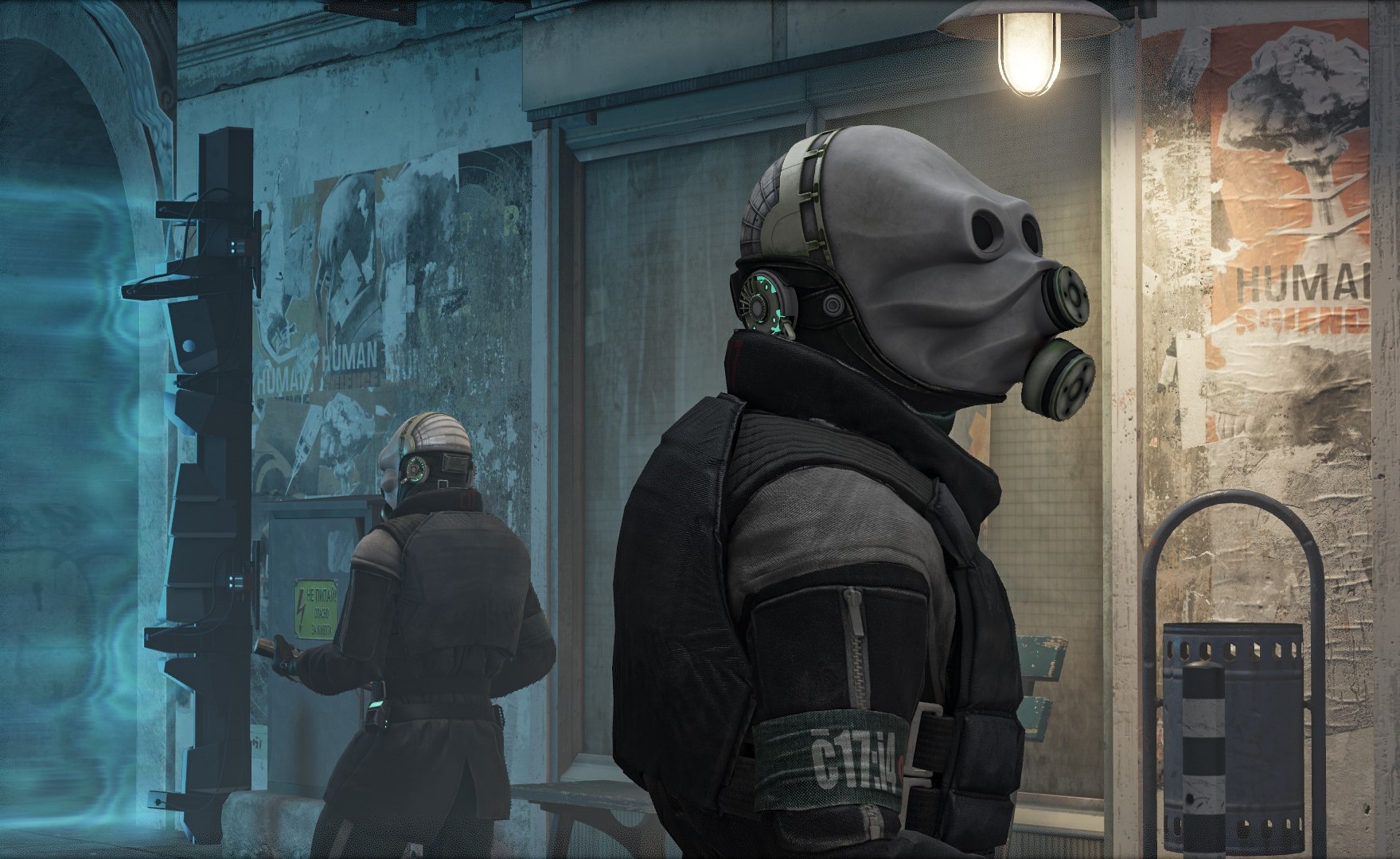
The District Assembly serves as the cornerstone of the local Administration, acting as the primary governing body within the district. Serving as the legislative and administrative authority within the District, under the Security Council, the Assembly is responsible for the creation and implementation of policy, management of departments, and adherence to local and city-wide values.
Structure & Hierarchy
The Assembly Framework
The District Assembly is the District's elected legislative and executive authority, split into executive and deliberative roles. It is the primary governing body and enacts laws, appropriations, and policy in accordance with city statute.
The Assembly is composed of nine seats—one Chairperson and eight Councillors— and is elected every two months.
SECURITY COUNCIL

-
CHAIRPERSON District ChairpersonElected Bi-Monthly • Majority Vote • 1Manages administration, issues decrees and policies, oversees inter-district affairs, departments, and presides over the Assembly.
-
COUNCILLOR District CouncillorElected Bi-Monthly • D'Hondt System • 8 SeatsCreates and abolishes laws, sets overarching policy, and oversees the Chairperson and their administration.
AUTHORITY
-
OVERSEER District Overseer Appointed by City • IndefiniteThe District Overseer is the highest adjudicative and supervisory authority within the District, appointed by the Security Council as its representative. They oversee the Assembly, ensure compliance with city-wide statutes, enforce adherence to collaborator and charter rules and values, and intervene where applicable.
Above the District Assembly is the District Overseer, who serves as the foremost supervisory and final adjudicative authority within the District.
Overseeing the Assembly and its members, they ensure compliance with city-wide statutes and adherence to District procedure, rarely intervening, except for conflict resolution and to enforce procedural law.
Powers of the Chairperson
As head of the District and Assembly, the Chairperson holds significant executive authority and is responsible for the day-to-day governance of the District. The Chairperson may:
- Administer day-to-day district operations and affairs
- Preside over District Assembly sessions and meetings
- Represent the District, its Assembly, and its administration in official capacities, including intra-ones
- Enforce and implement laws, policies, and regulations within the District
- Issue fiats, decrees, and other administrative directives and or instruments
- Oversee District departments and policy implementation
Powers of the Councillor
Collectively, the Assembly shall:
- Create and amend all district law and statutes
- Oversee the Chairperson and their actions
- Set policy direction and oversee district affairs and appropriations
- Establish committees and delegate offices and responsibilities
- Recall, censure, or remove the Chairperson and their actions
- Alter or amend the District Charter
Statutory Instruments, Decrees, and Policies
When not in session, the Chairperson assumes the role of primary governing authority.
To govern
effectively,
they are granted several instruments to facilitate leadership between sessions. These instruments are
designed to ensure continuity but remain subject to the Assembly's oversight.
The Assembly retains the authority to reject, overturn, or officialize any of these
acts through a
formal vote.
Furthermore, all instruments must align with pre-established laws and cannot contravene existing
statutes.
The District Chairperson may issue statutory instruments to clarify, implement, modify, and enforce pre-existing statutes. These instruments must remain consistent with the original law and remain subject to Assembly review.
The Chairperson may issue executive orders to Union branches, directing policy and procedure compatible with the law. Non-binding decrees may also be issued to Civil Protection, but these remain advisory unless explicitly ratified by the Assembly.
The District Chairperson may issue temporary administrative fiats to address imminent threats. These measures are limited to 14 days and must be voted on by the Assembly to be extended or made permanent, thereby creating new substantive law.
Committees
Committees are specialized bodies within the Assembly, composed of primarily Councillors and, rarely, the District Chairperson and/or other officials and citizens, primarily through Ad Hoc Committees, but also where an act allows for Standing Committees. They are responsible for specific areas of overview, such as finance, labour, Biotics, or health.
From conducting reviews of legislation and of their remits
to overseeing specific departments, Committees provide strong recommendatory action to the
Assembly and have limited authority within their sphere absent of an Assembly law or Chairperson decree.
Committees are divided into two primary types:
Standing Committees
These are committees that focus on specific subject
areas—such as health, business, or safety—exercising operational oversight within their
designated domain.
They are permanent committees with fixed session memberships and defined responsibilities,
created
through an act of Assembly, and exercise moderate operational oversight and
expertise
within
their
domain, capable of informed decisions and limited policy enactment, subject to the
review of
the Assembly.
They may make interim decisions, departmental/internal rules, and temporary defaults in the absence of a law; or, in the presence of a law, apply and clarify that law’s intent in their domain, until an Assembly statute or Chairperson decree overrides them.
Ad Hoc Committees
These are committees formed to address
specific issues outside of the standing committees, such as a crisis or
investigation.
These committees are temporary, have no fixed membership caps or requirements, and are
disbanded once their purpose is fulfilled. They do not necessarily have to be created
through an act of Assembly, and may be created by the
Chairperson instead
through decree.
Their membership does not necessarily constitute Assembly membership; however, after the committee's expiration, all policy changes are reversed unless the Assembly enacts them into proper law.
Authority Chain
To help visualize and demonstrate the relevant chain of authority, an abridged chain of authority for the District Administration, not including Civil Protection, its affiliates, or the broader city administration, is shown below:
- The City Administrator — Primary city ruler; commands the city.
- The Security Council — Supreme legislative and authoritative body of City 13.
- The District Administration★ — Primary governing Administration of the District.
- District Overseer — Non-partisan overseer role. Final adjudicatory & supervisory authority
- District Chairperson — Elected administrator. Implements District policy while presiding over the Assembly.
- District Assembly — Supreme elected legislative authority within the District. Sets policy and rules by law.
- District Directorates — Local District departments. Ensures District upkeep while also enforcing Assembly law.
District governance officially begins with the District Overseer, but authority primarily rests with the District Chairperson and the District Assembly, with the District Overseer exercising a minimal supervisory role instead.
Legislation & Law
Legislation
District Legislations are laws enacted by the District Assembly. They differ from the decrees, ordinances, and enactments of the Chairperson, instead, exclusively referring to laws enacted by the District Assembly. Legislation can be used to refer to both a single or a collective body of laws.
Laws that refer to city-wide legislations are called City Legislation and enacted by the Security Council.
A legislation cannot exceed its intended scope, or be used to affect change beyond the District Assembly and district-level.
Unless specified, all administrative-backed legislation and laws require an accompanying bill.
Legislative Division
District legislation falls into three categories with varying levels of overlap: Administrative and regulatory law, criminal law, and procedural and council law. These categories provide a general framework for the laws and their processes, including their voting requirements, limitations, and enforcement.
See Public Petitions for more.
Unlawful Legislation
Unlawful legislation refers to bills and legislation that overstep, challenge, or undermine the district and city's governance and laws, or challenge the Combine occupation. Individual instances of unlawful legislation are either withdrawn, nulled, or vetoed, but may also result in punishment against the proposer.
Examples of unlawful legislation include:
- Proposals which aim to restrict, regulate, or reform Civil Protection
- Measures aimed at abolishing critical systems and organizations, such as the loyalist system and Civil Workers' Union
- Legislation that challenges or undermines city-wide laws or legislation, or exceeds its intended scope
- Attempts at softening, reforming, or challenging the Combine and its policies
- Laws which aim to expand or increase rights & freedoms detrimental to the regime
- Laws that go against city-wide values and norms, and are strictly anti-Combine
- Free rations, for everyone
All legislation must remain within the bounds permitted by the Security Council, as well as the Combine. Occasionally, vague, contradictory, or mildly critical laws and rhetoric may be tolerated, but never as direct opposition, and must reflect issues considered low sensitivity and salience to the regime.
Public Petitions
Citizens of any tier may submit petitions to the District Assembly provided it obtains at least ten signatures, does not violate any pre-existing law, charter, or scope, and is considered by the Assembly.
Upon submission, approval, and review, a petition functions as any other legislation, subject to its rules, categories, and criteria.
Civil Protection
Civil Protection serves as the primary police force, criminal enforcement instrument, and security apparatus for the District. Existing within the broader administrative ecosystem, they operate under a parallel command structure independent of the Assembly and Chairperson.
Because of this, they can only enforce compliance with the Assembly and its laws, but cannot be otherwise commanded or ordered by the Assembly or the Chairperson beyond requests. The Assembly may, however, create laws which indirectly influence Civil Protection or their enforcement.
Civil Protection remains, in principle, accountable to the Assembly and Chairperson as the District's primary police force. However, while bound to support district initiatives, especially concerning criminal law, this does not guarantee compliance.
Security Council
The Security Council is the highest legislative and authoritative body of City 13, composed of representatives from the Districts and led by the City Chairperson. It exercises ultimate jurisdiction over its districts, institutions, officers, and assemblies therein. Given City 13's decentralized structure, power is delegated from the Security Council to the various Districts, with the Security Council retaining ultimate authority over them.
Because the Security Council convenes intermittently, it rarely intervenes in District
affairs.
The Security Council has two primary functions:
- Creating city-wide laws & handling city-wide issues when active
- Appointing District Overseers
No law of the Assembly or Chairperson may supersede, contravene, or infringe upon any law, ordinance, or determination by the Security Council or its representative.
Elections, Voting, and Removal
Elections & Qualifications
The District Assembly is restricted to a total of eight seats plus the Chairperson unless amended by a procedural amendment. Every other month, elections are held to determine the District Chairperson and Councillors, who are elected by majority vote and the d’Hondt system, respectively.
-
District Overseer Appointed • Administrative • 1 SeatSupervisory AuthorityA neutral observer appointed by the city. Primarily for resolving disputes, enforcing laws and charter, and organizing elections, as well as transitions. Unlike the other two positions, they are not elected, but rather appointed by the Security Council.

-
The Chairperson Majority Popular Vote • T1+ Required • 1EXECUTIVE BRANCHElected concurrently by the District electorate to serve as the District's Chairperson and primary administrator. It is a direct election with no party requirement, meaning independents may run.
-
Councillors Party-Based d'Hondt System • T1+ Required • 8 SeatsLEGISLATIVE BRANCHElected through a district-wide, party-based vote via the d’Hondt system concurrent with the Chairperson's election. Citizens vote for parties with ranked ballot candidates, and seats are apportioned in accordance with the d'Hondt formula.
To understand the d'Hondt method more thoroughly, please read these links.
All elections will be announced, planned, and organized by the District Overseer, who may approve or reject candidates and parties for both elections. The District Overseer presides over all elections, and may delegate control as they choose.
Qualifications for Office:
Participation in the Assembly is conditioned upon the loyalty and conduct
of its
members.
Members must:
- Be Law-abiding citizens possessing minimal to no transgressions
- Possess minimum T1 Citizenship
- Align with permitted values
- Relinquish any roles or positions that could represent a conflict of interest
The same requirements apply for any prospective Chairperson.
Upon the certification of a new Assembly and Chairperson, the new Assembly has until the next scheduled session to organize. Until then, the outgoing Assembly and Chairperson shall continue to preside over the District in their limited capacity.
During the interim, only the outgoing Chairperson and Committees may exercise power, as a convening assembly would replace itself.
The new Assembly must convene within a reasonable time, whether by schedule or impromptu gathering.
Ranked Choice Candidacy
Assembly elections follow a "ranked-choice" ballot, whereby, upon registration, parties submit a ranked list of candidates of who they'd like to represent each respective seat (up to the maximum). Upon winning a set number of seats, seats are then distributed among candidates in accordance with their order.
A minimum of three must be submitted during registration. Upon allocation, if a party's seats exceed the number of listed candidates, the party may distribute those seats as it chooses, provided all prior qualifications are met.
Oversight, Vacancies, and Removal
Occasionally, members of the Assembly or Administration may be removed due to a plethora of reasons, including misconduct, inactivity, or catastrophic loss of trust by either the District Administration, their party, or the Chairperson. The Assembly holds the power to censure or remove any member of the Assembly, including the Chairperson, through a formal vote.
- They are found guilty of a severe transgression and are removed by the Overseer.
- They are absent for an extended period without justification and are removed by the Overseer.
- They fail to represent the interests of their constituents and party adequately and are removed by either the Overseer or their party lead.
- They are removed in a simple majority vote for cause by the Assembly.
Political Parties
Parties
Parties are the primary vehicle for political organization and representation within the Assembly. They coordinate and select candidates for the District Assembly, who are then elected or rejected based on their party's overall performance.
Instead of voting for candidates, citizens vote for parties instead, with the number of seats each party receives determined by the d'Hondt system and the overall voter share of each party.
Party Registration
At the beginning of an election cycle, all parties, new or incumbent, must register with the District Overseer for Councillor elections to guarantee ballot placement in the upcoming election. This is not required for direct elections for the Chairperson.
Only parties with one or more members in the Assembly are officially recognized. All parties, official or unofficial, must be registered approved by the District Overseer each election cycle.
To form or register a party for election cycle, as head of a party, a citizen must:
- Be at least Tier-3 citizenship & pay the Registration SC fee
- Have minimal transgressions
- Submit their party name and platform
- Possess at minimum 3 members
- Submit a ranked ballot of candidates
- Adhere to any requirements set
A party disbands or dissolves when it no longer meets the above requirements, ceases to be active, and ceases participation in local elections.
Official Parties
Official parties are those registered with the District Overseer and have at least
one seat in
the Assembly.
In addition to their participation in the Assembly, official parties receive
significant
visibility advantages, including enhanced ballot placement, increased publicity during
elections, priority speaking rights at events, and greater access to broadcasts and
locations.
Unofficial parties may still campaign freely, form and operate between election cycles, and
exercise the above, but receive significantly less visibility and support doing so.
The Administration
The Administration
The Administration is the term used to refer to everything within the local governing
structure.
Encompassing the Assembly, district departments, and
personnel, it unifies these groups under a single fused branch to align with
Assembly-led
policies and decisions under a
single bureaucratic umbrella.
While the District Assembly legislates and dictates policies, it is the rest of the
Administration's responsibility to enforce them. The Administration is always represented by its
executive head, the District Chairperson.
Administrative Divisions
Administrative Divisions
The district functions through four primary administrative divisions and one primary police force. These range from components of the District Assembly and executive, to Departments, and Civil Protection.
Departments
Departments—such as the Civil Workers Union (CWU) and the Civil Medical and Research Union (CMRU)—serve as permanent administrative departments that manage daily operations and services. Led by department Directors, these entities operate under the oversight of the Assembly and Chairperson, who establishes departmental policy in accordance with district law.
Assembly & Chairperson
Representing the legislative and executive branches of the district, respectively, these entities are jointly responsible for District law and policy. When active, the Assembly serves as the highest authority in the District, second only to the Overseer. When inactive, the Chairperson assumes the role of primary administrator, setting policies and governing as prescribed.
Civil Protection
Commanded by the Rank Leader Council, Civil Protection acts as the district's enforcement and security agent, enforcing Assembly policies while operating on a parallel hierarchy that may at times supersede administrative jurisdictions. Prioritizing stability and oppression, they serve the higher administrations like the City and Earth Admin. before district ones.
Committees
Committees are temporary or standing bodies delegated specialized authority to oversee specifics tasks, investigations, or jurisdictions. Created by either the Chairperson or Assembly as either a temporary or standing committee respectively, they range in responsibility from departmental and administrative oversight, event planning, policy enforcement, communication, and more.
District Overseer
The District Overseer is a non-partisan position appointed by the Security Council, acting primarily in a supervisory and adjudicatory role with a mandate of limited intervention. Serving as a neutral observer, the Overseer ensures stability, smooth power transitions, dispute resolution, and district alignment with city-wide directives.
The Assembly, with the approval of the Overseer, reserves the right to create new Departments and alter pre-existing ones.
District Departments
Departments
Departments are responsible for daily operations, labour, and services of the district, and operate beneath the Chairperson's executive branch, which is responsible for the overall operations, affairs, and welfare of the district. Managing the labour and services, they implement the Chairperson's departmental policy and adhere to broader Assembly law.
Active Departments

Civil Workers' Union
The nerve-center of City 13’s industrial might, the Civil Workers Union is a
city-owned labour directorate that manages and operates factories, properties, and
services within the city limits.
Through dedicated workshifts, the Industrial subsidiaries of the Civil Workers Union
collects and produces materials vital for all sectors of City 13; as well as runs the
marketplace from which business owners purchase the materials necessary for their own
goods. In
addition, the Civil Workers Union manages several properties for the city, and provides
its citizens
with services ranging from garbage collection to appliance installation.
Staffed by specialized workers and foremen, the Civil Workers Union ensures that City
13's industry continues, for without them, the entire city may grind to a halt.

Department of Business
The Department of Business oversees all licensed commerce within the District,
handling primarily businesses and business-related activities.
Its main focuses
are
managing permits, allocating stores, and enforcing
guidelines among businesses.
Additionally, it provides citizens and businesses
with
furnishing packages, appliances, vending machines, and labour services beyond their
normal working shifts.

Infestation Control
Infestation Control is responsible for combating, neutralizing, and containing
infestations within the District.
It's primarily composed of standard Civil
Workers who
have received specialized training and certification, using specialized equipment and
agents to dispatch any invasive threat.
Civil Medical and Research Union
The benefactors answer to humanity's medical requirements. Their task is to oversee the
health and well being of those under their care, ensuring those truly loyal are helped
in
their
time of need.
To coincide with this endeavour, research and development tasks fall under their
purview, an
extension of their medical knowledge, helping to advance humanity's potential towards
ascensionism.

Union Bureau of Credit
The Union Bureau of Credit is a global branch of the Administration operating selectively in numerous urban centers across the Earth Administration. Responsible for processing funding and wages, registration for inter-city and inter-district visas, work authorization, and general profile management.
Director Authority
Directors govern their own departments with near complete dominion, barring Assembly oversight and the Chairperson's directives. This does not extend to any other governing bodies, the Assembly, or Administration. Due to their position being closely intertwined with their department's administrative function, the position of director comes with a short list of perks.
Some of these privileges include:
- Ability to attend assemblies, but not vote
- Ability to request and use Civil Protection as permitted by their departments
- Immunity from low-tier transgressions
These account for some, but not all, of their perks given.
Loyalist Ideal
The Loyalist Ideal
Collaboration is the bread and butter of citizenship. As the primary instrument of social advancement, all citizens are bound to ever-increasing levels of loyalty, tying personal ambition and conformity to comfort and success.
Citizens find themselves sinking deeper into the Combine's trap — exchanging freedom and cooperation for status and well-being as the Combine rewards them with both material and social gain while also tightening its grip to keep them in line, ensuring their compliance.
Social Credits (SC)
Certain activities and specific privileges are now accessible using your own Social Credits as a new currency. Once simple status indicators, they are now the engine of your well-being. The transformation of SC into currency represents a significant change: from a simple cumulative number to a direct source of rights and privileges.
Loyalist Societies
Organizations created by Collaborators, they are responsible for organizing the district's prestige (events, clubs, leisure). Participation is highly recommended. It is the ideal place to network among members of the "fine flower" of the Loyalist sphere.
Tiers & Commission
Hierarchy and Armbands
Hierarchy is the pillar of the loyalist system, organizing citizens into a clear and rigid hierarchy. As a system, it creates a feedback of incentives and rewards to nurture dependence, while also serving as a mechanism of advancement and control for its followers.
A one-week delay is required to move to the next rank (T0 to T2). Beyond Tier 2, the waiting period increases to two weeks.
-
T0 Citizen
-
T1 Partisan 20 SC expenditure required
-
T2 Adherent 35 SC expenditure required
-
T3 Loyalist Interview + Exam + Recommendation from a T3+
-
T4 Collaborator Interview + 2 Recommendations from T4+
-
T5 High Collaborator Interview + 2 Reco. T5+
-
T6 Dignitary By invitation only
Affairs Commission
The Affairs Commission is the committee dedicated to maintaining and evaluating the morality, integrity, and upstandingness of the Loyalist System.
Its members oversee:
- Collaborator Interviews & Promotions (T3 to T5)
- Collaborator Investigations & Demotions
- Setting and enforcing overall Collaborator Standards
Its members are selected by the District Overseer, serving until removed.
Social Credits
Social Credits
The arrival of our Benefactors has changed many things in our society, starting with the social hierarchy. All citizens are not equal; total equality does not exist. It is an ideal that has been proven impossible. Its pursuit caused incalculable loss of life; our Benefactors in their wisdom ensured that loyalty would be rewarded.
What defines a citizen? Their completed quotas, their accomplished tasks, the reported crimes? Yes, and much more. To record the accomplishments of the average citizen, our Benefactors provided us with a new Social Stratification system. Social Credit, both a currency and a status symbol, allows the Union administration to determine an individual's loyalty and value.
Accumulating these credits is essential for social progression, requiring far more than simple work for the UTC. For what defines a good Loyalist is, above all, their ability to understand the world they live in. To contribute their stone to the collective building, to collaborate toward a better world.
Social Credit: The Collaborator's Currency
Social Credits, beyond being a numbered report on an individual's progression, are also a currency exchangeable for various advantages. These advantages are not all available upon joining the Loyalist scene. Each Rank provides more exchange possibilities. For any social credit expenditure, consult a member of the Affairs Commission in your district.
Here is the list of possible exchanges per rank:
Uh-oh!