Rat King
Willard Martyr
- Joined
- Sep 8, 2022
- Messages
- 334
- Thread Author
- #1
Chapter 1. Introduction to Xenian Fungus (or Xenomycota Maligna)
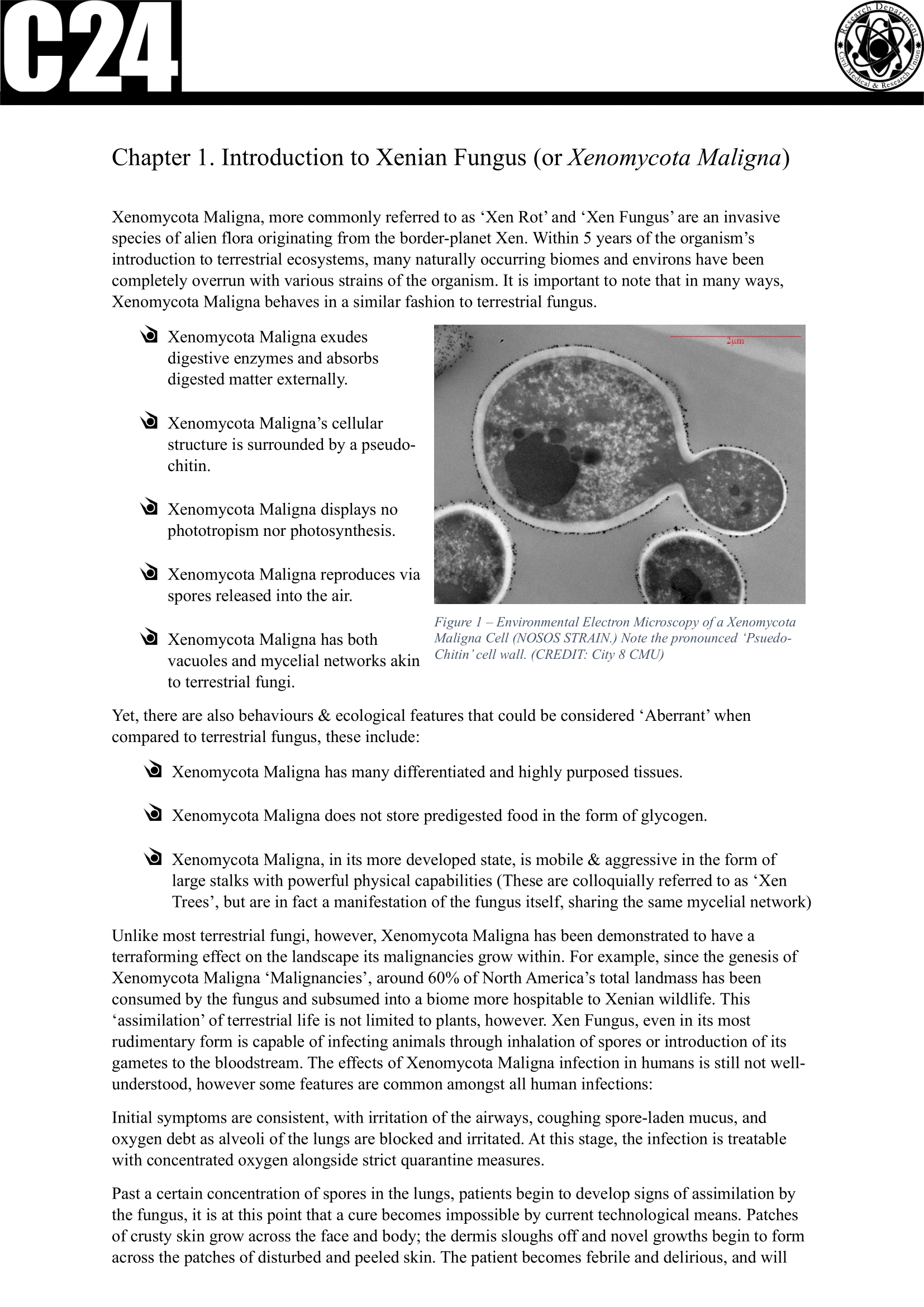
Xenomycota Maligna, more commonly referred to as ‘Xen Rot’ and ‘Xen Fungus’ are an invasive species of alien flora originating from the border-planet Xen. Within 5 years of the organism’s introduction to terrestrial ecosystems, many naturally occurring biomes and environs have been completely overrun with various strains of the organism. It is important to note that in many ways, Xenomycota Maligna behaves in a similar fashion to terrestrial fungus.
- Xenomycota Maligna exudes digestive enzymes and absorbs digested matter externally.
- Xenomycota Maligna’s cellular structure is surrounded by a pseudo-chitin.
- Xenomycota Maligna displays no phototropism nor photosynthesis.
- Xenomycota Maligna reproduces via spores released into the air.
- Xenomycota Maligna has both vacuoles and mycelial networks akin to terrestrial fungi.
- Xenomycota Maligna has many differentiated and highly purposed tissues.
- Xenomycota Maligna does not store predigested food in the form of glycogen.
- Xenomycota Maligna, in its more developed state, is mobile & aggressive in the form of large stalks with powerful physical capabilities (These are colloquially referred to as ‘Xen Trees’, but are in fact a manifestation of the fungus itself, sharing the same mycelial network)
Initial symptoms are consistent, with irritation of the airways, coughing spore-laden mucus, and oxygen debt as alveoli of the lungs are blocked and irritated. At this stage, the infection is treatable with concentrated oxygen alongside strict quarantine measures.
Past a certain concentration of spores in the lungs, patients begin to develop signs of assimilation by the fungus, it is at this point that a cure becomes impossible by current technological means. Patches of crusty skin grow across the face and body; the dermis sloughs off and novel growths begin to form across the patches of disturbed and peeled skin. The patient becomes febrile and delirious, and will typically attempt to seek aid, however the act of seeking aid at this point only poses a danger to others, who could be potentially infected by contact with the individual in advanced stages of infection. Strain upon the immune, respiratory, and circulatory system continue to increase as novel mycelial growth webs over the skin, digits deform into long stalks, vocal cords blossom into mushrooms as the patient chokes on cap growths in their trachea. Once the patient expires from Xen Rot, their biomass is digested from the inside out, creating a new hotspot for malignancy, typically far away from the original source.
It is believed that infection of animals is a core part of how Xenomycota Maligna spreads.
The effects of Xenomycota Maligna infection on the environment appear to precede and facilitate a variety of hostile Xenian Fauna, including Snarks, Headcrabs and larger, unclassified fauna, these fauna are typically highly territorial, forming a symbiotic relationship with the fungus in which the malignancy provides ideal breeding & feeding grounds, while the hostile Xenian fauna provides protection from predators (or infestation control workers, to stretch the analogy.)
Interestingly, Vortigaunts appear entirely unaffected by Xenian Malignancy, this is likely a result of their innate regenerative capacity and physical conditioning to hostile alien biomes (Earth included.) This makes Biotic assets ideal infestation control workers, as they are able to brave even significantly spore-polluted areas without fear of infection by the spores.
Differentiated Tissues
Mycelium (Webbing)
sMycelial Webbing is the primary and most common indicator of Xenian Malignancy. Present across all stages of development, this pale-white net of interlocking tendrils serves several unique purposes for the organism.Ecological Features
- Mycelia exude digestive enzymes capable of breaking down organic matter and some limited varieties of inorganic minerals.
- Mycelia contain vacuoles for the absorption of predigested matter.
- Mycelia act as the base and ‘root’ system for larger, more specialised growths.
- Mycelia transport signalling hormones throughout the structure of the infection and serve as the first line of immune defence when attacked by foreign pathogens.
Stromata (Erebus Clusters)
Erebus Clusters serve the function of energy storage and waste excretion of the malignancy. Large, purple-hued orbs form along the path of the mycelium, distributed at about 1 stroma per every 50 m2 of Mycelium.Ecological Features
- Stromata act as food storage for the malignancies in the form of exotic polysaccharide syrup (Colloquially referred to as ‘Erebus Mucus’.) It is yet unknown if these exotic polysaccharides are safe for human consumption, however they have been demonstrated to possess significant anti-inflammatory and immunostimulant qualities, making them useful for a variety of medical purposes.
- Nitrogenous pigments that are created as a byproduct of metabolic processes colour typical Xenomycota Maligna Stromata’s a deep purple hue.
- The prevalence and size of these clusters is a key indicator of the malignancy’s health and development, with them becoming far more common the further a strain develops.
Photostipites (Light Stalks)
Photostipites serve the biological purpose of Prey Attraction. By drawing nocturnal and crepuscular insects and small animals, the malignancy is able to capture & digest sufficiently small and defenceless fauna, providing a secondary method of feeding itself beyond the passive digestion and absorption of biomass its mycelium grows over.Ecological Features
- Photostipites are extremely sensitive to any touch, and as a result have a motion-sensitive retraction mechanism in which they pull away into a large chitinous sheath to prevent damage.
- The luminescent discharge at the bulb of the stalk is a result of metabolic byproducts in the digestion of the complex polysaccharides in the malignancy’s stroma.
- Photostipites produces significant heat alongside luminescence. Probe thermometers usually place Photostipites in its illuminated state at 45*C, with extremes of up to 70*C in extraordinarily advanced infections.
- While present in more advanced stages of infection, Photostipites are most common in Class I and II infections, where the quick acquisition of any available biomass is most important for the malignancy’s maturity.
- Photostipites are able to regulate the discharge of light and are seen to dim and even retract during periods of strong ambient illumination. This ensures that the lure potential of the stalk is maintained, and energy is not wasted
Nestiphyte (Tubers)
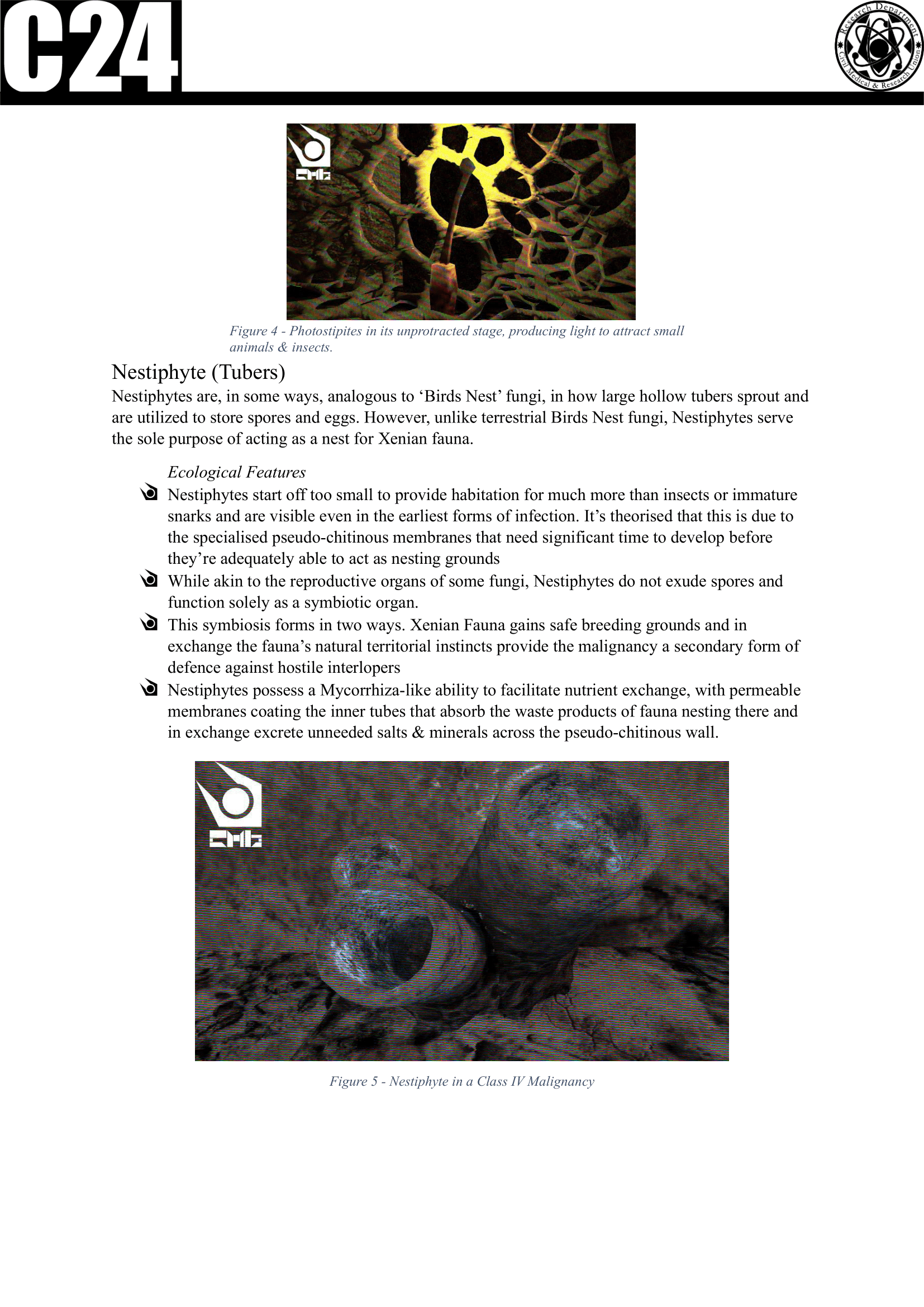
Nestiphytes are, in some ways, analogous to ‘Birds Nest’ fungi, in how large hollow tubers sprout and are utilized to store spores and eggs. However, unlike terrestrial Birds Nest fungi, Nestiphytes serve the sole purpose of acting as a nest for Xenian fauna.Ecological Features
- Nestiphytes start off too small to provide habitation for much more than insects or immature snarks and are visible even in the earliest forms of infection. It’s theorised that this is due to the specialised pseudo-chitinous membranes that need significant time to develop before they’re adequately able to act as nesting grounds
- While akin to the reproductive organs of some fungi, Nestiphytes do not exude spores and function solely as a symbiotic organ.
- This symbiosis forms in two ways. Xenian Fauna gains safe breeding grounds and in exchange the fauna’s natural territorial instincts provide the malignancy a secondary form of defence against hostile interlopers
- Nestiphytes possess a Mycorrhiza-like ability to facilitate nutrient exchange, with permeable membranes coating the inner tubes that absorb the waste products of fauna nesting there and in exchange excrete unneeded salts & minerals across the pseudo-chitinous wall.
Mycoflagellum (Xen Tree)
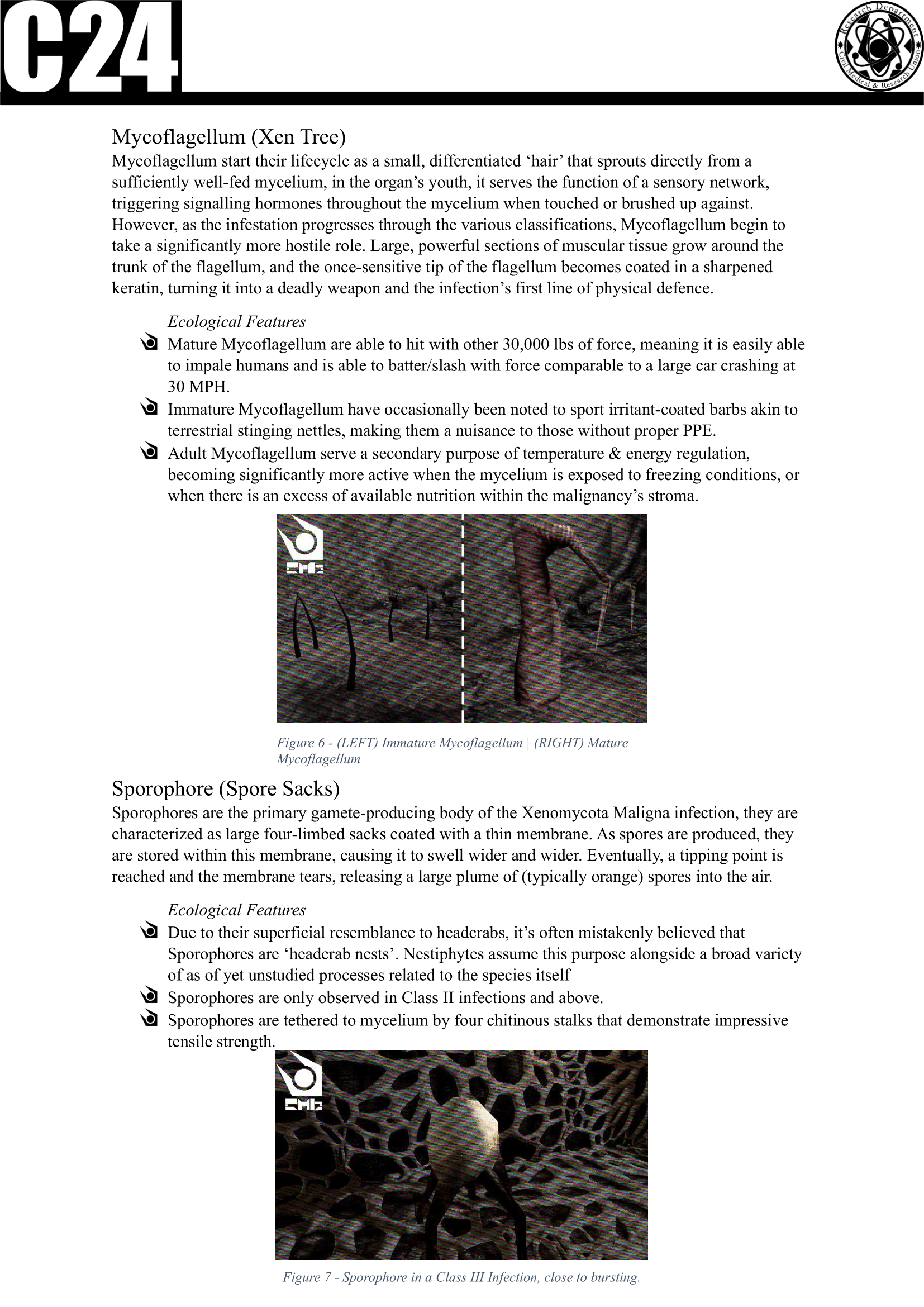
Mycoflagellum start their lifecycle as a small, differentiated ‘hair’ that sprouts directly from a sufficiently well-fed mycelium, in the organ’s youth, it serves the function of a sensory network, triggering signalling hormones throughout the mycelium when touched or brushed up against. However, as the infestation progresses through the various classifications, Mycoflagellum begin to take a significantly more hostile role. Large, powerful sections of muscular tissue grow around the trunk of the flagellum, and the once-sensitive tip of the flagellum becomes coated in a sharpened keratin, turning it into a deadly weapon and the infection’s first line of physical defence.Ecological Features
- Mature Mycoflagellum are able to hit with other 30,000 lbs of force, meaning it is easily able to impale humans and is able to batter/slash with force comparable to a large car crashing at 30 MPH.
- Immature Mycoflagellum have occasionally been noted to sport irritant-coated barbs akin to terrestrial stinging nettles, making them a nuisance to those without proper PPE.
- Adult Mycoflagellum serve a secondary purpose of temperature & energy regulation, becoming significantly more active when the mycelium is exposed to freezing conditions, or when there is an excess of available nutrition within the malignancy’s stroma.
Sporophore (Spore Sacks)
Sporophores are the primary gamete-producing body of the Xenomycota Maligna infection, they are characterized as large four-limbed sacks coated with a thin membrane. As spores are produced, they are stored within this membrane, causing it to swell wider and wider. Eventually, a tipping point is reached and the membrane tears, releasing a large plume of (typically orange) spores into the air.Ecological Features
- Due to their superficial resemblance to headcrabs, it’s often mistakenly believed that Sporophores are ‘headcrab nests’. Nestiphytes assume this purpose alongside a broad variety of as of yet unstudied processes related to the species itself
- Sporophores are only observed in Class II infections and above.
- Sporophores are tethered to mycelium by four chitinous stalks that demonstrate impressive tensile strength.
Stromatoform Embryo
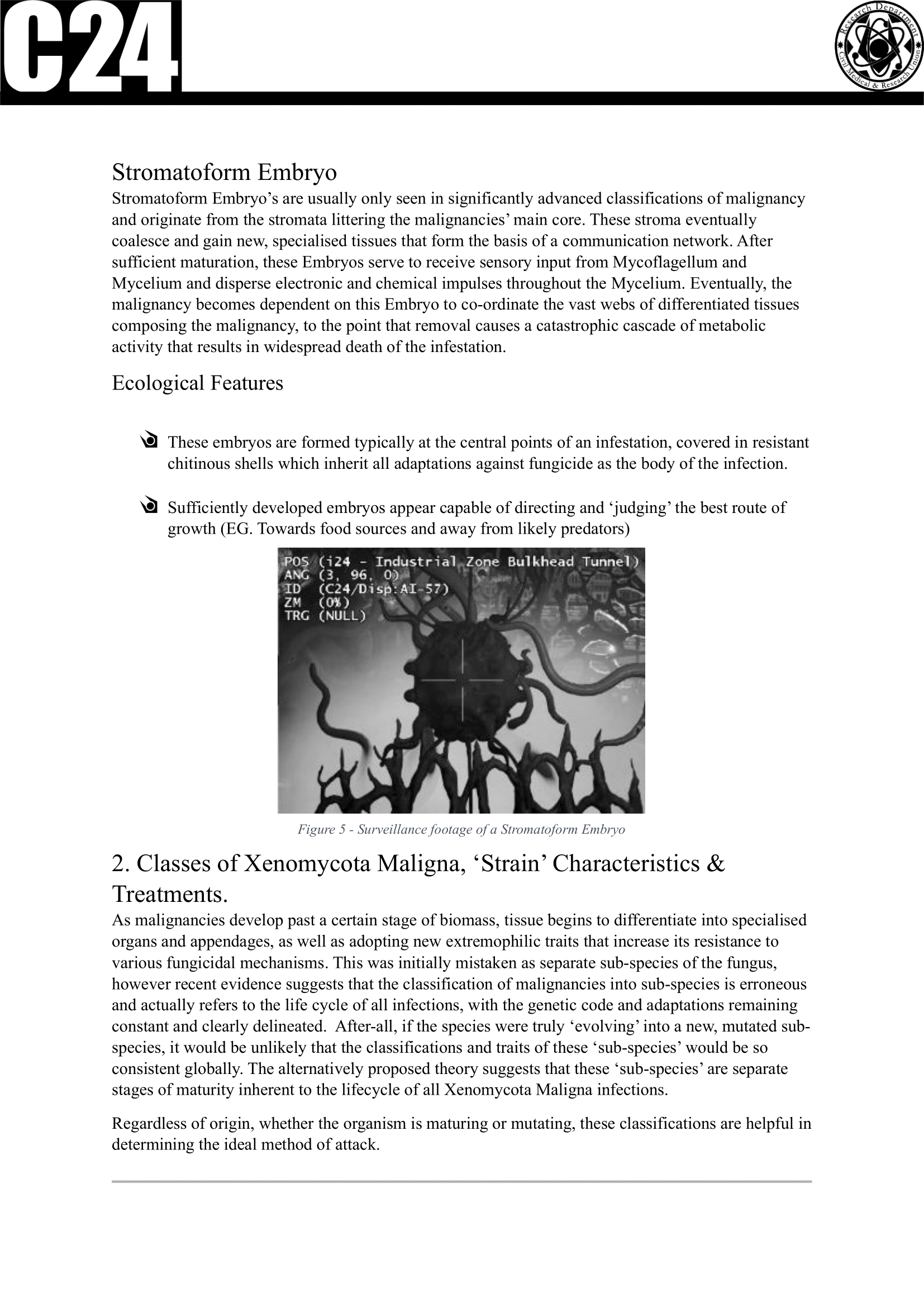
Stromatoform Embryo’s are usually only seen in significantly advanced classifications of malignancy and originate from the stromata littering the malignancies’ main core. These stroma eventually coalesce and gain new, specialised tissues that form the basis of a communication network. After sufficient maturation, these Embryos serve to receive sensory input from Mycoflagellum and Mycelium and disperse electronic and chemical impulses throughout the Mycelium. Eventually, the malignancy becomes dependent on this Embryo to co-ordinate the vast webs of differentiated tissues composing the malignancy, to the point that removal causes a catastrophic cascade of metabolic activity that results in widespread death of the infestation.Ecological Features
- These embryos are formed typically at the central points of an infestation, covered in resistant chitinous shells which inherit all adaptations against fungicide as the body of the infection.
- Sufficiently developed embryos appear capable of directing and ‘judging’ the best route of growth (EG. Towards food sources and away from likely predators)
2. Classes of Xenomycota Maligna, ‘Strain’ Characteristics & Treatments.
As malignancies develop past a certain stage of biomass, tissue begins to differentiate into specialised organs and appendages, as well as adopting new extremophilic traits that increase its resistance to various fungicidal mechanisms. This was initially mistaken as separate sub-species of the fungus, however recent evidence suggests that the classification of malignancies into sub-species is erroneous and actually refers to the life cycle of all infections, with the genetic code and adaptations remaining constant and clearly delineated. After-all, if the species were truly ‘evolving’ into a new, mutated sub-species, it would be unlikely that the classifications and traits of these ‘sub-species’ would be so consistent globally. The alternatively proposed theory suggests that these ‘sub-species’ are separate stages of maturity inherent to the lifecycle of all Xenomycota Maligna infections.Regardless of origin, whether the organism is maturing or mutating, these classifications are helpful in determining the ideal method of attack.
CLASS I – ‘EREBUS’
Class I infestations are malignancies in their most juvenile and benign form, typically presenting as a small web of mycelium with 1-2 stromata clusters. Class I infections do not produce spores, and thus pose minimal risk to infrastructure and life in the area, however it’s largely inadvisable to allow any malignancy to remain untreated, as it will eventually develop into a more severe and life-threatening malignancy.TRAITS:
| Mycelium | Present in limited quantities |
| Stromata | 2 or fewer present, >5 cm across |
| Photostipites | Absent |
| Nestiphyte | Absent |
| Mycoflagellum | Absent |
| Sporophore | Absent |
| Embryo | Absent |
| Fauna Symbiosis | Absent |
| Fungicidal Adaptations | Absent |
| Special Adaptations | Absent |
- Class I malignancies do not produce spores.
- Class I malignancies do not have differentiated tissues such as Xen Stalks or Bulbs
- Class I malignancies are not resistant to traditional fungicides.
TREATMENTS:
- The most common treatment for class I malignancies involves the application of a superheated hydrocarbon foam. This foam expands into the vacuoles of the mycelium webbing present, choking it of nutrients needed to grow as well as severely damaging the tissue.
- Erebus class malignancies are also susceptible to all other types of infestation control, they are the least resilient and most benign infection class.
TREATMENT FORMULARY - HYDROCARBON FOAM:
PER GALLONREQUIRED EQUIPMENT & REAGANTS:
Quantity | Prerequisite |
1 | Mixer |
5 | Ethanol |
1 | Adhesive |
2 | Unrefined Chemicals |
500 ml | Petroleum |
RECIPE:
- Start the chemical mixer at 70 degrees Centigrade, with a mixing speed of 120 RPM.
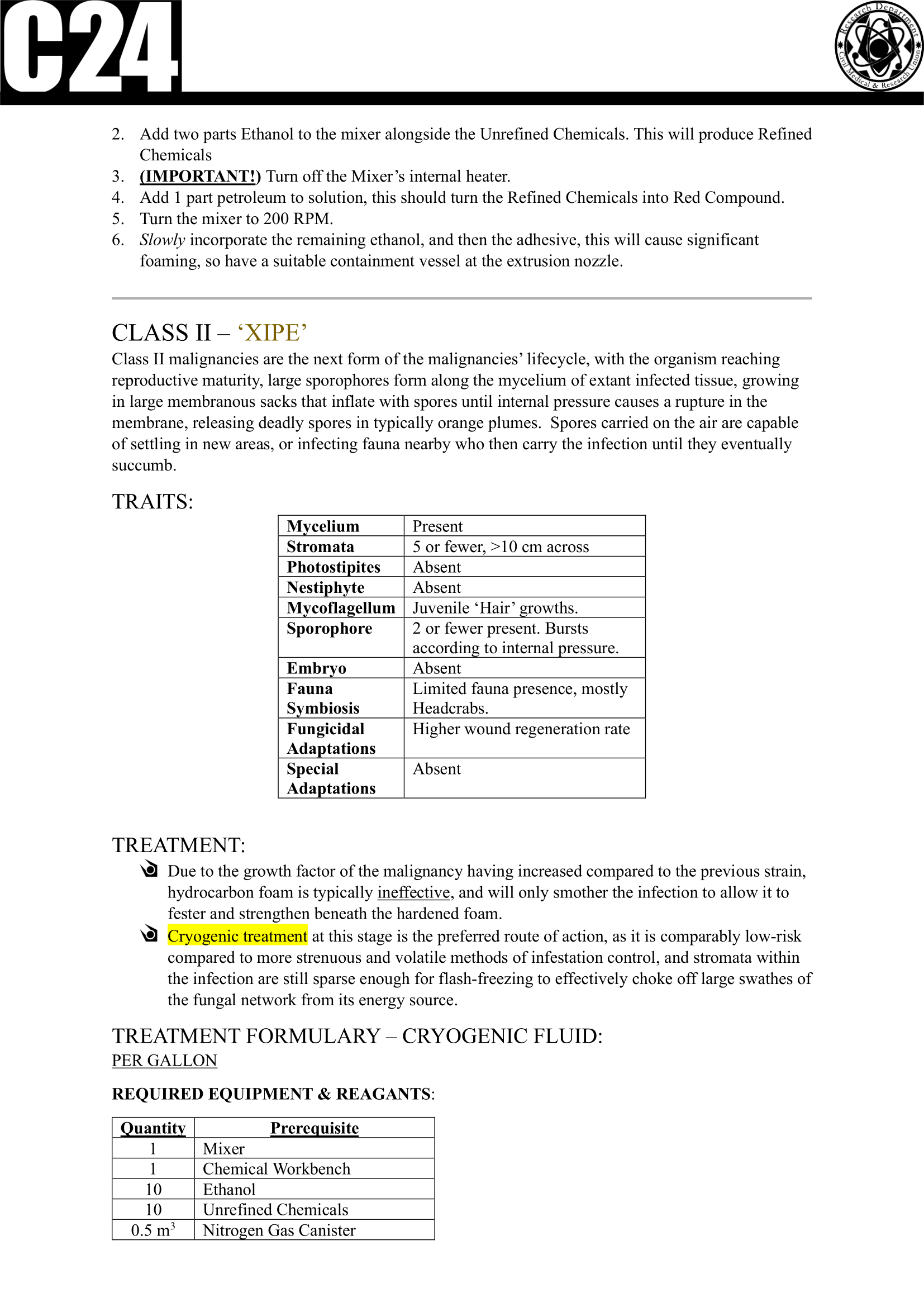
- Add two parts Ethanol to the mixer alongside the Unrefined Chemicals. This will produce Refined Chemicals
- (IMPORTANT!) Turn off the Mixer’s internal heater.
- Add 1 part petroleum to solution, this should turn the Refined Chemicals into Red Compound.
- Turn the mixer to 200 RPM.
- Slowly incorporate the remaining ethanol, and then the adhesive, this will cause significant foaming, so have a suitable containment vessel at the extrusion nozzle.
CLASS II – ‘XIPE’
Class II malignancies are the next form of the malignancies’ lifecycle, with the organism reaching reproductive maturity, large sporophores form along the mycelium of extant infected tissue, growing in large membranous sacks that inflate with spores until internal pressure causes a rupture in the membrane, releasing deadly spores in typically orange plumes. Spores carried on the air are capable of settling in new areas, or infecting fauna nearby who then carry the infection until they eventually succumb.TRAITS:
| Mycelium | Present |
| Stromata | 5 or fewer, >10 cm across |
| Photostipites | Absent |
| Nestiphyte | Absent |
| Mycoflagellum | Juvenile ‘Hair’ growths. |
| Sporophore | 2 or fewer present. Bursts according to internal pressure. |
| Embryo | Absent |
| Fauna Symbiosis | Limited fauna presence, mostly Headcrabs. |
| Fungicidal Adaptations | Higher wound regeneration rate |
| Special Adaptations | Absent |
TREATMENT:
- Due to the growth factor of the malignancy having increased compared to the previous strain, hydrocarbon foam is typically ineffective, and will only smother the infection to allow it to fester and strengthen beneath the hardened foam.
- Cryogenic treatment at this stage is the preferred route of action, as it is comparably low-risk compared to more strenuous and volatile methods of infestation control, and stromata within the infection are still sparse enough for flash-freezing to effectively choke off large swathes of the fungal network from its energy source.
TREATMENT FORMULARY – CRYOGENIC FLUID:
PER GALLONREQUIRED EQUIPMENT & REAGANTS:
Quantity | Prerequisite |
1 | Mixer |
1 | Chemical Workbench |
10 | Ethanol |
10 | Unrefined Chemicals |
0.5 m3 | Nitrogen Gas Canister |
RECIPE:
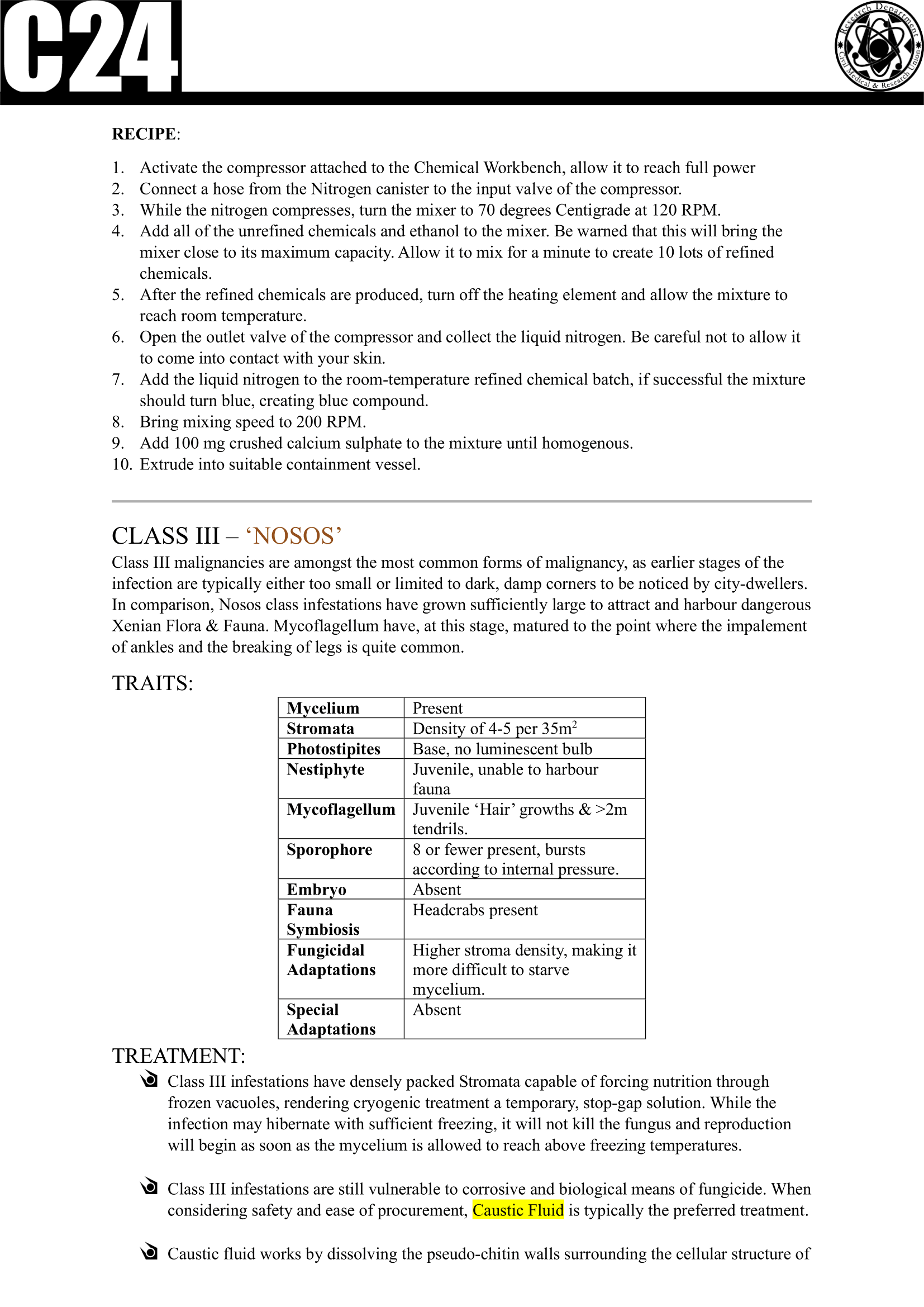
- Activate the compressor attached to the Chemical Workbench, allow it to reach full power
- Connect a hose from the Nitrogen canister to the input valve of the compressor.
- While the nitrogen compresses, turn the mixer to 70 degrees Centigrade at 120 RPM.
- Add all of the unrefined chemicals and ethanol to the mixer. Be warned that this will bring the mixer close to its maximum capacity. Allow it to mix for a minute to create 10 lots of refined chemicals.
- After the refined chemicals are produced, turn off the heating element and allow the mixture to reach room temperature.
- Open the outlet valve of the compressor and collect the liquid nitrogen. Be careful not to allow it to come into contact with your skin.
- Add the liquid nitrogen to the room-temperature refined chemical batch, if successful the mixture should turn blue, creating blue compound.
- Bring mixing speed to 200 RPM.
- Add 100 mg crushed calcium sulphate to the mixture until homogenous.
- Extrude into suitable containment vessel.
CLASS III – ‘NOSOS’
Class III malignancies are amongst the most common forms of malignancy, as earlier stages of the infection are typically either too small or limited to dark, damp corners to be noticed by city-dwellers. In comparison, Nosos class infestations have grown sufficiently large to attract and harbour dangerous Xenian Flora & Fauna. Mycoflagellum have, at this stage, matured to the point where the impalement of ankles and the breaking of legs is quite common.TRAITS:
| Mycelium | Present |
| Stromata | Density of 4-5 per 35m2 |
| Photostipites | Base, no luminescent bulb |
| Nestiphyte | Juvenile, unable to harbour fauna |
| Mycoflagellum | Juvenile ‘Hair’ growths & >2m tendrils. |
| Sporophore | 8 or fewer present, bursts according to internal pressure. |
| Embryo | Absent |
| Fauna Symbiosis | Headcrabs present |
| Fungicidal Adaptations | Higher stroma density, making it more difficult to starve mycelium. |
| Special Adaptations | Absent |
TREATMENT:
- Class III infestations have densely packed Stromata capable of forcing nutrition through frozen vacuoles, rendering cryogenic treatment a temporary, stop-gap solution. While the infection may hibernate with sufficient freezing, it will not kill the fungus and reproduction will begin as soon as the mycelium is allowed to reach above freezing temperatures.
- Class III infestations are still vulnerable to corrosive and biological means of fungicide. When considering safety and ease of procurement, Caustic Fluid is typically the preferred treatment.
- Caustic fluid works by dissolving the pseudo-chitin walls surrounding the cellular structure of
- the infection, causing internal organelles and cytoplasm to leak, causing cell death on a mass scale. It is primarily composed of Hydrochloric Acid suspended in an emulsion of Refined Chemicals, giving the solution a greenish tint.
PER GALLON
REQUIRED EQUIPMENT & REAGANTS:
Quantity | Prerequisite |
1 | Mixer |
5 | Ethanol |
5 | Unrefined Chemicals |
50 mg | Sodium Chloride |
200 g | Sand or similar silicate |
RECIPE:
- Turn the mixer to 70 degrees Centigrade at a mixing speed of 120 RPM
- Add 5 parts Ethanol to 5 parts Unrefined Chemical within the mixing vessel, ensure the contents are thoroughly combined to create Refined Chemicals
- Increase the heating element to 100 degrees Centigrade, lower the mixer speed to 50 RPM
- Slowly introduce the Sodium Chloride to the refined chemical solution, this should turn the solution into Green Compound
- Line an infestation control tank with 200 MG silicate (Sand is ideal, but other silica-based powders such as granite and finely crushed glass work.)
- Extrude the green compound into the infestation control barrel.
CLASS IV – ‘THANATOS’
TRAITS:
- Class IV malignancies are significantly advanced forms of malignancy that have grown numerous defence mechanisms against fungicide.
- Symbiosis with Xenian fauna is at it’s peak, with ‘Panthereyes’, Snarks and Headcrabs (as well as their victims) becoming extremely common. All of these species are to some degree or another territorial, and act as a natural defence mechanism atop the extremely hazardous and reactive fungal strain.
- It is at this stage that a centralized ‘nervous system’ is typically found in the form of an ‘Embryo’. A large cluster of stem-cells, synapses, and polysaccharide energy stores. Typically, this embryo is in fact several Stroma that have been compacted and forced into the role of a ‘brain’. While not entirely analogous to human nervous systems, this embryo has been shown to direct and adjust the malignancy in real time in response to threats.
| Mycelium | Present and highly dense |
| Stromata | Density of 7-8 per 35m2 |
| Photostipites | Active |
| Nestiphyte | Large enough to harbour Snarks & Headcrabs |
| Mycoflagellum | Juvenile ‘Hair’ growths & >4.5m tendrils. |
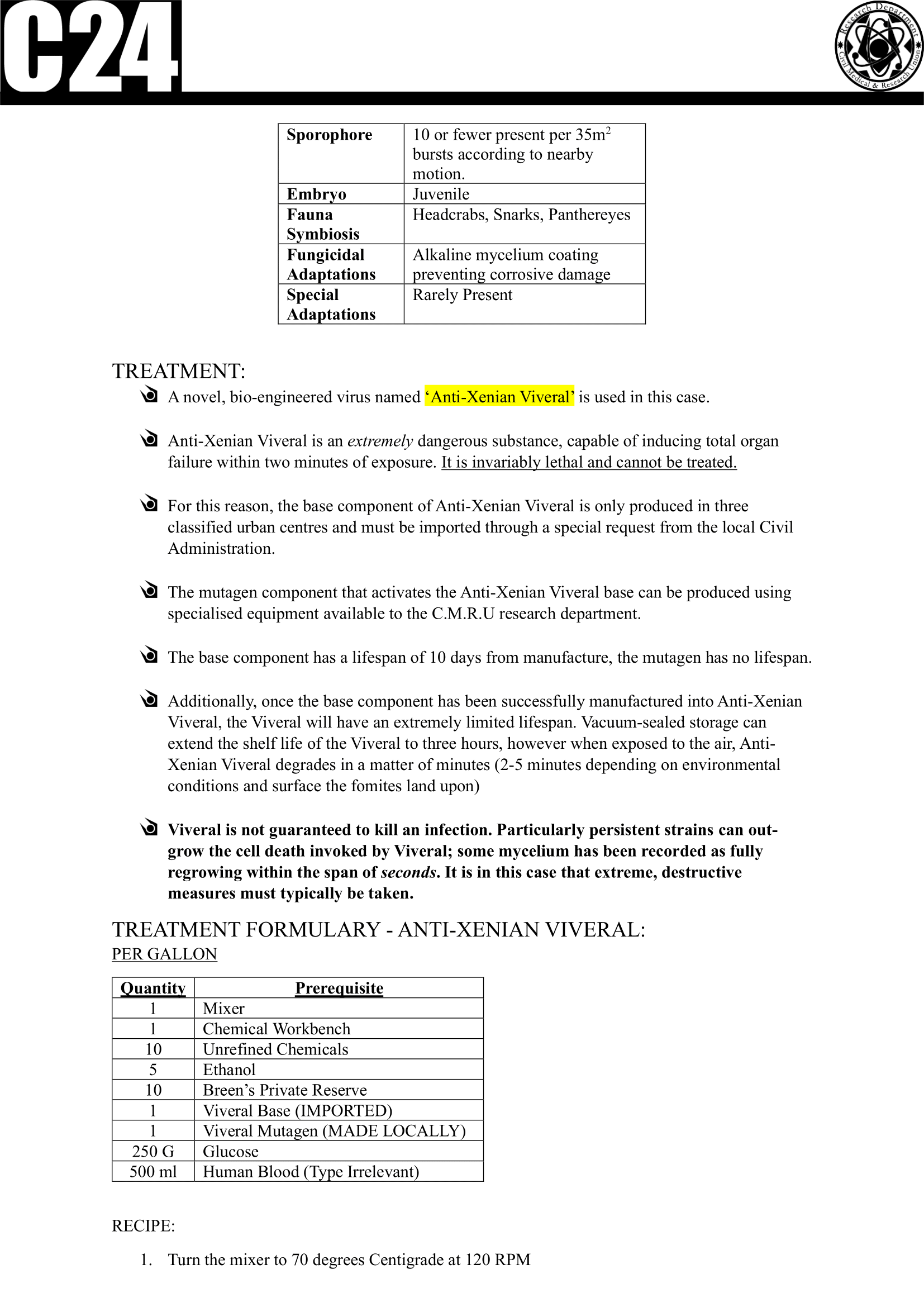
| Sporophore | 10 or fewer present per 35m2 bursts according to nearby motion. |
| Embryo | Juvenile |
| Fauna Symbiosis | Headcrabs, Snarks, Panthereyes |
| Fungicidal Adaptations | Alkaline mycelium coating preventing corrosive damage |
| Special Adaptations | Rarely Present |
TREATMENT:
- Class IV malignancies have mycelial webbing coated in a highly alkaline mucus, rendering Caustic Fluid less effective, creating large build-ups of basic foam around the areas of application, preventing further fluid from damaging the cells.
- Class IV malignancies, while inheriting all previous resistances of the preceding classes, are still vulnerable on a cellular basis to the damage caused by ionizing radiation and extreme heat
- Thermo-Radioactive compound is a solution of radioactive products suspended within a stabilizing solution. Crushed Uranium ore is mixed with Plutonium-238. Plutonium-238 generates heat as it decays, this heat is trapped within the compound and used as a secondary sterilizing method alongside the gamma radiation emitted by the Uranium-238 ore.
- From this class onwards, treatment is not guaranteed to be effective. Xenomycota malignancies are highly adaptable and have been demonstrated to be able to adapt to treatments within minutes of their application.
TREATMENT FORMULARY – THERMO-RADIOACTIVE SOLUTION:
PER GALLONQuantity | Prerequisite |
1 | Mixer |
10 | Unrefined Chemicals |
10 | Ethanol |
1 L | Petroleum |
100 G | Uranium Ore (U-238) |
50 G | Plutonium (P-238) |
250 G | Sodium Borate (Borax) |
RECIPE:
- Turn the mixer to 70 degrees centigrade at 120 RPM.
- Add 10 parts ethanol to the mixer.
- Incorporate 10 unrefined chemicals, this will bring the fill level close to capacity of the mixer. Allow to thoroughly incorporate into refined chemicals.
- Extrude the refined chemicals into a temporary 1 gallon holding vessel.
- Manually pour 1 litre of petroleum into the holding beaker, forming a gallon of red compound
- Pour half of the red compound into the mixer at 90 degrees centigrade at 200 RPM.
- Using appropriate PPE, crush the uranium ore into a powder and incorporate 50G U-238, 25G P-238, and finally top with 125 G Sodium Borate.
- Extrude into a containment vessel and repeat Steps 6-7 for the other half of the red compound.
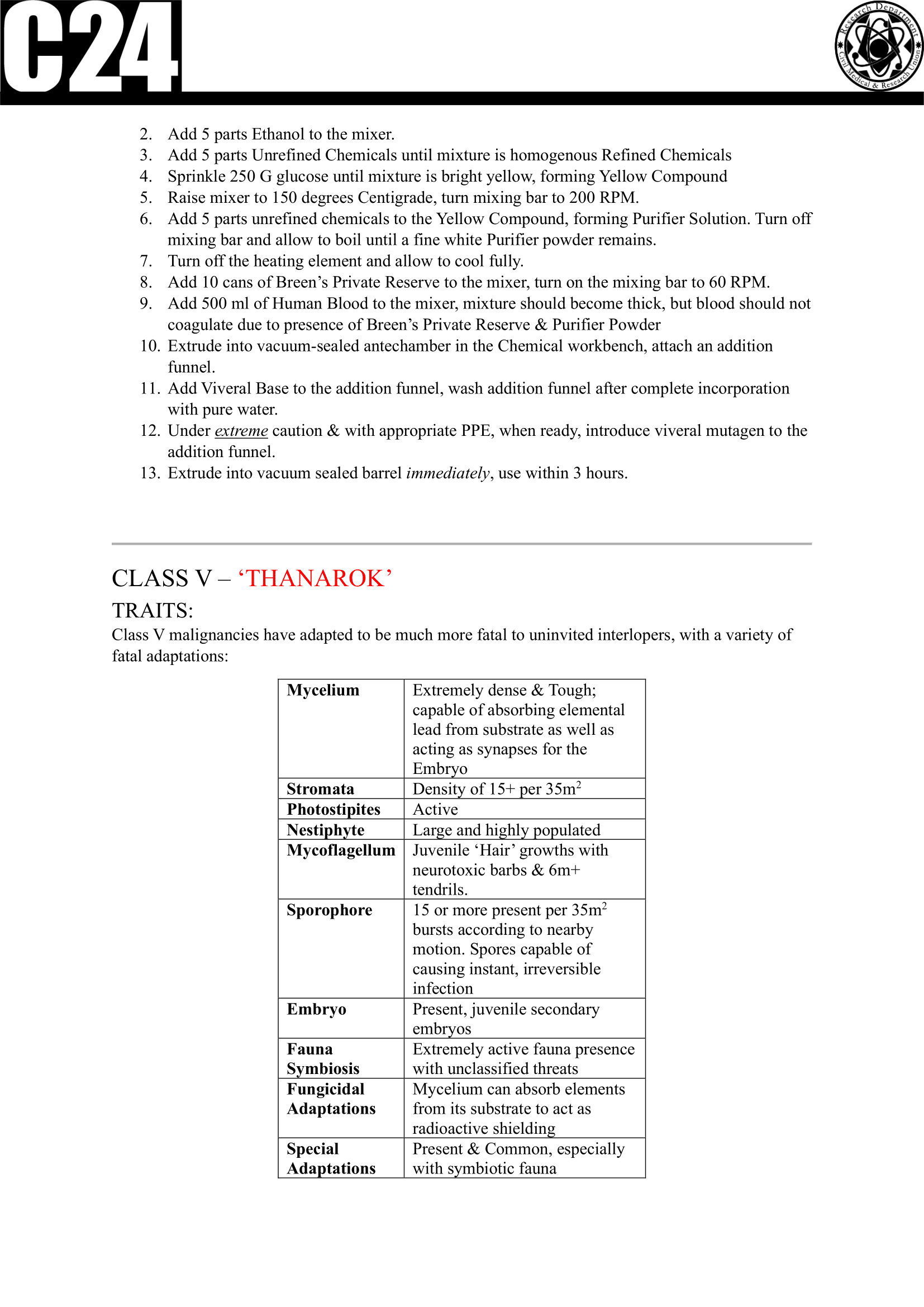
CLASS V – ‘THANAROK’
TRAITS:
Class V malignancies have adapted to be much more fatal to uninvited interlopers, with a variety of fatal adaptations:
| Mycelium | Extremely dense & Tough; capable of absorbing elemental lead from substrate as well as acting as synapses for the Embryo |
| Stromata | Density of 15+ per 35m2 |
| Photostipites | Active |
| Nestiphyte | Large and highly populated |
| Mycoflagellum | Juvenile ‘Hair’ growths with neurotoxic barbs & 6m+ tendrils. |
| Sporophore | 15 or more present per 35m2 bursts according to nearby motion. Spores capable of causing instant, irreversible infection |
| Embryo | Present, juvenile secondary embryos |
| Fauna Symbiosis | Extremely active fauna presence with unclassified threats |
| Fungicidal Adaptations | Mycelium can absorb elements from its substrate to act as radioactive shielding |
| Special Adaptations | Present & Common, especially with symbiotic fauna |
- Symbiotic enhancement of the fauna it has developed a mutualistic relationship with has also been observed (SEE: 4. Specialised Adaptations & Unknown Strains)
- Spores that are capable of producing irreversible infections with a single breath
- Mycelium that is capable of absorbing elements from the substrate it grows over and incorporating them as biological defence
- Besides these adaptations, the ‘embryo’ formed in class IV infestations becomes significantly more complex, appearing to prioritize growth to specific food sources and away from sources of predation, additionally, the infestation becomes dependent on the signalling hormones excreted by the embryo for continued survival. Some class V infestations have been observed to form secondary pseudo-embryos for redundancy purposes, ensuring that the infestation does not die completely if the primary embryo is removed.
TREATMENT:
- A novel, bio-engineered virus named ‘Anti-Xenian Viveral’ is used in this case.
- Anti-Xenian Viveral is an extremely dangerous substance, capable of inducing total organ failure within two minutes of exposure. It is invariably lethal and cannot be treated.
- For this reason, the base component of Anti-Xenian Viveral is only produced in three classified urban centres and must be imported through a special request from the local Civil Administration.
- The mutagen component that activates the Anti-Xenian Viveral base can be produced using specialised equipment available to the C.M.R.U research department.
- The base component has a lifespan of 10 days from manufacture, the mutagen has no lifespan.
- Additionally, once the base component has been successfully manufactured into Anti-Xenian Viveral, the Viveral will have an extremely limited lifespan. Vacuum-sealed storage can extend the shelf life of the Viveral to three hours, however when exposed to the air, Anti-Xenian Viveral degrades in a matter of minutes (2-5 minutes depending on environmental conditions and surface the fomites land upon)
- Viveral is not guaranteed to kill an infection. Particularly persistent strains can out-grow the cell death invoked by Viveral; some mycelium has been recorded as fully regrowing within the span of seconds. It is in this case that extreme, destructive measures must typically be taken not detailed in this manual.
TREATMENT FORMULARY - ANTI-XENIAN VIVERAL:
PER GALLONQuantity | Prerequisite |
1 | Mixer |
1 | Chemical Workbench |
10 | Unrefined Chemicals |
5 | Ethanol |
10 | Breen’s Private Reserve |
1 | Viveral Base (IMPORTED) |
1 | Viveral Mutagen (MADE LOCALLY) |
250 G | Glucose |
500 ml | Human Blood (Type Irrelevant) |
RECIPE:
- Turn the mixer to 70 degrees Centigrade at 120 RPM
- Add 5 parts Ethanol to the mixer.
- Add 5 parts Unrefined Chemicals until mixture is homogenous Refined Chemicals
- Sprinkle 250 G glucose until mixture is bright yellow, forming Yellow Compound
- Raise mixer to 150 degrees Centigrade, turn mixing bar to 200 RPM.
- Add 5 parts unrefined chemicals to the Yellow Compound, forming Purifier Solution. Turn off mixing bar and allow to boil until a fine white Purifier powder remains.
- Turn off the heating element and allow to cool fully.
- Add 10 cans of Breen’s Private Reserve to the mixer, turn on the mixing bar to 60 RPM.
- Add 500 ml of Human Blood to the mixer, mixture should become thick, but blood should not coagulate due to presence of Breen’s Private Reserve & Purifier Powder
- Extrude into vacuum-sealed antechamber in the Chemical workbench, attach an addition funnel.
- Add Viveral Base to the addition funnel, wash addition funnel after complete incorporation with pure water.
- Under extreme caution & with appropriate PPE, when ready, introduce viveral mutagen to the addition funnel.
- Extrude into vacuum sealed barrel immediately, use within 3 hours.
CLASS VI – ‘EXTINCTION’
TRAITS:- Only one Class VI malignancy exists, on the west coast of Northern America, now labelled as the ‘Xen Exclusion Zone’. This zone consists of one organism that has spread throughout the landmass of entire countries, terraforming the environment to one that is akin to the surface of the border planet Xen.
- A lack of cogent information on this infestation class is noted, mostly due to the fact that manned expeditionary teams rarely break through the outer layer of infestation before succumbing to the dangers within
- Infestation control with these classes of infestation usually involve the efforts of more than a single urban centre, and are typically not the concern of local infestation control teams
No theoretical models exist for the widespread treatment of a Class VI malignancy, and any that are currently used are a closely guarded secret.
3. Infestation Control Equipment and Procedures
Infestation Control Equipment
Infestation Control Vessel
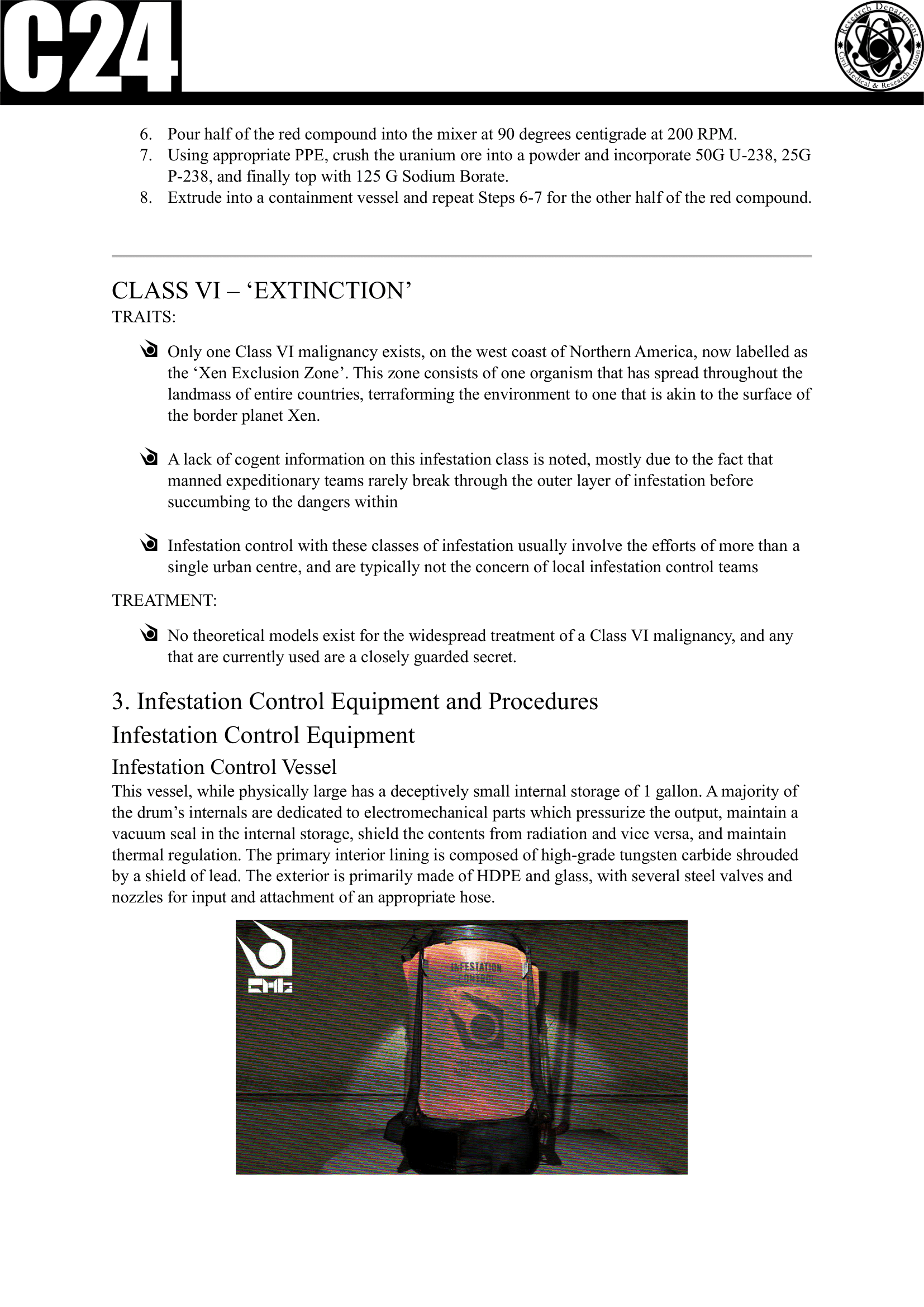
This vessel, while physically large has a deceptively small internal storage of 1 gallon. A majority of the drum’s internals are dedicated to electromechanical parts which pressurize the output, maintain a vacuum seal in the internal storage, shield the contents from radiation and vice versa, and maintain thermal regulation. The primary interior lining is composed of high-grade tungsten carbide shrouded by a shield of lead. The exterior is primarily made of HDPE and glass, with several steel valves and nozzles for input and attachment of an appropriate hose.Applicator Nozzle
The applicator nozzle is a metal pump and valve system that is contained within a shaft about the size of a forearm. The metal prongs shrouding the emission valve prevent accidental backflow into the applicator and provide a limited amount of protection to the user’s hands by emitting pressurised air downstream of the dispenser. Dispensing of the solution inside is operated by a trigger, with a flow-rate valve right above it to change the rate at which solution is dispensed.Barrel Hose
The barrel hose is made of a non-reactive polymer, with several failsafe valves at either end to ensure material does not flow from the tube in the case of accidental disconnection.HAZMAT Suit
Standard issue Infestation HAZMATs are made of three layers of Teflon and PVC, making the suit puncture and tear resistant, however they are not immune to sharp and penetrating objects like those found at the tip of a mature Mycoflagellum (or similar sharp blades). An oxygen tank on the back is connected to the suit via attachment hose and contains 30 minutes of oxygen. Standard issue HAZMATs are keyed to be able to pass through field restrictors toggled to ‘Infestation Control’ mode.Infestation Detector
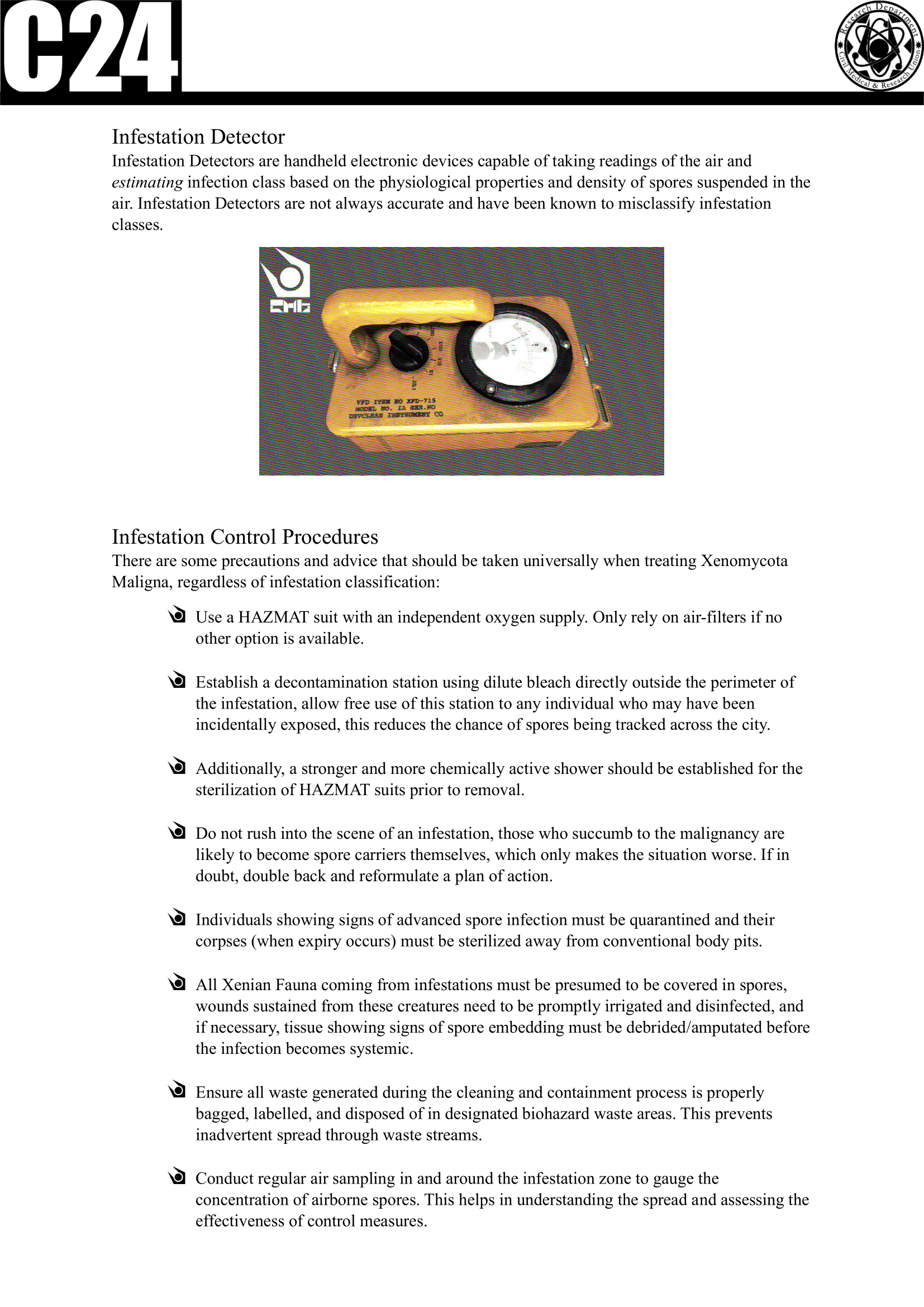
Infestation Detectors are handheld electronic devices capable of taking readings of the air and estimating infection class based on the physiological properties and density of spores suspended in the air. Infestation Detectors are not always accurate and have been known to misclassify infestation classes.Infestation Control Procedures
There are some precautions and advice that should be taken universally when treating Xenomycota Maligna, regardless of infestation classification:- Use a HAZMAT suit with an independent oxygen supply. Only rely on air-filters if no other option is available.
- Establish a decontamination station using dilute bleach directly outside the perimeter of the infestation, allow free use of this station to any individual who may have been incidentally exposed, this reduces the chance of spores being tracked across the city.
- Additionally, a stronger and more chemically active shower should be established for the sterilization of HAZMAT suits prior to removal.
- Do not rush into the scene of an infestation, those who succumb to the malignancy are likely to become spore carriers themselves, which only makes the situation worse. If in doubt, double back and reformulate a plan of action.
- Individuals showing signs of advanced spore infection must be quarantined and their corpses (when expiry occurs) must be sterilized away from conventional body pits.
- All Xenian Fauna coming from infestations must be presumed to be covered in spores, wounds sustained from these creatures need to be promptly irrigated and disinfected, and if necessary, tissue showing signs of spore embedding must be debrided/amputated before the infection becomes systemic.
- Ensure all waste generated during the cleaning and containment process is properly bagged, labelled, and disposed of in designated biohazard waste areas. This prevents inadvertent spread through waste streams.
- Conduct regular air sampling in and around the infestation zone to gauge the concentration of airborne spores. This helps in understanding the spread and assessing the effectiveness of control measures.
- Never work alone. If you are the last individual in an infestation control team standing, it is imperative to retreat and re-assess. For safety, Infestation Control teams should work with a minimum of four individuals so that if an individual is incapacitated, there are enough workers to extricate and rescue the injured individual.
- Avoid using highly volatile or explosive infestation control methods in confined spaces where cave-in could occur as a result of the selected treatment. A cave-in will not kill the infection and will give it artificial cover in the form of concrete debris, making it significantly more difficult to deal with.
4. Specialised adaptations & Unknown Strains
Specialised adaptations refer to unique characteristics displayed by the infection. These are most typically found in class IV and above infections, where the organism has had sufficient time to grow and adapt to it’s surroundings.Camouflage
Camouflage has been observed in several species of infestation in C24 43 and elsewhere. Initial examination of the cells under microscope indicates that the chitinous cell wall is coated with reflectins, small mirror-like organelles that coat the outside of the cell wall and refract light around the cell in a way that appears to make the organism ‘invisible’, or at least, heavily obscured. Reports show that creatures living symbiotically within infestations that have developed camouflaging capabilities often make use of this by coating themselves in the spores and mycelium of the infestation. This in turn grants the fauna a limited ‘cloaking’ capacity, making them harder to see.
Leman Strain
The Leman Strain, named after the harbour-gate in Industrial 24 it resided within, is a unique and unclassifiable infestation. Its exhibited traits indicate an infestation severity between class IV and class V, yet what appears to be unique about this strain is it’s unusual tenacity and mutagenic properties. The Leman malignancy was initially detected at Class III and had proceeded to mutate through the next two classes within a matter of days; with its Stromatoform Embryo maturing from stroma into adult and active embryo in an astonishing 6 hours. The current theory behind this accelerated metabolic activity states that the unique chemical waste and byproduct extant around the Leman Harbor is precisely what fuelled and forced the rapid cellular mutation and division of the infection. As of writing, the Leman strain remains an extant threat to Industrial 24 and is growing rapidly. Addendums to this strain will be produced as more is discovered about the Leman strain.







Last edited: