M
Merlinsclaw
Guest
- Thread Author
- #1
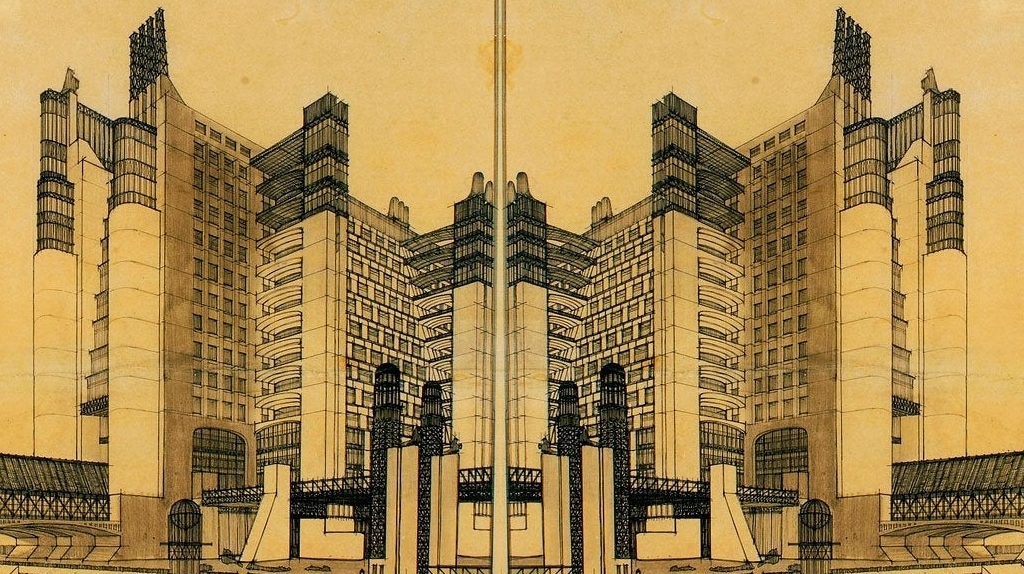

Rome-- A city known for two and a half millennia as the birthplace of a distinct culture, people, language, and Empire. The effects that Rome had on Humanity as a whole are undeniable. For two and a half millennia the legacy of Rome, in part, remained intact. Yet, in a mere 12 years the entire history of a nation and people has been unraveled and rebuilt.
Rome, now known as the City No. 32, is an urban center that at the time plays a prominent role in world politics. A large nexus towers over the center of the city, stationed near the vital Trainyards, while the heart of government is slightly south-west near the old Roman Forum and Colosseum. The city itself is lacking in a proper military. Low numbers of Metropolice and Transhumans are instead compensated by vicious loyalist militia titled "The Futurist Force." Meanwhile, the Peninsula itself is protected by legions of voluntary soldiers and penal battalions, ordered in part by the Administration. Despite the numbers, Rome itself is relatively stable in part to its ideology and history.
Rome, no stranger to triumph and loss as with the legacy of the Roman Empire and its fascist roots, was particularly rich in its culture preceding the Combine Invasion. Yet, in 2001 with the Xenian Invasion of Earth, the Italian Peninsula fell into chaos. Along with most of the world, Italian cities were flooded with refugees and chaos ensued. For three grueling years though, the nation endured.
In the after-math of the Xenian Invasion of Earth the "War of Unification" began. In seven hours, an Eldritch Empire had secured Earth and Rome itself was devastated from extended fighting and bombing by invading Synthetic forces. In the year and a half following the War, Rome itself was still in a state of ruin. Monuments were destroyed, entire districts bombed out, and rail lines ripped up. The ineffective and corrupt bureaucracy that existed in Italy prior to the war persisted until the Culling essentially eliminated the ruling administration.
From inside the government, a lowly bureaucrat turned demagogue was ascended to the position of City Administrator-- Silvio Casto. Casto utilized unconventional methods to maintain the occupation. Instead of streamlining a "Loyalist System" like much of the World, he instead opted for voluntary programs to help rebuild the City. Programs such as Militias to keep the population in line, Construction Unions, and Artist Associations. These Loyalists ultimately saw what good Casto had done, and a Cult of Personality began to form.
Yet as time went on the ruling government was posed with the question of how to rebuild the city. Conservationists argued for the reconstruction of how it was, while a new, intellectual class born from the voluntary programs Casto ordered argued for a new 'style'-- Only that would ultimately fall in line with the Benefactors. And so, Futurism was born. The Reconstruction of Rome not only came in the style of new architecture. It came in new film, literature, art, music, food, and more. The ever-more radicalized intellectual class demanded the demolition or reconstruction of old monuments and blocks. They built new ones overtop the old graves in the images of Speed, Industry, Youth, Machinery, Progress, and Violence.
After years of construction, violence, and the recreation of the City in a new image Futurism had 'succeeded' in Rome. Large Loyalists Communes were created in the inner-city, where philosophers sat and drank, wrote, and ate from their gardens. A inpart hedonistic lifestyle that came from artistic, political, and social roots. Yet the road to this upper-class Loyalism would not so easy. Loyalism came through voluntary enlistment within political movements and militias such as the Futurist Force, who would brutalize the outcasts of the city and rampage in the slums. Meanwhile, the general population dubbed 'Conformists', nor loyalist nor anti-civil or outcasted, were kept entranced through glamorized displays of violent propaganda such as the Gladiatorial Battles between man and Xenian beast in the rebuilt Futurist Colosseum.
While Futurism to some is a glamorous display of Utopian Loyalism, to others it is a harsh and violent display of occupational dystopic conditions. The City itself suffers from a lack of hard resources, which it has instead obtained from Allied Futurist cities, and a failed 'Weather Project' has devastated parts of Northern and Eastern Italy. The project resulted in a massive eternal storm near Lorviono and killed parts of the countryside. Despite this, the Apennine Mountains have prevented further devastation inland and Rome itself has come out mostly unharmed rather than frequent Earthquakes.
Current Events:
Despite this, Rome itself continues to hold a position on the world stage and particularly in the Mediterranean. In recent weeks, Casto has vowed to carry the movement North and secure the unstable Cities of Northern Europe with Futurism.