

George
Willard Networks Whistleblower
- Joined
- Nov 19, 2021
- Messages
- 1,550
- Thread Author
- #1

Part 1: Spiral Dynamics Stages 1-3
Moving forward from the red stage in Spiral Dynamics, which is characterized by ego-driven force and aggression, we encounter the next stages in the spiral’s development.
To recap, the red stage represents a phase where raw power and individualistic dominance prevail, often manifesting in anti-social behavior* patterns typical of adolescents, interactions among criminals, or within highly aggressive societal structures such as prisons, organized crime syndicates like the mafia or Yakuza, and militant groups. This stage is marked by a survivalist mentality where strength and control are paramount.
*Note: The term “anti-social behavior” refers to actions that harm or lack consideration for the well-being of others, often violating social norms and laws. This is different from “asocial” behavior, which describes a lack of interest in social interactions. Anti-social behavior frequently emerges in contexts such as prison populations and among young males, manifesting as aggression, theft, or other disruptive activities.
As individuals or groups transition from these red stage environments—such as moving from adolescence to adulthood, or from criminal activities to lawful societal roles—they face a significant transformational dilemma. The challenge lies in moving from a life governed by raw, unchecked power to one that integrates more complex, organized, and socially cohesive structures. This movement reflects a broader maturation process where previous modes of operation become insufficient for achieving long-term success and harmony.
Stage Blue: Order

The next stage in Spiral Dynamics is the blue stage, often associated with traditionalism, rule-based order, and stability. Here, the emphasis shifts from individual power to collective structure. Societies and individuals operating at this level seek to establish law, order, and a sense of duty, often guided by religious or ideological doctrines.
Characteristics: The blue stage is defined by a rigid adherence to rules and a belief in a higher power or cause. It values discipline, loyalty, and moralistic codes.
Examples: This stage can be seen in highly structured institutions such as the military, religious organizations, and bureaucratic systems. It promotes societal cohesion through shared beliefs and a common purpose.
Characteristics: The blue stage is defined by a rigid adherence to rules and a belief in a higher power or cause. It values discipline, loyalty, and moralistic codes.
Examples: This stage can be seen in highly structured institutions such as the military, religious organizations, and bureaucratic systems. It promotes societal cohesion through shared beliefs and a common purpose.
Transitioning Between Stages
Transitioning from one stage to another often involves significant psychological and social shifts. For instance, moving from the red stage to the blue stage requires relinquishing a focus on personal power in favor of collective order and moral codes. Similarly, advancing from the blue stage to the orange stage involves embracing individualism and rationality, while moving from orange to green necessitates a shift towards communal values and environmental consciousness.
Each stage in Spiral Dynamics builds upon the previous one, integrating new values and worldviews while addressing the limitations of earlier stages. This developmental model highlights the dynamic and evolving nature of human consciousness and societal structures, illustrating how individuals and groups navigate complex transformational dilemmas to achieve higher levels of integration and complexity.
In our exploration of Spiral Dynamics, we move to the blue stage, a pivotal transition from the raw individualism and aggression of the red stage. As Machiavelli* illustrates in his analysis of the Roman Empire, societal cohesion is often achieved through the implementation of binding principles, particularly religious ones. The Romans, known for their warrior ethos, managed to channel their aggressive instincts into a cohesive force through the unifying power of religion. This curbing of aggression allowed for the expansion and stability of the Roman Empire, demonstrating the importance of overarching principles in maintaining social order.
*Note: Niccolò Machiavelli (1469-1527) was an Italian Renaissance political philosopher and historian, best known for his works “The Prince” and “Discourses on Livy.” In his analysis of political power and governance, Machiavelli emphasized the importance of strong, cohesive leadership and the use of binding principles, such as laws and religious doctrines, to maintain order and control within a society. His observations on the Roman Empire highlight how effective governance relies on unifying structures to curb individual aggression and promote collective stability.
Each stage in Spiral Dynamics builds upon the previous one, integrating new values and worldviews while addressing the limitations of earlier stages. This developmental model highlights the dynamic and evolving nature of human consciousness and societal structures, illustrating how individuals and groups navigate complex transformational dilemmas to achieve higher levels of integration and complexity.
In our exploration of Spiral Dynamics, we move to the blue stage, a pivotal transition from the raw individualism and aggression of the red stage. As Machiavelli* illustrates in his analysis of the Roman Empire, societal cohesion is often achieved through the implementation of binding principles, particularly religious ones. The Romans, known for their warrior ethos, managed to channel their aggressive instincts into a cohesive force through the unifying power of religion. This curbing of aggression allowed for the expansion and stability of the Roman Empire, demonstrating the importance of overarching principles in maintaining social order.
*Note: Niccolò Machiavelli (1469-1527) was an Italian Renaissance political philosopher and historian, best known for his works “The Prince” and “Discourses on Livy.” In his analysis of political power and governance, Machiavelli emphasized the importance of strong, cohesive leadership and the use of binding principles, such as laws and religious doctrines, to maintain order and control within a society. His observations on the Roman Empire highlight how effective governance relies on unifying structures to curb individual aggression and promote collective stability.
Stage Blue: The Emergence of Order and Stability
The blue stage, often referred to as the stage of order and stability, marks the introduction of structured, rule-based societies. At this stage, religion—or more broadly, any binding principle—plays a crucial role. The term “religious” should be understood in its etymological sense of “binding” (from the Latin religare), signifying the unifying force that brings individuals together into a collective order. This could be institutional religion or any grand narrative that serves to integrate individual actions into a coherent societal framework
Characteristics of Blue
Adherence to Rules: The blue stage emphasizes strict adherence to laws, traditions, and moral codes. These rules provide a clear framework within which individuals operate, reducing chaos and promoting stability.
Collectivism over Individualism: Unlike the red stage, where personal power and individualism dominate, the blue stage prioritizes the collective good. The needs and goals of the group take precedence over individual desires.
Moral and Ethical Guides: Societies at this stage often derive their moral and ethical frameworks from religious or ideological texts, which provide guiinterplay on how to live and interact with others.
Hierarchy and Authority: There is a clear hierarchy within blue stage societies, with defined roles and responsibilities. Authority is respected and often seen as divinely or ideologically ordained.
Collectivism over Individualism: Unlike the red stage, where personal power and individualism dominate, the blue stage prioritizes the collective good. The needs and goals of the group take precedence over individual desires.
Moral and Ethical Guides: Societies at this stage often derive their moral and ethical frameworks from religious or ideological texts, which provide guiinterplay on how to live and interact with others.
Hierarchy and Authority: There is a clear hierarchy within blue stage societies, with defined roles and responsibilities. Authority is respected and often seen as divinely or ideologically ordained.
Examples of Blue
Historical: The Roman Empire under the influence of state religion, medieval Europe with its feudal system and Christian doctrine, or ancient China with Confucianism as a guiding philosophy.
Modern: Contemporary examples can be found in countries or communities where religious laws strongly influence daily life and governance, or in institutions like the military, where discipline and hierarchy are paramount.
Modern: Contemporary examples can be found in countries or communities where religious laws strongly influence daily life and governance, or in institutions like the military, where discipline and hierarchy are paramount.
The Binding Function of Religion and Grand Narratives
The blue stage relies on grand narratives—comprehensive and overarching stories or doctrines that provide meaning and direction to life. These narratives help to bind individuals together, creating a sense of belonging and purpose that transcends personal ambition.
Religious and Ideological Narratives: These narratives might be religious, such as the teachings of Christianity, Islam, or Buddhism, or they could be secular ideologies like Marxism or nationalism. The key is that they offer a shared framework for understanding the world and one’s place in it.
Regulation of Behavior: By providing clear guidelines on acceptable behavior, these narratives help to curb the aggressive and self-centered tendencies of the red stage. This regulation is essential for maintaining social harmony and order.
Transformational Challenge: Moving from the red to the blue stage involves a significant shift from individualistic to collectivistic thinking. This transition can be challenging as it requires individuals to subordinate their personal desires to the rules and goals of the group.
Education and Socialization: Individuals are often introduced to the blue stage through formal education, religious instruction, or socialization within communities that value order and tradition.
Institutional Structures: The establishment of institutions (religious, educational, legal) that embody and enforce the rules and narratives of the blue stage is crucial for this transition.
Religious and Ideological Narratives: These narratives might be religious, such as the teachings of Christianity, Islam, or Buddhism, or they could be secular ideologies like Marxism or nationalism. The key is that they offer a shared framework for understanding the world and one’s place in it.
Regulation of Behavior: By providing clear guidelines on acceptable behavior, these narratives help to curb the aggressive and self-centered tendencies of the red stage. This regulation is essential for maintaining social harmony and order.
Transformational Challenge: Moving from the red to the blue stage involves a significant shift from individualistic to collectivistic thinking. This transition can be challenging as it requires individuals to subordinate their personal desires to the rules and goals of the group.
Education and Socialization: Individuals are often introduced to the blue stage through formal education, religious instruction, or socialization within communities that value order and tradition.
Institutional Structures: The establishment of institutions (religious, educational, legal) that embody and enforce the rules and narratives of the blue stage is crucial for this transition.
Stage Blue and the Social Contract
This stage in Spiral Dynamics not only aligns with historical developments but also reflects a deeper psychological and philosophical evolution in human societies. The emergence of organized religion during this period serves as a binding contract, akin to social contract theories espoused by thinkers like Thomas Hobbes.
The blue stage’s emergence coincides with the rise of organized religion, which can be understood as a form of social contract. This contract functions to curtail the anarchic and competitive behaviors characteristic of earlier stages, transforming them into a collective ethos underpinned by a higher principle or deity.
Thomas Hobbes, in his seminal work Leviathan, describes the state of nature as a “war of all against all” (bellum omnium contra omnes). In this anarchic condition, individuals act solely based on their self-interest, leading to constant conflict and insecurity. To escape this chaos, individuals enter into a social contract, surrendering certain freedoms in exchange for security and order provided by a sovereign power, which Hobbes metaphorically names the Leviathan.
The blue stage’s emergence coincides with the rise of organized religion, which can be understood as a form of social contract. This contract functions to curtail the anarchic and competitive behaviors characteristic of earlier stages, transforming them into a collective ethos underpinned by a higher principle or deity.
Thomas Hobbes, in his seminal work Leviathan, describes the state of nature as a “war of all against all” (bellum omnium contra omnes). In this anarchic condition, individuals act solely based on their self-interest, leading to constant conflict and insecurity. To escape this chaos, individuals enter into a social contract, surrendering certain freedoms in exchange for security and order provided by a sovereign power, which Hobbes metaphorically names the Leviathan.
Transformation from Tribe to God
In earlier stages like purple, social cohesion was achieved through tribal affiliations and the signifier of the tribe. As societies evolved into the red stage, the focus shifted to the ego and personal power. The blue stage marks a further shift, where the signifier becomes God, representing an omnipotent, overarching principle that unifies society under a collective moral and legal framework.
In Western contexts, this principle is often embodied in the concept of monotheism, where a singular deity serves as the ultimate authority. This transition reflects a maturation from individual and tribal loyalties to a higher, more abstract form of allegiance that governs societal behavior.
Sigmund Freud, in Civilization and Its Discontents, discusses the tension between individual desires and societal demands. He argues that civilization requires individuals to repress their instinctual drives (what Nietzsche might describe as the “will to power”) for the sake of communal harmony. This repression is seen as a necessary evil, a compromise essential for maintaining social order and cohesion.
Freud views religion as a mechanism that facilitates this repression, providing a moral framework that justifies the sacrifices individuals make for the collective good.
In Western contexts, this principle is often embodied in the concept of monotheism, where a singular deity serves as the ultimate authority. This transition reflects a maturation from individual and tribal loyalties to a higher, more abstract form of allegiance that governs societal behavior.
Sigmund Freud, in Civilization and Its Discontents, discusses the tension between individual desires and societal demands. He argues that civilization requires individuals to repress their instinctual drives (what Nietzsche might describe as the “will to power”) for the sake of communal harmony. This repression is seen as a necessary evil, a compromise essential for maintaining social order and cohesion.
Freud views religion as a mechanism that facilitates this repression, providing a moral framework that justifies the sacrifices individuals make for the collective good.
Crystallization of Society: The Collective Ideal
The blue stage represents a crystallization of social order, where the chaotic impulses of the red stage are subsumed under a collective ideal. This ideal is often personified as a divine or sovereign entity that commands obedience and loyalty.
Institutionalization: This stage sees the development of institutions—religious, legal, and educational—that embody and enforce the rules and norms of the society. These institutions help to internalize the collective ideals within individuals, transforming their behavior to align with societal expectations.
Curbing the Ego: The blue stage necessitates the curbing of the individual ego’s desires, channeling them into socially acceptable forms. This is crucial for maintaining the stability and coherence of the society, preventing the destructive potential of unchecked individualism.
In synthesizing these perspectives, we can see that the blue stage in Spiral Dynamics is marked by a significant reorganization of human consciousness and societal structures. This stage is characterized by the internalization of a higher principle, whether it be God, the sovereign, or another overarching narrative, which serves to bind individuals into a cohesive and orderly collective. This process involves the suppression of individualistic and aggressive tendencies in favor of a more stable and predictable social order.
By understanding the blue stage through the lenses of Hobbes, Freud, and the historical development of organized religion, we gain deeper insight into the mechanisms that underpin societal cohesion and the evolution of human consciousness. This stage sets the foundation for further development, where the stability and order established here can be built upon to achieve even higher levels of complexity and integration in subsequent stages.
Institutionalization: This stage sees the development of institutions—religious, legal, and educational—that embody and enforce the rules and norms of the society. These institutions help to internalize the collective ideals within individuals, transforming their behavior to align with societal expectations.
Curbing the Ego: The blue stage necessitates the curbing of the individual ego’s desires, channeling them into socially acceptable forms. This is crucial for maintaining the stability and coherence of the society, preventing the destructive potential of unchecked individualism.
In synthesizing these perspectives, we can see that the blue stage in Spiral Dynamics is marked by a significant reorganization of human consciousness and societal structures. This stage is characterized by the internalization of a higher principle, whether it be God, the sovereign, or another overarching narrative, which serves to bind individuals into a cohesive and orderly collective. This process involves the suppression of individualistic and aggressive tendencies in favor of a more stable and predictable social order.
By understanding the blue stage through the lenses of Hobbes, Freud, and the historical development of organized religion, we gain deeper insight into the mechanisms that underpin societal cohesion and the evolution of human consciousness. This stage sets the foundation for further development, where the stability and order established here can be built upon to achieve even higher levels of complexity and integration in subsequent stages.
The God-King and the Social Contract
The concept of God in this context symbolizes the ultimate signifier, the binding principle that consolidates societal order. This idea parallels the notion of the Leviathan in Hobbes’ political theory, where the social contract serves to curb the natural state of constant conflict and establish a stable society.
God-King: In various cultures, this principle is embodied in the figure of the God-King, such as the Pharaohs of Egypt, who were seen as divine rulers, or the Mandate of Heaven* in China, which justified the emperor’s rule as divinely ordained.
*Note: The “Mandate of Heaven” is an ancient Chinese philosophical concept used to justify the rule of the emperor. It posits that heaven grants the emperor the right to rule based on their virtue and ability to govern well and justly. If an emperor fails to fulfill these responsibilities, it is believed that heaven withdraws its mandate, leading to the fall of that ruler and the rise of a new one. This concept was central to the legitimacy of dynastic rule in China for over two millennia.
Religious Authority: In medieval Europe, the Pope’s authority and the connection between the Church and the ruling class exemplified this intertwining of religious and political power. The ancien régime* in France also illustrated this dynamic, where the monarchy derived its legitimacy from divine sanction.
*Note: The term “ancien régime” refers to the political and social system in France before the French Revolution of 1789, characterized by absolute monarchy, feudal privileges for the aristocracy and clergy, and rigid class distinctions.
Binding Force and Oppression: While the blue stage brings cohesion and order, it also introduces elements of authoritarianism. The centralization of power under a divine or sovereign authority often leads to oppressive structures, where dissent is minimized, and conformity is enforced.
God-King: In various cultures, this principle is embodied in the figure of the God-King, such as the Pharaohs of Egypt, who were seen as divine rulers, or the Mandate of Heaven* in China, which justified the emperor’s rule as divinely ordained.
*Note: The “Mandate of Heaven” is an ancient Chinese philosophical concept used to justify the rule of the emperor. It posits that heaven grants the emperor the right to rule based on their virtue and ability to govern well and justly. If an emperor fails to fulfill these responsibilities, it is believed that heaven withdraws its mandate, leading to the fall of that ruler and the rise of a new one. This concept was central to the legitimacy of dynastic rule in China for over two millennia.
Religious Authority: In medieval Europe, the Pope’s authority and the connection between the Church and the ruling class exemplified this intertwining of religious and political power. The ancien régime* in France also illustrated this dynamic, where the monarchy derived its legitimacy from divine sanction.
*Note: The term “ancien régime” refers to the political and social system in France before the French Revolution of 1789, characterized by absolute monarchy, feudal privileges for the aristocracy and clergy, and rigid class distinctions.
Binding Force and Oppression: While the blue stage brings cohesion and order, it also introduces elements of authoritarianism. The centralization of power under a divine or sovereign authority often leads to oppressive structures, where dissent is minimized, and conformity is enforced.
Historical Conflict: Blue’s Transformational Dilemma

The authoritarian tendencies of the blue stage often lead to significant social conflicts and upheavals. For instance, the French Revolution was a reaction against the oppressive aspects of the ancien régime. Similarly, the Reformation challenged the Catholic Church’s monopoly on religious and moral authority, leading to significant shifts in European society.
Friedrich Nietzsche, a fierce critic of the Christian Church, argued that the blue stage’s moralism and collectivism suppressed the individual’s will to power. He saw the blue stage as detrimental to the development of strong, autonomous individuals, promoting instead a herd mentality.
Beyond Blue: The Irreversible Historical Shift
According to contemporary philosopher Slavoj Žižek, historical shifts such as these represent irreversible transformations. Once a society has transitioned through a significant stage, it cannot revert to previous forms. This is particularly relevant when considering the shift from the blue stage’s authoritarianism to subsequent stages of development.
Enlightenment and Beyond: The Enlightenment, with its emphasis on reason and individual rights, represented a critical movement against the authoritarianism of the blue stage. It paved the way for the emergence of the orange stage in Spiral Dynamics, which values personal achievement and scientific progress (more on this later on).
Overcoming Blue Stage Limitations: The transition from the blue stage to higher stages involves overcoming the limitations of authoritarianism and moralistic rigidity. This process often entails significant social and ideological upheaval, as new values and principles emerge to replace the old.
Blue Summary: The blue stage in Spiral Dynamics is a critical phase in the development of human societies, marked by the establishment of organized religion as a unifying force. While this stage brings order and stability, it also introduces elements of authoritarianism and social control, leading to eventual conflict and transformation. The historical shifts from blue to higher stages reflect an ongoing process of societal evolution, where new values and principles emerge to address the limitations of previous stages. This dynamic progression underscores the complexity and fluidity of human development, as articulated by thinkers from Hobbes and Nietzsche to contemporary philosophers like Žižek.
Enlightenment and Beyond: The Enlightenment, with its emphasis on reason and individual rights, represented a critical movement against the authoritarianism of the blue stage. It paved the way for the emergence of the orange stage in Spiral Dynamics, which values personal achievement and scientific progress (more on this later on).
Overcoming Blue Stage Limitations: The transition from the blue stage to higher stages involves overcoming the limitations of authoritarianism and moralistic rigidity. This process often entails significant social and ideological upheaval, as new values and principles emerge to replace the old.
Blue Summary: The blue stage in Spiral Dynamics is a critical phase in the development of human societies, marked by the establishment of organized religion as a unifying force. While this stage brings order and stability, it also introduces elements of authoritarianism and social control, leading to eventual conflict and transformation. The historical shifts from blue to higher stages reflect an ongoing process of societal evolution, where new values and principles emerge to address the limitations of previous stages. This dynamic progression underscores the complexity and fluidity of human development, as articulated by thinkers from Hobbes and Nietzsche to contemporary philosophers like Žižek.
The Impossibility of Perfect Regress: Why the Spiral Moves Only Forward
The question of whether we can regress to earlier stages in the Spiral Dynamics model, such as returning to the red stage from blue, touches upon Nietzsche’s concept of “untimely meditations”, where one might engage in anachronistic thinking or actions that defy the historical and developmental trajectory. However, the narrative structure of Spiral Dynamics suggests that once a society has traversed a transformational dilemma and integrated the lessons of a particular stage, regressing to a previous stage becomes impossible. Instead, the evolution proceeds forward to the next stage, integrating and building upon the previous experiences and learnings.
Irreversibility and Forward Movement
Spiral Dynamics posits that each stage represents a complexification and integration of previous stages. The movement from one stage to the next involves overcoming significant challenges and dilemmas particular to each stage. Once these challenges are addressed, and a new stage is reached, regression to a former stage is not feasible because the society or individual has fundamentally transformed in ways that cannot be undone.
Integrative Progression: Sediment & Root

Each stage in Spiral Dynamics carries forward the “sediment” of previous stages—meaning the foundational experiences, values, and structures are not discarded but rather integrated into a more complex system. This cumulative progression ensures that each new stage builds upon the old, creating a richer and more sophisticated societal framework.
Architectural Feat: The metaphor of carrying forward the “soil” and “roots” of previous stages suggests that the development of human consciousness and societies is akin to growing an ever-expanding and intricate garden. Each stage adds new layers of meaning and structure, which are essential for the health and growth of the whole system.
From Blue to Orange: The transition from the blue stage to the orange stage signifies a shift from collectivist and hierarchical structures to a focus on individualism, scientific inquiry, and achievement. This shift mirrors the historical transitions seen in events like the Enlightenment and the Industrial Revolution.
Architectural Feat: The metaphor of carrying forward the “soil” and “roots” of previous stages suggests that the development of human consciousness and societies is akin to growing an ever-expanding and intricate garden. Each stage adds new layers of meaning and structure, which are essential for the health and growth of the whole system.
From Blue to Orange: The transition from the blue stage to the orange stage signifies a shift from collectivist and hierarchical structures to a focus on individualism, scientific inquiry, and achievement. This shift mirrors the historical transitions seen in events like the Enlightenment and the Industrial Revolution.
The Fall of the Ancien Régime: The Road to Orange

The French Revolution serves as a historical example of this transition. The fall of the Ancien Régime not only dismantled the monarchy and feudal system but also the aristocracy that represented the hierarchical and authoritarian structures of the blue stage. This upheaval paved the way for the values of the orange stage: liberty, equality, fraternity, and the rise of rational and empirical thought.
The “prison” created by the limitations of each stage must be transcended using the tools and insights gained from previous experiences. In moving from blue to orange, societies must find new ways to integrate individual freedoms with social responsibilities, fostering environments where rational inquiry and innovation can flourish.
The “prison” created by the limitations of each stage must be transcended using the tools and insights gained from previous experiences. In moving from blue to orange, societies must find new ways to integrate individual freedoms with social responsibilities, fostering environments where rational inquiry and innovation can flourish.
The French Revolution
The French Revolution was not a revolution of the proletariat but a revolution of the bourgeoisie, a different type of class struggle: the struggle of the bourgeoisie, or mercantile class, against the aristocracy. The aristocracy held power by blood, much like the Mandate of Heaven in China or the god-kings in Egypt, where a type of religious binding power formed a blue social contract, a Leviathan that imposed its authority over individuals.
The aristocracy’s power was justified by lineage and divine right, creating a rigid social hierarchy supported by religious and cultural traditions. This system can be understood as a blue stage social contract, where collective stability and order were maintained through a binding religious or ideological framework.
The bourgeoisie, however, saw themselves as the true providers of value in society. As the mercantile and professional class, they contributed to economic growth and innovation, which contrasted sharply with the perceived stagnation of the aristocracy. The aristocracy’s power by blood right had become an anachronism in the face of the emerging values of merit and economic contribution championed by the bourgeoisie.
Revolutionary Shift: The French Revolution exemplifies the transition from the blue stage to the orange stage in Spiral Dynamics. The revolution was not just a rejection of the aristocracy but a fundamental shift in the basis of social power and legitimacy. It marked the rise of values associated with the orange stage: individual merit, rationality, and economic success.
The aristocracy’s power was justified by lineage and divine right, creating a rigid social hierarchy supported by religious and cultural traditions. This system can be understood as a blue stage social contract, where collective stability and order were maintained through a binding religious or ideological framework.
The bourgeoisie, however, saw themselves as the true providers of value in society. As the mercantile and professional class, they contributed to economic growth and innovation, which contrasted sharply with the perceived stagnation of the aristocracy. The aristocracy’s power by blood right had become an anachronism in the face of the emerging values of merit and economic contribution championed by the bourgeoisie.
Revolutionary Shift: The French Revolution exemplifies the transition from the blue stage to the orange stage in Spiral Dynamics. The revolution was not just a rejection of the aristocracy but a fundamental shift in the basis of social power and legitimacy. It marked the rise of values associated with the orange stage: individual merit, rationality, and economic success.
New Values: Economic Merit over Blood Right
The bourgeoisie argued that their role in commerce and industry provided a more legitimate and effective basis for societal leadership than the inherited privileges of the aristocracy. This shift from blood right to economic merit represented a significant ideological and structural transformation.
The fall of the Ancien Régime, therefore, was not merely the overthrow of a monarchy but the dismantling of an entire social order based on hereditary privilege. It was a rejection of the blue stage’s authoritarian and hierarchical structures in favor of the more dynamic and meritocratic principles of the orange stage.
New Social Contract: The revolution led to the establishment of a new social contract, where power was based on individual achievement and contribution rather than hereditary right. This new contract emphasized the principles of liberty, equality, and fraternity, which are hallmarks of the orange stage.
Enlightenment thinkers promoted ideas of personal liberty and rationality that undermined the aristocratic order. Figures like the Marquis de Sade, with his libertine philosophy, pushed these ideas to radical extremes, advocating for the liberation of the individual from societal constraints, which can be seen as an early form of what would later evolve into neoliberalism.
The fall of the Ancien Régime, therefore, was not merely the overthrow of a monarchy but the dismantling of an entire social order based on hereditary privilege. It was a rejection of the blue stage’s authoritarian and hierarchical structures in favor of the more dynamic and meritocratic principles of the orange stage.
New Social Contract: The revolution led to the establishment of a new social contract, where power was based on individual achievement and contribution rather than hereditary right. This new contract emphasized the principles of liberty, equality, and fraternity, which are hallmarks of the orange stage.
Enlightenment thinkers promoted ideas of personal liberty and rationality that undermined the aristocratic order. Figures like the Marquis de Sade, with his libertine philosophy, pushed these ideas to radical extremes, advocating for the liberation of the individual from societal constraints, which can be seen as an early form of what would later evolve into neoliberalism.
The Emergence of Modern Society: Industrial Revolution
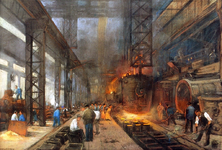
As the dust settled from the collapse of the Ancien Régime, the new social order did not revert to the red stage’s raw power dynamics but rather evolved into a more complex and structured form. The rise of industrialization and the consolidation of the mercantile class led to significant societal changes:
This period saw the rise of industrial capitalism, characterized by technological advancement, urbanization, and a shift towards a more planned and technocratic society. The mafiosi, or power brokers of the old system, metaphorically put on business suits, symbolizing their adaptation to the new economic and social landscape.
Technocracy and Planning: The new order involved detailed planning and the emergence of technocratic governance, where experts and technical knowledge began to shape societal organization and development.
This period saw the rise of industrial capitalism, characterized by technological advancement, urbanization, and a shift towards a more planned and technocratic society. The mafiosi, or power brokers of the old system, metaphorically put on business suits, symbolizing their adaptation to the new economic and social landscape.
Technocracy and Planning: The new order involved detailed planning and the emergence of technocratic governance, where experts and technical knowledge began to shape societal organization and development.
Mass Psychology and Consumer Capitalism
The orange stage also witnessed the development of new means of social control and influence, such as public relations, psychoanalysis, and mass psychology. These tools were used to manage and direct the desires of individuals, aligning them with the goals of consumer capitalism.
Consumer Culture: The mercantile class’s rise led to the dominance of consumer capitalism, where the ego’s desires were continually stimulated and manipulated through advertising and mass media. This created a chain of desire driven by the principles of trade and exchange value.
The transition from the blue stage of the Ancien Régime to the orange stage marked a significant evolutionary step in human societies. The revolution driven by the bourgeoisie replaced hereditary privilege with merit-based achievement and economic productivity. This shift paved the way for modern industrial and consumer societies, characterized by technocratic governance and sophisticated methods of mass influence.
Consumer Culture: The mercantile class’s rise led to the dominance of consumer capitalism, where the ego’s desires were continually stimulated and manipulated through advertising and mass media. This created a chain of desire driven by the principles of trade and exchange value.
The transition from the blue stage of the Ancien Régime to the orange stage marked a significant evolutionary step in human societies. The revolution driven by the bourgeoisie replaced hereditary privilege with merit-based achievement and economic productivity. This shift paved the way for modern industrial and consumer societies, characterized by technocratic governance and sophisticated methods of mass influence.
Capital: The New God-Signifier
As Nietzsche famously declared, “God is dead, and we have killed him”, symbolizing the decline of religious and traditional authorities that characterized the blue stage in Spiral Dynamics. This pronouncement heralded the rise of a new societal order: stage orange, characterized by capitalism, rationality, and individualism.
Nietzsche’s assertion about the death of God reflects the cultural and philosophical shift from a society governed by religious and moral absolutes to one driven by human reason and economic rationality. This shift marks the transition from the blue stage, with its emphasis on collective order and hierarchical authority, to the orange stage, where individual achievement and material success become the primary values.
Capitalism and Mercantilism: The orange stage is often labeled as capitalism, but it encompasses more than just the economic system. It includes the broader cultural and social implications of living in a market-driven society.
Economic Focus: This stage emphasizes free markets, competition, and the pursuit of personal and economic growth. The mercantile class, having overthrown the aristocracy, now dominates, driving innovation and industrial progress.
Consumerism: In stage orange, individuals define themselves through the accumulation and consumption of products. Consumer culture thrives, where personal success is often measured by material wealth and social status.
Rationality and Science: The orange stage values empirical knowledge, scientific inquiry, and technological advancement. Rational thinking and strategic planning are seen as keys to success.
Nietzsche’s assertion about the death of God reflects the cultural and philosophical shift from a society governed by religious and moral absolutes to one driven by human reason and economic rationality. This shift marks the transition from the blue stage, with its emphasis on collective order and hierarchical authority, to the orange stage, where individual achievement and material success become the primary values.
Capitalism and Mercantilism: The orange stage is often labeled as capitalism, but it encompasses more than just the economic system. It includes the broader cultural and social implications of living in a market-driven society.
Economic Focus: This stage emphasizes free markets, competition, and the pursuit of personal and economic growth. The mercantile class, having overthrown the aristocracy, now dominates, driving innovation and industrial progress.
Consumerism: In stage orange, individuals define themselves through the accumulation and consumption of products. Consumer culture thrives, where personal success is often measured by material wealth and social status.
Rationality and Science: The orange stage values empirical knowledge, scientific inquiry, and technological advancement. Rational thinking and strategic planning are seen as keys to success.
Broadening the Concept of Capitalism
Just as the term “religion” in the blue stage should be understood broadly, “capitalism” in the orange stage encompasses a wide range of behaviors and societal structures.
Innovation and Entrepreneurship: Beyond mere commerce, the orange stage fosters an environment where innovation and entrepreneurship are highly valued. Individuals are encouraged to think creatively and take risks to achieve success.
Meritocracy: The orange stage promotes the idea that success is based on merit. Hard work, intelligence, and talent are seen as the primary determinants of one’s social and economic position.
Societal Implications
Individualism and Freedom: The shift to stage orange brings a greater emphasis on individual rights and freedoms. Personal liberty and self-determination become central values, contrasting with the collective orientation of the blue stage.
Decline of Traditional Authority: As Nietzsche indicated, the decline of religious and traditional authorities paves the way for new forms of social organization based on merit and economic performance.
Technological and Social Progress: The orange stage is marked by rapid technological advancements and significant social changes. Innovations in industry, communication, and transportation transform everyday life and create new opportunities for personal and collective growth.
New Forms of Control: While stage orange promotes individual freedom, it also introduces new mechanisms of control and influence, such as advertising, public relations, and consumer psychology. These tools are used to shape desires and behaviors in ways that support the capitalist system.
Innovation and Entrepreneurship: Beyond mere commerce, the orange stage fosters an environment where innovation and entrepreneurship are highly valued. Individuals are encouraged to think creatively and take risks to achieve success.
Meritocracy: The orange stage promotes the idea that success is based on merit. Hard work, intelligence, and talent are seen as the primary determinants of one’s social and economic position.
Societal Implications
Individualism and Freedom: The shift to stage orange brings a greater emphasis on individual rights and freedoms. Personal liberty and self-determination become central values, contrasting with the collective orientation of the blue stage.
Decline of Traditional Authority: As Nietzsche indicated, the decline of religious and traditional authorities paves the way for new forms of social organization based on merit and economic performance.
Technological and Social Progress: The orange stage is marked by rapid technological advancements and significant social changes. Innovations in industry, communication, and transportation transform everyday life and create new opportunities for personal and collective growth.
New Forms of Control: While stage orange promotes individual freedom, it also introduces new mechanisms of control and influence, such as advertising, public relations, and consumer psychology. These tools are used to shape desires and behaviors in ways that support the capitalist system.
Marxist Perspective: Use Value vs. Exchange Value
Use Value: In earlier stages, such as purple (tribal) and red (egocentric), the value of an object was primarily derived from its utility—what Marx calls “use value”. This value is intrinsic to the object based on its ability to satisfy human needs or wants directly. For example, a tool in a tribal society is valuable because it aids in hunting or farming.
Exchange Value: In the orange stage, dominated by capitalism, the focus shifts to “exchange value”. This concept, introduced by Marx, refers to the value of an object in a market economy, determined by what it can be traded or sold for, rather than its direct utility. This shift represents the commodification of goods, where the worth of products is measured by their market price rather than their practical use.
Capitalist Economy: In a capitalist society, products and services are primarily valued for their ability to generate profit through exchange. This system encourages the production of goods not necessarily for their utility but for their potential to be sold in the market.
Consumerism: The culture of consumerism emerges, where individuals define their identities and social status through the accumulation and display of marketable goods. Advertising and marketing play crucial roles in creating and maintaining demand, often promoting the idea that personal fulfillment is achieved through material possessions.
Exchange Value: In the orange stage, dominated by capitalism, the focus shifts to “exchange value”. This concept, introduced by Marx, refers to the value of an object in a market economy, determined by what it can be traded or sold for, rather than its direct utility. This shift represents the commodification of goods, where the worth of products is measured by their market price rather than their practical use.
Capitalist Economy: In a capitalist society, products and services are primarily valued for their ability to generate profit through exchange. This system encourages the production of goods not necessarily for their utility but for their potential to be sold in the market.
Consumerism: The culture of consumerism emerges, where individuals define their identities and social status through the accumulation and display of marketable goods. Advertising and marketing play crucial roles in creating and maintaining demand, often promoting the idea that personal fulfillment is achieved through material possessions.
Technocratic Revolution: Cybernetics

The orange stage is also characterized by significant technological and scientific advancements. The Industrial Revolution, which began in the late 18th century, exemplifies this shift, as it brought about massive changes in production methods, transportation, and communication.
Cybernetics: In the mid-20th century, the emergence of cybernetics—an interdisciplinary field that studies the structure, communication, and control of systems—further revolutionized how societies function. Cybernetics integrates knowledge from fields such as engineering, computer science, biology, and sociology, leading to advancements in automation, computing, and systems theory.
The term “cybernetics” derives from the Greek word “kybernētēs,” meaning “steersman” or “governor.” This etymology highlights the core idea of cybernetics: the governance and regulation of complex systems through feedback mechanisms, much like a steersman navigates a ship.
Cybernetics focuses on how systems self-regulate and maintain stability through feedback loops. It applies to both mechanical and biological systems, exploring how these systems process information and respond to their environments to achieve desired outcomes.
Cybernetics: In the mid-20th century, the emergence of cybernetics—an interdisciplinary field that studies the structure, communication, and control of systems—further revolutionized how societies function. Cybernetics integrates knowledge from fields such as engineering, computer science, biology, and sociology, leading to advancements in automation, computing, and systems theory.
The term “cybernetics” derives from the Greek word “kybernētēs,” meaning “steersman” or “governor.” This etymology highlights the core idea of cybernetics: the governance and regulation of complex systems through feedback mechanisms, much like a steersman navigates a ship.
Cybernetics focuses on how systems self-regulate and maintain stability through feedback loops. It applies to both mechanical and biological systems, exploring how these systems process information and respond to their environments to achieve desired outcomes.
Exemplars
- Norbert Wiener: Often considered the father of cybernetics, Wiener’s work laid the foundation for the field. His book “Cybernetics: Or Control and Communication in the Animal and the Machine” (1948) is seminal.
- Ross Ashby: Known for his work on homeostasis and the design of adaptive systems, Ashby’s “An Introduction to Cybernetics” (1956) is another foundational text.
Metaphors and Analogies
- Steersman Analogy: Just as a steersman adjusts the course of a ship based on feedback from the environment (e.g., wind, currents), cybernetic systems adjust their operations based on feedback to maintain stability and achieve goals.
- Thermostat Metaphor: A thermostat regulates temperature by switching heating or cooling systems on and off in response to feedback from the environment. This simple example illustrates how cybernetic systems use feedback loops to maintain equilibrium.
Broadening of Cybernetics: Feedback Loops in Action
Postmodern Understanding: In a postmodern context, cybernetics represents a shift from linear, hierarchical models of control to more decentralized, networked forms of organization*. It aligns with postmodernism’s emphasis on complexity, interconnectedness, and the deconstruction of traditional boundaries.
Exemplary Impact on Society:
Exemplary Impact on Society:
- Technology: Automation and robotics rely heavily on cybernetic principles to function autonomously and adaptively.
- Management and Organizational Theory: Concepts such as systems thinking and organizational cybernetics apply cybernetic principles to optimize efficiency and adaptability in businesses and institutions.
- Biology and Medicine: Understanding biological feedback systems has led to advances in medical technology, such as biofeedback devices and prosthetics.
Panopticon Concept
The Panopticon is a type of institutional building envisioned by the English philosopher Jeremy Bentham in the late 18th century. It features a central observation tower within a circular structure of cells, allowing a single guard to observe all inmates without them knowing whether they are being watched at any given moment. This architectural design creates a sense of invisible omnipresence, inducing inmates to regulate their own behavior out of fear of constant surveillance.
Foucault’s Analysis of the Panopticon: Self-Regularity Despotism
In his book “Discipline and Punish: The Birth of the Prison” (1975), Foucault uses the Panopticon as a metaphor for modern disciplinary societies. He argues that the Panopticon symbolizes the shift in mechanisms of power and control from overt, physical forms of punishment to more subtle, psychological forms of surveillance and normalization.
- Disciplinary Power: Foucault describes how institutions such as prisons, schools, hospitals, and factories use surveillance to exert control. These institutions aim to produce disciplined, normalized individuals who conform to societal norms and expectations.
- Biopower: Extending this concept, Foucault introduces the notion of biopower, a form of power that regulates populations through techniques of surveillance, normalization, and control over bodies and behaviors.
-
Decentralized Control: In a postmodern context, cybernetics aligns with Foucault’s ideas by emphasizing decentralized and networked forms of control. Instead of hierarchical oversight, cybernetic systems use feedback loops and distributed information networks to regulate behavior.
Surveillance and Self-Regulation: Cybernetic systems often incorporate surveillance and feedback mechanisms that encourage self-regulation. For example, digital technologies and social media platforms use algorithms to monitor and influence user behavior, reflecting the principles of the Panopticon in a modern, decentralized form.
Just as the Panopticon creates a sense of perpetual surveillance, cybernetic systems enable continuous monitoring and data collection, influencing behavior on a broad scale.
Surveillance and Self-Regulation: Cybernetic systems often incorporate surveillance and feedback mechanisms that encourage self-regulation. For example, digital technologies and social media platforms use algorithms to monitor and influence user behavior, reflecting the principles of the Panopticon in a modern, decentralized form.
Just as the Panopticon creates a sense of perpetual surveillance, cybernetic systems enable continuous monitoring and data collection, influencing behavior on a broad scale.
Implications of Cybernetic Feedback Loops
Understanding Foucault’s analysis of the Panopticon helps contextualize the broader implications of cybernetics in postmodern society. It underscores the shift from visible, centralized authority to invisible, decentralized networks of power that shape and control individual and collective behaviors.
Technocratic Governance
The rise of technocratic governance, where decisions are made based on technical expertise and data-driven analysis, becomes a hallmark of stage orange societies. This approach aims to optimize efficiency and productivity, often applying scientific principles to social and economic planning.
In the transition to stage orange in Spiral Dynamics, the rise of cybernetics marks a significant shift in how reality is conceptualized and managed. This shift can be understood through the lens of “diagrammatization”, which signifies the transformation of complex, rounded models of reality into simplified, diagrammatic representations. This evolution reflects broader changes in societal, economic, and psychological frameworks.
Diagrammatization of Reality: The emergence of cybernetics and the accompanying shift towards block diagram representations signifies a move from more holistic, rounded views of the world, like Freud’s structural model of the psyche, to more segmented, functional perspectives.
Freud’s Structural Model: Freud’s model of the psyche, with its id, ego, and superego, presents a rounded, dynamic view of human psychology. It emphasizes the interplay of various forces within the mind, reflecting the complexity of human behavior. In the diagrammatization, we are moving away from the rounding, “wet”, “psychologizing” view of “liquid-organic” events.
Block Diagrams and Cybernetics: In contrast, cybernetics introduces a more mechanical and functional approach to understanding systems. Block diagrams represent processes in a segmented, linear fashion, emphasizing efficiency and control. This approach reflects a shift towards high modernism and brutalism in architecture, where function and efficiency are paramount.
In the transition to stage orange in Spiral Dynamics, the rise of cybernetics marks a significant shift in how reality is conceptualized and managed. This shift can be understood through the lens of “diagrammatization”, which signifies the transformation of complex, rounded models of reality into simplified, diagrammatic representations. This evolution reflects broader changes in societal, economic, and psychological frameworks.
Diagrammatization of Reality: The emergence of cybernetics and the accompanying shift towards block diagram representations signifies a move from more holistic, rounded views of the world, like Freud’s structural model of the psyche, to more segmented, functional perspectives.
Freud’s Structural Model: Freud’s model of the psyche, with its id, ego, and superego, presents a rounded, dynamic view of human psychology. It emphasizes the interplay of various forces within the mind, reflecting the complexity of human behavior. In the diagrammatization, we are moving away from the rounding, “wet”, “psychologizing” view of “liquid-organic” events.
Block Diagrams and Cybernetics: In contrast, cybernetics introduces a more mechanical and functional approach to understanding systems. Block diagrams represent processes in a segmented, linear fashion, emphasizing efficiency and control. This approach reflects a shift towards high modernism and brutalism in architecture, where function and efficiency are paramount.
Cybernetics and High Modernism

Architectural and Social Impacts: The influence of cybernetics extends to various domains, including architecture and urban planning. High modernism, with its emphasis on functionality and efficiency, mirrors the block diagram approach of cybernetics.
Brutalism: This architectural style, characterized by stark, block-like structures, exemplifies the practical, no-nonsense approach of the orange stage. It represents a departure from decorative forms towards utilitarian design.
Efficiency and Function: The focus on efficiency and function in architecture and urban planning reflects broader societal values of the orange stage, where the rapid exchange of products and services becomes central.
Brutalism: This architectural style, characterized by stark, block-like structures, exemplifies the practical, no-nonsense approach of the orange stage. It represents a departure from decorative forms towards utilitarian design.
Efficiency and Function: The focus on efficiency and function in architecture and urban planning reflects broader societal values of the orange stage, where the rapid exchange of products and services becomes central.
Economic and Psychological Integration
Velocity of Money: In the orange stage, economic theories highlight the increasing speed at which money circulates within the economy. This concept, known as the velocity of money, underscores the dynamic, fast-paced nature of capitalist economies.
Economic Theories: Various economic theories, such as Keynesian economics and monetarism, explore the implications of rapid money movement. These theories often intersect with psychological insights, illustrating the interconnectedness of economic and human behavior.
Economic Theories: Various economic theories, such as Keynesian economics and monetarism, explore the implications of rapid money movement. These theories often intersect with psychological insights, illustrating the interconnectedness of economic and human behavior.
Public Relations and Psychoanalysis
History and Emergence: The development of public relations (PR) and psychoanalysis during the orange stage represents the fusion of economic and psychological understanding. Key figures and historical events demonstrate this convergence.
Edward Bernays: Known as the father of public relations, Bernays applied Freudian concepts to shape public opinion and consumer behavior. His work illustrates the use of psychoanalytic principles in marketing and mass communication.
Psychoanalysis and PR: The integration of psychoanalysis into PR strategies reflects the orange stage’s focus on influencing and controlling human desires and behaviors. By understanding the subconscious motivations of individuals, PR professionals can craft messages that effectively drive consumer action.
Mass psychoanalysis reveals the products’ exchange value within a system of constant exchange, embodying a delusional rhizome—a concept from Deleuze and Guattari where the signifying chain itself becomes a rhizome, radiating perpetual difference. This difference perpetuates across time and space, framing consumer capitalism, also known as late-stage capitalism.
Edward Bernays: Known as the father of public relations, Bernays applied Freudian concepts to shape public opinion and consumer behavior. His work illustrates the use of psychoanalytic principles in marketing and mass communication.
Psychoanalysis and PR: The integration of psychoanalysis into PR strategies reflects the orange stage’s focus on influencing and controlling human desires and behaviors. By understanding the subconscious motivations of individuals, PR professionals can craft messages that effectively drive consumer action.
Mass psychoanalysis reveals the products’ exchange value within a system of constant exchange, embodying a delusional rhizome—a concept from Deleuze and Guattari where the signifying chain itself becomes a rhizome, radiating perpetual difference. This difference perpetuates across time and space, framing consumer capitalism, also known as late-stage capitalism.
Consumer Capitalism and Late-Stage Capitalism
Mass Psychoanalysis and Consumerism: In this stage, psychoanalytic principles are applied to understand and manipulate consumer behavior. The focus is on the subconscious motivations driving individuals to continually seek new products and experiences, reinforcing the exchange value over use value.
Rhizomatic Structure: The delusional rhizome signifies a non-hierarchical, interconnected network of signification and exchange. This structure, with its perpetual difference, contrasts with earlier, more linear models of societal organization. It embodies the complexity and fluidity of late-stage capitalism.
Rhizomatic Structure: The delusional rhizome signifies a non-hierarchical, interconnected network of signification and exchange. This structure, with its perpetual difference, contrasts with earlier, more linear models of societal organization. It embodies the complexity and fluidity of late-stage capitalism.
Enframing and Paranoiac Movements
Heidegger’s Enframing: According to Heidegger, enframing (Gestell) is a mode of revealing that reduces the world to a “standing-reserve” (resource ready to be used up), where everything is viewed as a means for consumption and exploitation. In late-stage capitalism, this enframing manifests in the relentless commodification of all aspects of life.
Paranoiac Anti-Communism: At the same time of the perpetual commodification and diagrammatization via enframing; during the Cold War, there was a strong paranoiac movement against communism, led by the United States. The CIA played a significant role in destabilizing various regions across the globe to counter communist influence.
The movement here is called “paranoiac” because the “spectre of communism” was not nearly as tangible as one thought it might be; i.e. the opposition was chasing ghosts, in a world far more “enframed” than they would themselves like to believe. This means: There was polarization, but the poles were, to a certain extent, artificially constructed, as a byproduct of political unrest, rather than reasoned engagement with “the facts”.
Paranoiac Anti-Communism: At the same time of the perpetual commodification and diagrammatization via enframing; during the Cold War, there was a strong paranoiac movement against communism, led by the United States. The CIA played a significant role in destabilizing various regions across the globe to counter communist influence.
The movement here is called “paranoiac” because the “spectre of communism” was not nearly as tangible as one thought it might be; i.e. the opposition was chasing ghosts, in a world far more “enframed” than they would themselves like to believe. This means: There was polarization, but the poles were, to a certain extent, artificially constructed, as a byproduct of political unrest, rather than reasoned engagement with “the facts”.
Anti-Communism: Historical Context and CIA Involvement
The CIA’s actions included supporting proxy wars, backing authoritarian regimes, and even aiding terrorist organizations. These efforts were aimed at containing the spread of communism and maintaining the dominance of capitalist ideologies.
Examples of CIA Involvement:
Examples of CIA Involvement:
- Latin America: Support for coups and authoritarian regimes to prevent socialist governments from taking power.
- Middle East: Backing insurgent groups and interfering in regional politics to counter Soviet influence.
- Southeast Asia: Engaging in covert operations and supporting anti-communist forces during the Vietnam War and beyond
Communism: The Eternal Other
In this context, late-stage capitalism is marked by a pervasive system of exchange driven by consumerism and reinforced through sophisticated psychological mechanisms. The rhizomatic structure of signification and the strategic geopolitical maneuvers against communism illustrate the complex and often contradictory nature of this stage. Understanding these dynamics provides a deeper insight into the current socio-economic landscape and its historical underpinnings.
In the narrative of late-stage capitalism, communism functions as the ultimate “eternal other”, the ideological enemy of Western capitalist consumerism. This binary framing of the global conflict, particularly during the Cold War, presents capitalism and communism as opposing forces. However, a deeper analysis reveals a more nuanced reality: there has never been a true communism as envisioned by Marx. Instead, we observe variations of capitalism in different guises, often framed under the rhetoric of anti-capitalism.
In the narrative of late-stage capitalism, communism functions as the ultimate “eternal other”, the ideological enemy of Western capitalist consumerism. This binary framing of the global conflict, particularly during the Cold War, presents capitalism and communism as opposing forces. However, a deeper analysis reveals a more nuanced reality: there has never been a true communism as envisioned by Marx. Instead, we observe variations of capitalism in different guises, often framed under the rhetoric of anti-capitalism.
Capitalism vs. “Communism”
Perpetual Othering: Communism is portrayed as the ultimate antagonist to capitalist systems. This framing serves to unify and justify actions within capitalist societies by creating a clear, external enemy.
Illusory Dichotomy: Despite the ideological opposition, the practical implementation of so-called communist systems often mirrors capitalist principles. The Cold War era, marked by the rivalry between the United States and the Soviet Union, is a prime example of this dynamic.
Illusory Dichotomy: Despite the ideological opposition, the practical implementation of so-called communist systems often mirrors capitalist principles. The Cold War era, marked by the rivalry between the United States and the Soviet Union, is a prime example of this dynamic.
Capitalism vs. Capitalism

In reality, the conflict was not between pure capitalism and pure communism but rather between different forms of state capitalism. Both sides utilized industrial and economic strategies that prioritized productivity and state control, albeit under different ideological banners.
Mao’s China and the Great Leap Forward
Marxist Distortion: Mao Zedong’s policies in China, particularly the Great Leap Forward, aimed to rapidly industrialize and collectivize the country. While these policies were conducted under the guise of Marxist ideology, they fundamentally employed capitalist methodologies of productivity and resource allocation.
Great Leap Forward: This campaign led to widespread famine and the deaths of an estimated 15-45 million people. The drive for industrial output and agricultural collectivization exemplified a distortion of Marxist principles, prioritizing productivity and control in ways akin to capitalist systems.
Capitalist Productivity Toolkit: Mao’s application of mass mobilization, industrial quotas, and forced collectivization reflected a reliance on the same tools of efficiency and production that underpin capitalist economies. The result was a hybrid system that combined authoritarian control with capitalist-style economic strategies.
Great Leap Forward: This campaign led to widespread famine and the deaths of an estimated 15-45 million people. The drive for industrial output and agricultural collectivization exemplified a distortion of Marxist principles, prioritizing productivity and control in ways akin to capitalist systems.
Capitalist Productivity Toolkit: Mao’s application of mass mobilization, industrial quotas, and forced collectivization reflected a reliance on the same tools of efficiency and production that underpin capitalist economies. The result was a hybrid system that combined authoritarian control with capitalist-style economic strategies.
Orange: Conclusion
The supposed dichotomy between capitalism and communism, particularly during the Cold War, obscures the reality that what we often see is capitalism in various forms clashing with itself. The narrative of communism as the ultimate other serves to strengthen capitalist ideologies by creating a clear adversary. However, historical implementations of so-called communist systems, such as Mao’s China, reveal a reliance on capitalist methodologies under different ideological veneers. Thus, stage orange capitalism remains the dominant framework, continuously adapting and reconfiguring competing ideologies to reinforce its own principles.
The supposed ideological battle between capitalism and communism, especially during the Cold War, is, in essence, a mischaracterization. Instead, what exists is a distortion of Marxist ideals where true communism—a society based on the principles of the commune—has never been realized. The actual conflict is between different forms of capitalism, each seeking to maximize exchange value at the expense of use value and human life.
The supposed ideological battle between capitalism and communism, especially during the Cold War, is, in essence, a mischaracterization. Instead, what exists is a distortion of Marxist ideals where true communism—a society based on the principles of the commune—has never been realized. The actual conflict is between different forms of capitalism, each seeking to maximize exchange value at the expense of use value and human life.
Marxist Distortion and the Absence of the Commune
Distortion of Marxism: The systems labeled as “communist”, such as Mao’s China, were, in reality, variations of state capitalism. These systems focused on industrial and economic productivity, employing capitalist principles under the guise of Marxism.
Lack of True Commune: The envisioned Marxist commune, where goods and resources are shared equitably based on need (use value), was never the goal. Instead, these regimes prioritized the circulation of capital and the maximization of exchange value, reducing human life to quantifiable data points.
Quantification and Rasterization
Population Control: In late-stage capitalism, populations are increasingly quantified and managed through computerization and rasterization. Individuals are reduced to data points, categorized, and controlled within a system that values efficiency and productivity over human well-being.
Reduction to Orange Pulp: This metaphor illustrates how individuals are dehumanized and processed by the capitalist system, becoming mere tools of production.
Citizens as Tools of Production: In this system, individuals are commodified, their labor and lives instrumentalized for the sake of economic gain. The bourgeois revolution has reached its zenith, where the mercantile class controls the means of production, and citizens perpetuate the cycle of capital exchange.
Lack of True Commune: The envisioned Marxist commune, where goods and resources are shared equitably based on need (use value), was never the goal. Instead, these regimes prioritized the circulation of capital and the maximization of exchange value, reducing human life to quantifiable data points.
Quantification and Rasterization
Population Control: In late-stage capitalism, populations are increasingly quantified and managed through computerization and rasterization. Individuals are reduced to data points, categorized, and controlled within a system that values efficiency and productivity over human well-being.
Reduction to Orange Pulp: This metaphor illustrates how individuals are dehumanized and processed by the capitalist system, becoming mere tools of production.
Citizens as Tools of Production: In this system, individuals are commodified, their labor and lives instrumentalized for the sake of economic gain. The bourgeois revolution has reached its zenith, where the mercantile class controls the means of production, and citizens perpetuate the cycle of capital exchange.
Global Capitalism and Market Competition
Globalism: The conflict of various capitalisms is now played out on a global stage, with nations and corporations competing to accelerate their exchange value. This global market is characterized by
Acceleration of Exchange Value: The primary goal of these competing capitalisms is to increase the speed and volume of capital circulation, often at the cost of human and ecological well-being.
Global Markets: Capital flows freely across borders, creating interconnected economies that are deeply integrated yet marked by stark inequalities.
In the context of late-stage capitalism, the ideological conflict is not truly between capitalism and communism but between different forms of capitalism. These systems all aim to enhance exchange value, often sidelining human and ecological considerations. The bourgeois revolution is complete, with the mercantile class firmly in control, and the global market emerges as the arena where these competing capitalisms strive for dominance. This reality reflects the deep distortion of Marxist ideals and underscores the pervasive and adaptive nature of capitalism in its various forms.
Acceleration of Exchange Value: The primary goal of these competing capitalisms is to increase the speed and volume of capital circulation, often at the cost of human and ecological well-being.
Global Markets: Capital flows freely across borders, creating interconnected economies that are deeply integrated yet marked by stark inequalities.
In the context of late-stage capitalism, the ideological conflict is not truly between capitalism and communism but between different forms of capitalism. These systems all aim to enhance exchange value, often sidelining human and ecological considerations. The bourgeois revolution is complete, with the mercantile class firmly in control, and the global market emerges as the arena where these competing capitalisms strive for dominance. This reality reflects the deep distortion of Marxist ideals and underscores the pervasive and adaptive nature of capitalism in its various forms.
General Remarks on Multiplicity of Stages
It’s important to clarify that while Spiral Dynamics posits a linear development of stages, in reality, individuals, societies, and organizations embody elements of multiple stages simultaneously. This nuanced understanding recognizes that no person or entity is exclusively situated within a single stage.
Multiple Active Stages; Probability Distribution: Every individual and society has elements from all stages of development active to varying extents. This distribution is more probabilistic than deterministic, meaning that while one stage might be dominant, influences from other stages are always present.
Dominant Stage: The dominant stage is where the majority of thought patterns, behaviors, and values align. For many parts of the world, stage orange—characterized by capitalism, consumerism, and individualism—dominates. However, this does not negate the influence of other stages.
Concurrent Stages: For example, a person primarily operating from stage orange might still exhibit behaviors and values from stage blue (e.g., adherence to rules and traditions) or stage green (e.g., concern for social equality and the environment).
Societal and Individual Variability
Societal Examples: Different societies may emphasize different stages, yet still display a mix of characteristics from various stages.
Western Societies: Generally dominated by stage orange, with strong influences from earlier stages like blue (institutional structures and traditions) and emerging influences from green (social and environmental consciousness).
Developing Nations: May have a stronger presence of earlier stages like purple (tribal and familial bonds) or red (power and domination) while also incorporating elements of orange and blue as they industrialize and modernize.
Individual Examples: Within any given society, individuals vary widely in their dominant stages.
Personal Development: An individual might primarily operate from stage orange in their professional life (focus on achievement and success) while exhibiting stage blue behaviors in their personal life (strong adherence to family traditions and community norms).
Multiple Active Stages; Probability Distribution: Every individual and society has elements from all stages of development active to varying extents. This distribution is more probabilistic than deterministic, meaning that while one stage might be dominant, influences from other stages are always present.
Dominant Stage: The dominant stage is where the majority of thought patterns, behaviors, and values align. For many parts of the world, stage orange—characterized by capitalism, consumerism, and individualism—dominates. However, this does not negate the influence of other stages.
Concurrent Stages: For example, a person primarily operating from stage orange might still exhibit behaviors and values from stage blue (e.g., adherence to rules and traditions) or stage green (e.g., concern for social equality and the environment).
Societal and Individual Variability
Societal Examples: Different societies may emphasize different stages, yet still display a mix of characteristics from various stages.
Western Societies: Generally dominated by stage orange, with strong influences from earlier stages like blue (institutional structures and traditions) and emerging influences from green (social and environmental consciousness).
Developing Nations: May have a stronger presence of earlier stages like purple (tribal and familial bonds) or red (power and domination) while also incorporating elements of orange and blue as they industrialize and modernize.
Individual Examples: Within any given society, individuals vary widely in their dominant stages.
Personal Development: An individual might primarily operate from stage orange in their professional life (focus on achievement and success) while exhibiting stage blue behaviors in their personal life (strong adherence to family traditions and community norms).
Dynamic and Fluid Nature of Stages
Transition and Integration: People and societies are not static; they continually transition between stages, integrating elements from multiple stages as they evolve.
Growth and Change: As individuals and societies encounter new challenges and opportunities, they adapt by integrating more complex ways of thinking and behaving. This process is continuous and fluid, reflecting the dynamic nature of human development.
Stage Interaction: Stages interact and influence one another, leading to complex behaviors and societal norms that cannot be easily categorized into a single stage.
Cultural Blending: Cultural practices often blend elements from various stages. For example, modern corporate cultures might incorporate stage orange’s focus on efficiency and competition while also promoting stage green’s values of teamwork and social responsibility.
Growth and Change: As individuals and societies encounter new challenges and opportunities, they adapt by integrating more complex ways of thinking and behaving. This process is continuous and fluid, reflecting the dynamic nature of human development.
Stage Interaction: Stages interact and influence one another, leading to complex behaviors and societal norms that cannot be easily categorized into a single stage.
Cultural Blending: Cultural practices often blend elements from various stages. For example, modern corporate cultures might incorporate stage orange’s focus on efficiency and competition while also promoting stage green’s values of teamwork and social responsibility.
Conclusion
Understanding Spiral Dynamics as a model that recognizes the active presence of multiple stages within individuals and societies provides a more accurate and flexible framework. While stage orange might currently dominate in many parts of the world, the influence of other stages remains significant and integral to the complexity of human development. This perspective allows for a more comprehensive and nuanced view of personal and societal evolution.
Focusing on stage orange and its complexities is essential given its prominence in contemporary society. We shall end with a concise summary of the main points discussed, which will serve as a foundation for our upcoming exploration of stage green and its critiques of consumer capitalism.
Focusing on stage orange and its complexities is essential given its prominence in contemporary society. We shall end with a concise summary of the main points discussed, which will serve as a foundation for our upcoming exploration of stage green and its critiques of consumer capitalism.
Next Article
TL;DR: Key Points
- Stage Orange Dominance: Focus on capitalism, consumerism, individual success, and material accumulation.
- Presence of elements from all stages in varying degrees within individuals and societies.
- Marxist Perspective: Shift from use value (utility) to exchange value (market value) in stage orange.
- “Communist” systems like Mao’s China applied capitalist principles, distorting Marxism.
- Cybernetics and Technocratic Influence: Transition from holistic models to segmented, functional representations (block diagrams).
- Rise of cybernetics, efficiency in architecture (brutalism), and rapid economic exchange.
- Mass Psychoanalysis and PR: Use of psychoanalytic principles to shape consumer desires and behaviors.
- Development of public relations techniques to influence public opinion and drive consumption.
- Global Capitalism and Market Dynamics Expansion of global markets and competition.
- Focus on accelerating exchange value and increasing the velocity of money.
- Critiques of Consumer Capitalism: Environmental and social concerns about relentless consumption and production.
- Human life reduced to data points and exploitation of natural resources.
- Upcoming Discussion on Stage Green: Exploration of sustainability, social justice, and animal rights.
- Analysis of the interplay between stage orange and green values in current politics.
Last edited:


 and I can already say that I feel enlightened. [: >]