

George
Willard Networks Whistleblower
- Joined
- Nov 19, 2021
- Messages
- 1,550
- Thread Author
- #1

Okay, well we’re now at a point in a spiral where I think the guardrails are off and we’re going straight to the performative effects of the exploration that we’ve embarked on. {This indicates that the discussion is now moving beyond structured guidelines into more fluid and expressive interpretations}.
Previous Parts: Beige, Purple, Red, Blue, Orange
So it’s gonna be a bit tough now to follow the spiral in a straightforward manner because there is no more straightforward manner, and as I have to prepare us for embarking on the so-called tier two aspects of the spiral, we really need to drill home the performance pieces here. {Tier two in spiral dynamics refers to a higher level of consciousness where previous stages are integrated and transcended}.
So again, as I said in other articles, we’re referring to that type of performance art avant-garde and so forth that mixes poetry with philosophy {avant-garde performance art often challenges conventional boundaries, merging different forms of expression}. As such, I highly recommend reading these two articles {likely specific references that provide foundational knowledge for understanding the current discussion}. With that out of the way, I’ll just recap from the last article, and of course, you should also be reading all the prior spiral dynamics articles; otherwise, this is not gonna be making a whole lot of sense. {Reading the previous articles is essential for context and comprehension}.
Stage Orange: Recap

So we were at stage orange {in spiral dynamics, stage orange represents a worldview centered around achievement, material success, and rationality}, which was emblematic of consumer capitalism but a broader systemic notion of capitalism. This means essentially a maximization of profit but also of efficiency and a certain kind of reductivity, a certain kind of block diagrammatically exposition of reality that reduces it in its complexity, which is however necessary to avoid a type of mystical mythological thinking in the strongly religious reductivism so to speak.
And so we’re really now moving, well first of all, into the transformational dilemma of orange.
So again, the value system here at orange, just to reproduce it, includes rationality and science, individualism, democracy, capitalism, and materialism. {Stage orange values emphasize logical reasoning, empirical evidence, personal autonomy, political freedom, economic efficiency, and tangible success}. Additionally, we have self-reliance, independence, and autonomy, all reinforcing individualism.
The warm colors in the spiral dynamics model are more individualistic, and you might think, “Okay, well once we have science, once we have democracy, once we have liberal or neoliberal democracy, isn’t there a type of Francis Fukuyama ‘end of history’ scenario? Aren’t we basically done with our development?” {Francis Fukuyama’s “end of history” thesis suggests that Western liberal democracy might constitute the endpoint of humanity’s sociocultural evolution}.
However, let’s look at what types of problems we might face in such a society. For one, individuals with higher developmental status and high socioeconomic status are often less likely to have many children. {This phenomenon can be observed in developed societies where career and personal achievements often take precedence over starting large families}. The focus shifts towards career and individualism rather than furthering the collective. {This reflects a societal shift where personal goals and professional success are prioritized}.
With the Nietzschean “death of God,” we are also facing a metaphysical crisis of meaning. {Friedrich Nietzsche’s proclamation of the “death of God” signifies the decline of religious and traditional moral frameworks, leading to existential uncertainty}. In this type of world, the question arises: What is now going to give us something more, that “something more” beyond the hamster wheel of consumer capitalism? {This highlights the quest for deeper meaning and fulfillment in a materialistic society}.
Inherent with consumer capitalism and the free market economy is the interesting issue that the greatest freedom seems to be for the circulation of capital, not for the people. {In a free market system, capital flows freely to seek maximum returns, sometimes at the expense of human values and social equity}. This points to a fundamental contradiction in stage orange: while it champions individual freedom and autonomy, it often prioritizes economic mechanisms over human welfare. {This critique suggests that the values of stage orange might inadvertently undermine the very principles of personal freedom and well-being it seeks to uphold}.
So we have freedom, and of course, in many regards, this freedom is expanding. {Expanding freedoms refer to increased personal liberties and choices available to individuals in a democratic, capitalist society}. However, at the same time, people are also becoming enslaved to the system. {This paradox suggests that while formal freedoms grow, individuals may feel more constrained by societal and economic structures}.
This phenomenon is addressed in various pop-culture-relevant movies such as “American Psycho” or “Fight Club”. Both films critique consumer culture and the hollow pursuit of material success, depicting characters trapped in cycles of superficiality and existential despair.
What has truly become free now is capital and the reproduction of goods within the market economy. {Capital flows unimpeded, driven by market forces and profit motives, often overshadowing individual autonomy}. But in some sense, people are less free than ever because their path is now charted out completely by the maximization of profit and scientific reductionism. {Individuals may feel their choices and lives are increasingly dictated by economic imperatives and scientific paradigms}.
And so we’re really now moving, well first of all, into the transformational dilemma of orange.
So again, the value system here at orange, just to reproduce it, includes rationality and science, individualism, democracy, capitalism, and materialism. {Stage orange values emphasize logical reasoning, empirical evidence, personal autonomy, political freedom, economic efficiency, and tangible success}. Additionally, we have self-reliance, independence, and autonomy, all reinforcing individualism.
The warm colors in the spiral dynamics model are more individualistic, and you might think, “Okay, well once we have science, once we have democracy, once we have liberal or neoliberal democracy, isn’t there a type of Francis Fukuyama ‘end of history’ scenario? Aren’t we basically done with our development?” {Francis Fukuyama’s “end of history” thesis suggests that Western liberal democracy might constitute the endpoint of humanity’s sociocultural evolution}.
However, let’s look at what types of problems we might face in such a society. For one, individuals with higher developmental status and high socioeconomic status are often less likely to have many children. {This phenomenon can be observed in developed societies where career and personal achievements often take precedence over starting large families}. The focus shifts towards career and individualism rather than furthering the collective. {This reflects a societal shift where personal goals and professional success are prioritized}.
With the Nietzschean “death of God,” we are also facing a metaphysical crisis of meaning. {Friedrich Nietzsche’s proclamation of the “death of God” signifies the decline of religious and traditional moral frameworks, leading to existential uncertainty}. In this type of world, the question arises: What is now going to give us something more, that “something more” beyond the hamster wheel of consumer capitalism? {This highlights the quest for deeper meaning and fulfillment in a materialistic society}.
Inherent with consumer capitalism and the free market economy is the interesting issue that the greatest freedom seems to be for the circulation of capital, not for the people. {In a free market system, capital flows freely to seek maximum returns, sometimes at the expense of human values and social equity}. This points to a fundamental contradiction in stage orange: while it champions individual freedom and autonomy, it often prioritizes economic mechanisms over human welfare. {This critique suggests that the values of stage orange might inadvertently undermine the very principles of personal freedom and well-being it seeks to uphold}.
So we have freedom, and of course, in many regards, this freedom is expanding. {Expanding freedoms refer to increased personal liberties and choices available to individuals in a democratic, capitalist society}. However, at the same time, people are also becoming enslaved to the system. {This paradox suggests that while formal freedoms grow, individuals may feel more constrained by societal and economic structures}.
This phenomenon is addressed in various pop-culture-relevant movies such as “American Psycho” or “Fight Club”. Both films critique consumer culture and the hollow pursuit of material success, depicting characters trapped in cycles of superficiality and existential despair.
What has truly become free now is capital and the reproduction of goods within the market economy. {Capital flows unimpeded, driven by market forces and profit motives, often overshadowing individual autonomy}. But in some sense, people are less free than ever because their path is now charted out completely by the maximization of profit and scientific reductionism. {Individuals may feel their choices and lives are increasingly dictated by economic imperatives and scientific paradigms}.
Reductionism, Disenchantment: Orange Rising
Scientific reductionism, which no one can countercheck, leads to a situation where the priestly caste is now replaced by new priests in white robes—doctors, psychiatrists, theoretical physicists, mathematicians, computer scientists, and so forth. {This new elite holds authority over knowledge and societal norms, akin to religious authorities in the past}. These figures are now meant to explain the world to us, pushing beyond what is considered primitive and delusional magical thinking. {They provide the frameworks and explanations that shape our understanding and decisions, often beyond layperson scrutiny}.
With this individualism comes a certain type of reduction of the romantic function of society. {The emphasis on rationality and material success can diminish the role of art, imagination, and emotional richness in social life}. This romantic function—encompassing creativity, emotional depth, and a sense of wonder—tends to be undervalued in a society focused on efficiency and scientific validation. {Such a reduction can lead to a sense of disenchantment and loss of meaning, as the poetic and transcendent aspects of human experience are sidelined}.
A radical disenchantment, similar to the Enlightenment, is where the idea is that we are now seeing through the mythological function of the world. {The Enlightenment was a period that emphasized reason, science, and empirical evidence, often at the expense of traditional myths and religious beliefs}. In this context, we encounter a world that, in some sense, has cast off its skin, now opening up to its own unraveling. {This metaphor suggests a shedding of previous layers of meaning and protection, exposing the core to existential crises}.
With this individualism comes a certain type of reduction of the romantic function of society. {The emphasis on rationality and material success can diminish the role of art, imagination, and emotional richness in social life}. This romantic function—encompassing creativity, emotional depth, and a sense of wonder—tends to be undervalued in a society focused on efficiency and scientific validation. {Such a reduction can lead to a sense of disenchantment and loss of meaning, as the poetic and transcendent aspects of human experience are sidelined}.
A radical disenchantment, similar to the Enlightenment, is where the idea is that we are now seeing through the mythological function of the world. {The Enlightenment was a period that emphasized reason, science, and empirical evidence, often at the expense of traditional myths and religious beliefs}. In this context, we encounter a world that, in some sense, has cast off its skin, now opening up to its own unraveling. {This metaphor suggests a shedding of previous layers of meaning and protection, exposing the core to existential crises}.
Raw Objectivity & Death: Technology as Technique

As we always think about the purely objective—if there ever was such a thing—it would truly spell death. {The purely objective world, devoid of subjective and emotional aspects, could lead to a lifeless, mechanistic existence}.
The only thing that makes us think about an objective is this double entendre: the objective as something being objective (neutral and unbiased) and the objective as something that we aim for.
The word “objective” serves a dual purpose, highlighting both impartiality and goal-oriented pursuits. As such, the pure objective, at the same time, spells the death of the world as it is—the death not just of a scientifically reduced world but also of the emotional and phenomenological world. {This implies the eradication of the rich, subjective experiences that give life depth and meaning}. It is the end of the world as we know it and even as we can know it. {This radical shift threatens to transform our fundamental understanding and experience of reality}.
I hope these are all markers that highlight the problems we face. To delve into what Heidegger means by technology, I’ll quickly provide some context to further elaborate on the transformational dilemma of orange. {Heidegger’s philosophy can shed light on the deeper implications of technological advancement within stage orange}.When Heidegger talks about technology, don’t read it as just the internet or modern gadgets. Technology here is meant in a broad sense, derived from the Greek word “technē”.
Technē refers to craft, art, or skill in Greek, emphasizing a broader understanding of technology beyond contemporary devices. In Heidegger’s view, being itself has been reduced to what he calls “standing reserve” (Bestand). Standing reserve is a concept where everything, including nature and humans, is viewed as a resource to be optimized and exploited. This reduction, aimed at maximizing profit, leads to alienation from being itself—from nature and the essence of existence. {This alienation is a central concern in Heidegger’s critique of modern technology}.
Heidegger’s thinking pivots technology against nature, but it’s not just about the internet or industrial machinery. It encompasses the broader fact of making everything into standing reserve, exploiting nature, and thus alienating us from our intrinsic connection to being. {The pervasive technological mindset transforms our relationship with the world into one of utility and exploitation, distancing us from more profound, existential engagements} {The Industrial Revolution marked a significant shift towards mechanization and efficiency, exemplifying the transformation of natural and human resources into standing reserves}.
This can lend itself to a certain type of radical macro-primitivism, of course, but we’re not going that far. The points we want to make here are that there are certain problems inherent in the current system. For instance, if capitalism exploits the environment as though it were an infinitely regenerative sphere, it turns out that the biosphere actually dies. {This is a critique of the unsustainable exploitation of natural resources under capitalism}.
Issues like man-made climate change and other environmental problems emerge from this unchecked exploitation. {Human activities, driven by the pursuit of profit, significantly contribute to global warming and environmental degradation}. Animals are killed for experimentation in the pharmaceutical industry, cosmetics, and other sectors, highlighting the exploitation of the biosphere. {This points to ethical concerns regarding the treatment of animals and the sustainability of such practices}.
We are exploiting the planet by using up forests and other natural resources faster than they can regenerate, destabilizing the biosphere in the name of human consumerism. {This unsustainable approach threatens the delicate balance of ecosystems}. It’s not just about extracting value from a Marxist perspective but about generating surplus value. {Surplus value in Marxist theory refers to the excess of value produced by labor over the value paid to labor, which capitalists appropriate as profit}.
Gandhi’s statement, “The world is big enough for everyone’s needs but not everyone’s greed,” encapsulates this issue. {This aphorism emphasizes the sufficiency of resources to meet human needs if distributed equitably, contrasting with the insatiable greed that drives over-exploitation}. The maximization of profit and “efficiency” at all costs is causing long-term problems. {This myopic focus on short-term gains neglects ethical and environmental concerns, leading to systemic issues}.
If we persist in this capitalist mindset, ignoring ethical or long-term concerns, we will continue to face these problems. {Addressing these issues requires a shift in perspective and priorities}. The dilemma involves recognizing the limitations and negative consequences of the current system while seeking a path forward.
The only thing that makes us think about an objective is this double entendre: the objective as something being objective (neutral and unbiased) and the objective as something that we aim for.
The word “objective” serves a dual purpose, highlighting both impartiality and goal-oriented pursuits. As such, the pure objective, at the same time, spells the death of the world as it is—the death not just of a scientifically reduced world but also of the emotional and phenomenological world. {This implies the eradication of the rich, subjective experiences that give life depth and meaning}. It is the end of the world as we know it and even as we can know it. {This radical shift threatens to transform our fundamental understanding and experience of reality}.
I hope these are all markers that highlight the problems we face. To delve into what Heidegger means by technology, I’ll quickly provide some context to further elaborate on the transformational dilemma of orange. {Heidegger’s philosophy can shed light on the deeper implications of technological advancement within stage orange}.When Heidegger talks about technology, don’t read it as just the internet or modern gadgets. Technology here is meant in a broad sense, derived from the Greek word “technē”.
Technē refers to craft, art, or skill in Greek, emphasizing a broader understanding of technology beyond contemporary devices. In Heidegger’s view, being itself has been reduced to what he calls “standing reserve” (Bestand). Standing reserve is a concept where everything, including nature and humans, is viewed as a resource to be optimized and exploited. This reduction, aimed at maximizing profit, leads to alienation from being itself—from nature and the essence of existence. {This alienation is a central concern in Heidegger’s critique of modern technology}.
Heidegger’s thinking pivots technology against nature, but it’s not just about the internet or industrial machinery. It encompasses the broader fact of making everything into standing reserve, exploiting nature, and thus alienating us from our intrinsic connection to being. {The pervasive technological mindset transforms our relationship with the world into one of utility and exploitation, distancing us from more profound, existential engagements} {The Industrial Revolution marked a significant shift towards mechanization and efficiency, exemplifying the transformation of natural and human resources into standing reserves}.
This can lend itself to a certain type of radical macro-primitivism, of course, but we’re not going that far. The points we want to make here are that there are certain problems inherent in the current system. For instance, if capitalism exploits the environment as though it were an infinitely regenerative sphere, it turns out that the biosphere actually dies. {This is a critique of the unsustainable exploitation of natural resources under capitalism}.
Issues like man-made climate change and other environmental problems emerge from this unchecked exploitation. {Human activities, driven by the pursuit of profit, significantly contribute to global warming and environmental degradation}. Animals are killed for experimentation in the pharmaceutical industry, cosmetics, and other sectors, highlighting the exploitation of the biosphere. {This points to ethical concerns regarding the treatment of animals and the sustainability of such practices}.
We are exploiting the planet by using up forests and other natural resources faster than they can regenerate, destabilizing the biosphere in the name of human consumerism. {This unsustainable approach threatens the delicate balance of ecosystems}. It’s not just about extracting value from a Marxist perspective but about generating surplus value. {Surplus value in Marxist theory refers to the excess of value produced by labor over the value paid to labor, which capitalists appropriate as profit}.
Gandhi’s statement, “The world is big enough for everyone’s needs but not everyone’s greed,” encapsulates this issue. {This aphorism emphasizes the sufficiency of resources to meet human needs if distributed equitably, contrasting with the insatiable greed that drives over-exploitation}. The maximization of profit and “efficiency” at all costs is causing long-term problems. {This myopic focus on short-term gains neglects ethical and environmental concerns, leading to systemic issues}.
If we persist in this capitalist mindset, ignoring ethical or long-term concerns, we will continue to face these problems. {Addressing these issues requires a shift in perspective and priorities}. The dilemma involves recognizing the limitations and negative consequences of the current system while seeking a path forward.
The Communal Shift: Orange to Green
As with all shifts in Spiral Dynamics (SD) stages, we now need to move from a warm color (representing individualism) to a cool color (representing collectivism). {This oscillation reflects the dynamic interplay between individual and collective orientations throughout the stages}. We must think beyond individual greed and desire, considering broader ethical and communal concerns. {The shift signifies a transition towards a more holistic and inclusive worldview}.
Importantly, the spiral not only oscillates between warm and cool colors but also shows a broadening of concern at each stage. {Each stage encompasses a wider range of issues and perspectives than the previous one}. Even though consumer capitalism in stage orange is individualist, just like stage red, the difference lies in the broadening of concern. {Stage orange incorporates a systemic understanding that includes the benefits of capitalism for the general community, unlike the more self-centered stage red}.
This broadening of concern is essential. Capitalism, despite its flaws, has contributed significantly to community welfare and technological advancements. {It’s crucial to acknowledge the positive aspects while addressing the negative ones}. Therefore, it’s not about demonizing capitalism but about understanding its nuances and evolving beyond its limitations. {A balanced critique recognizes both the strengths and weaknesses of the system, guiding us towards more sustainable and equitable solutions}.
Stage orange indeed broadened the dominance-based approach of stage red, bringing many improvements. {Stage red was characterized by power dynamics and egocentric behavior, whereas stage orange introduces systemic thinking and meritocracy}. This evolution signifies progress in societal structures, fostering innovation, economic growth, and individual freedoms. {Capitalism at this stage emphasizes efficiency, competition, and technological advancements}.
It’s not about getting rid of capitalism entirely but rather integrating and evolving it.
{The goal is to incorporate the strengths of capitalism while addressing its shortcomings}. The shift into a cooler color in the Spiral Dynamics model signifies a movement towards more collective and sustainable approaches. {Cool colors in Spiral Dynamics represent stages that emphasize community, ecological awareness, and systemic interconnectedness}.
As we move from capitalism, we start to explore the emerging layers that address broader, more inclusive concerns. {This transition reflects a deeper integration of individual and collective needs, aiming for a balanced approach}. In many parts of the world, especially those with advanced political and intellectual landscapes, this shift can be a contentious battleground. {Political discourse often intensifies around these transitions, reflecting diverse perspectives and interests}.
Importantly, the spiral not only oscillates between warm and cool colors but also shows a broadening of concern at each stage. {Each stage encompasses a wider range of issues and perspectives than the previous one}. Even though consumer capitalism in stage orange is individualist, just like stage red, the difference lies in the broadening of concern. {Stage orange incorporates a systemic understanding that includes the benefits of capitalism for the general community, unlike the more self-centered stage red}.
This broadening of concern is essential. Capitalism, despite its flaws, has contributed significantly to community welfare and technological advancements. {It’s crucial to acknowledge the positive aspects while addressing the negative ones}. Therefore, it’s not about demonizing capitalism but about understanding its nuances and evolving beyond its limitations. {A balanced critique recognizes both the strengths and weaknesses of the system, guiding us towards more sustainable and equitable solutions}.
Stage orange indeed broadened the dominance-based approach of stage red, bringing many improvements. {Stage red was characterized by power dynamics and egocentric behavior, whereas stage orange introduces systemic thinking and meritocracy}. This evolution signifies progress in societal structures, fostering innovation, economic growth, and individual freedoms. {Capitalism at this stage emphasizes efficiency, competition, and technological advancements}.
It’s not about getting rid of capitalism entirely but rather integrating and evolving it.
{The goal is to incorporate the strengths of capitalism while addressing its shortcomings}. The shift into a cooler color in the Spiral Dynamics model signifies a movement towards more collective and sustainable approaches. {Cool colors in Spiral Dynamics represent stages that emphasize community, ecological awareness, and systemic interconnectedness}.
As we move from capitalism, we start to explore the emerging layers that address broader, more inclusive concerns. {This transition reflects a deeper integration of individual and collective needs, aiming for a balanced approach}. In many parts of the world, especially those with advanced political and intellectual landscapes, this shift can be a contentious battleground. {Political discourse often intensifies around these transitions, reflecting diverse perspectives and interests}.
What Even Is Capitalism???
I want to clarify what I mean by capitalism. {Capitalism here refers to an economic system characterized by private ownership, free markets, and profit motives}. This system is broader than you might initially think. {Capitalism is not monolithic; it encompasses various forms and adaptations}. Just because something is labeled socialism doesn’t mean it is entirely separate from capitalist principles. {Many modern economies blend elements of both systems, integrating social welfare with market mechanisms}.
Capitalism has shown remarkable adaptability, often incorporating aspects of socialism to address its limitations. {For example, social safety nets, public healthcare, and education systems are integrated within capitalist economies to ensure broader societal welfare}. This nuanced understanding helps us appreciate the complexities and potentials of economic systems.
As we transition into a cooler color, we aim to synthesize the best elements of individualism and collectivism, fostering a more holistic and resilient society. {This synthesis seeks to balance personal freedoms with communal responsibilities, ensuring long-term ecological and social health}. The next stages in Spiral Dynamics will further explore these integrative approaches, emphasizing sustainable practices, global interconnectedness, and deeper ecological awareness. {These emerging layers reflect an evolution towards a more compassionate, equitable, and environmentally conscious world}.
Capitalism has shown remarkable adaptability, often incorporating aspects of socialism to address its limitations. {For example, social safety nets, public healthcare, and education systems are integrated within capitalist economies to ensure broader societal welfare}. This nuanced understanding helps us appreciate the complexities and potentials of economic systems.
As we transition into a cooler color, we aim to synthesize the best elements of individualism and collectivism, fostering a more holistic and resilient society. {This synthesis seeks to balance personal freedoms with communal responsibilities, ensuring long-term ecological and social health}. The next stages in Spiral Dynamics will further explore these integrative approaches, emphasizing sustainable practices, global interconnectedness, and deeper ecological awareness. {These emerging layers reflect an evolution towards a more compassionate, equitable, and environmentally conscious world}.
Politics? Please NOT…
Be that as it may, as we move along the spiral, our goal is to avoid becoming politically entrenched because that is not the point of our exploration. However, you will see a lot of conflicts play out along the tension poles between green and orange, especially in U.S. politics, which is particularly emblematic of this dynamic. {The tension between these stages often reflects broader societal debates about progress, values, and the role of different systems}.
Stage Green: Entry

In simplest terms, green is going to add ethical checks and balances to the rationalism of orange. {Stage green introduces a focus on social equality, environmental sustainability, and holistic thinking, counterbalancing the individualism and materialism of stage orange}. Here are some key terms associated with green values: value pluralism, equality, relativism, sensitivity, emotionality, civil rights, environmentalism, broadening of the empathy sphere, biospherism (including animal rights and nature conservation). {These values emphasize inclusivity, diversity, and ecological awareness}.
Green represents a broadening of our perspective, moving beyond the positivism situated in orange. {Positivism in stage orange emphasizes objective knowledge and scientific rationalism}. In contrast, green acknowledges that everything is context-dependent. {This perspective is influenced by thinkers like Wittgenstein, who evolved from early to later work emphasizing the importance of language games and cultural contexts}.
Early Wittgenstein’s work focused on logical positivism and the structure of language, whereas late Wittgenstein emphasized the fluidity and context-dependency of meaning. {This shift reflects a move from rigid frameworks to more flexible, interpretive approaches}.
Similarly, stage green sees the value in cultural relativism and constructivism. {Cultural relativism suggests that beliefs and practices must be understood within their cultural contexts, while constructivism argues that knowledge is constructed through social processes}.
In general, green involves broadening our perspective to consider the biosphere, moving beyond an anthropocentric (human-centered) and ethnocentric (culture-centered) view of the world. (cf. What is Post-Humanism?). {This stage promotes a more holistic and inclusive understanding of human and ecological interconnectedness}.
Given the current political climate, particularly in the U.S., contemporary politics often becomes a point of contention. To avoid people getting hung up on specific political terms, we’ll use the terms “progressive” and “conservative.” {These terms broadly capture the ideological spectrum between those advocating for change and those supporting traditional values}.
In summary, the transition from orange to green involves integrating ethical considerations and expanding empathy beyond the individualistic and materialistic focus of orange. {This shift is crucial for addressing broader societal and environmental challenges}. As we continue to navigate the spiral, it is essential to recognize the value of each stage while striving for a more inclusive and sustainable future.
Green represents a broadening of our perspective, moving beyond the positivism situated in orange. {Positivism in stage orange emphasizes objective knowledge and scientific rationalism}. In contrast, green acknowledges that everything is context-dependent. {This perspective is influenced by thinkers like Wittgenstein, who evolved from early to later work emphasizing the importance of language games and cultural contexts}.
Early Wittgenstein’s work focused on logical positivism and the structure of language, whereas late Wittgenstein emphasized the fluidity and context-dependency of meaning. {This shift reflects a move from rigid frameworks to more flexible, interpretive approaches}.
Similarly, stage green sees the value in cultural relativism and constructivism. {Cultural relativism suggests that beliefs and practices must be understood within their cultural contexts, while constructivism argues that knowledge is constructed through social processes}.
In general, green involves broadening our perspective to consider the biosphere, moving beyond an anthropocentric (human-centered) and ethnocentric (culture-centered) view of the world. (cf. What is Post-Humanism?). {This stage promotes a more holistic and inclusive understanding of human and ecological interconnectedness}.
Given the current political climate, particularly in the U.S., contemporary politics often becomes a point of contention. To avoid people getting hung up on specific political terms, we’ll use the terms “progressive” and “conservative.” {These terms broadly capture the ideological spectrum between those advocating for change and those supporting traditional values}.
In summary, the transition from orange to green involves integrating ethical considerations and expanding empathy beyond the individualistic and materialistic focus of orange. {This shift is crucial for addressing broader societal and environmental challenges}. As we continue to navigate the spiral, it is essential to recognize the value of each stage while striving for a more inclusive and sustainable future.
Some Politics, Sort Of.
I’m going to use those terms. Let’s make a mapping here and say that, from a reductive, almost caricatured perspective, orange can be seen as the conservative part, and green represents the progressives. {This simplification aligns stage orange with values typically associated with conservative or neoliberal politics, and stage green with progressive or green politics}.
To give an idea from party politics, in many countries, orange would be represented by the neoliberal party, while green would be represented by the Green Party. {Neoliberalism emphasizes free-market policies, deregulation, and privatization, whereas green politics focuses on environmental sustainability, social justice, and inclusivity}.
Neoliberalism is essentially the idea that the freedom of the markets will liberate people. {This economic theory posits that minimal government intervention in the economy allows for optimal allocation of resources, fostering innovation and growth}. On the other hand, green represents a cultural theory. {Green politics integrates ecological concerns with social justice, emphasizing the interconnectedness of environmental health and human well-being}.
These are quite different things—they are apples and oranges, which already makes the conflict in the U.S. very confusing. {The divergent focuses of economic freedom and cultural inclusivity create a complex landscape of political contention}.
Conservatism in the U.S. is not always synonymous with neoliberalism. {Conservatism often includes a broader range of ideologies, including traditionalist and, sometimes, populist elements}. Neoliberalism, in this context, is focused on conserving the interests of big money, established institutions, companies, and the flow of capital, ensuring that no form of Marxism (as they understand it) can take place. {Neoliberal conservatism aims to maintain the status quo of economic structures and market freedom, often resisting redistributive policies or significant government intervention}.
Furthermore, there’s the concept of “cultural Marxism”, which might be closer to what is often referred to as identity politics. {Cultural Marxism is a controversial and often misunderstood term used to describe a focus on cultural and social issues, such as race, gender, and sexuality, through a critical lens}. This aspect of green politics emphasizes the importance of addressing systemic inequalities and expanding civil rights. {Identity politics seeks to address and rectify the marginalization of specific groups, advocating for broader social and cultural inclusivity}.
Overall, mapping orange to neoliberal conservatism and green to progressive cultural theories can help clarify the ideological divides. {This mapping provides a framework for understanding the core values and conflicts between these stages}. Neoliberalism focuses on economic freedom and the preservation of capital flow, while green politics emphasizes cultural inclusivity, environmental sustainability, and social justice. {Recognizing these distinctions is crucial for navigating and addressing the complex political and social dynamics at play}.
To give an idea from party politics, in many countries, orange would be represented by the neoliberal party, while green would be represented by the Green Party. {Neoliberalism emphasizes free-market policies, deregulation, and privatization, whereas green politics focuses on environmental sustainability, social justice, and inclusivity}.
Neoliberalism is essentially the idea that the freedom of the markets will liberate people. {This economic theory posits that minimal government intervention in the economy allows for optimal allocation of resources, fostering innovation and growth}. On the other hand, green represents a cultural theory. {Green politics integrates ecological concerns with social justice, emphasizing the interconnectedness of environmental health and human well-being}.
These are quite different things—they are apples and oranges, which already makes the conflict in the U.S. very confusing. {The divergent focuses of economic freedom and cultural inclusivity create a complex landscape of political contention}.
Conservatism in the U.S. is not always synonymous with neoliberalism. {Conservatism often includes a broader range of ideologies, including traditionalist and, sometimes, populist elements}. Neoliberalism, in this context, is focused on conserving the interests of big money, established institutions, companies, and the flow of capital, ensuring that no form of Marxism (as they understand it) can take place. {Neoliberal conservatism aims to maintain the status quo of economic structures and market freedom, often resisting redistributive policies or significant government intervention}.
Furthermore, there’s the concept of “cultural Marxism”, which might be closer to what is often referred to as identity politics. {Cultural Marxism is a controversial and often misunderstood term used to describe a focus on cultural and social issues, such as race, gender, and sexuality, through a critical lens}. This aspect of green politics emphasizes the importance of addressing systemic inequalities and expanding civil rights. {Identity politics seeks to address and rectify the marginalization of specific groups, advocating for broader social and cultural inclusivity}.
Overall, mapping orange to neoliberal conservatism and green to progressive cultural theories can help clarify the ideological divides. {This mapping provides a framework for understanding the core values and conflicts between these stages}. Neoliberalism focuses on economic freedom and the preservation of capital flow, while green politics emphasizes cultural inclusivity, environmental sustainability, and social justice. {Recognizing these distinctions is crucial for navigating and addressing the complex political and social dynamics at play}.
Value Pluralism & Identity Politics
Value pluralism, situated at green, is deeply related to identity politics. {Value pluralism acknowledges a diversity of values and perspectives, rejecting the idea of a single, dominant worldview}. To explain how identity politics emerged and its connections to post-modern philosophy and feminism, we must look at thinkers like Deleuze, Guattari, Derrida, and others.
Identity politics emerged from a recognition of the multiplicity of identities and experiences that cannot be reduced to a single master signifier, as was common in earlier stages. {In stage blue, the master signifier was often God, while in stage orange, it was capital}. With value pluralism, individuals are encouraged to pick and choose their identities, leading to a more existentialist approach. {This existentialist perspective allows for personal freedom in defining one’s identity, reflecting the diverse and fluid nature of human experiences}.
Post-modern philosophers like Lyotard, Deleuze, Guattari, and Derrida contributed to this shift by challenging grand narratives and emphasizing the complexity of reality. {Lyotard’s “The Postmodern Condition” describes a skepticism towards meta-narratives, which are overarching stories or ideologies that claim to explain everything}.
This skepticism is self-defeating in a way, because post-modernism itself can be seen as a meta-narrative. {The irony here is that while post-modernism critiques grand narratives, it often creates new frameworks that function similarly}.
Post-modernism, with its emphasis on cultural relativism and the multiplicity of valid values, aligns with the principles of identity politics. {Cultural relativism argues that beliefs and practices should be understood within their cultural contexts, without imposing universal standards}. Identity politics takes this further by advocating for the recognition and validation of diverse identities based on race, gender, sexuality, and other factors. {This approach seeks to address historical and systemic inequalities by highlighting and celebrating differences}.
Deleuze and Guattari’s work on multiplicity and difference further supports this view. {Their philosophy emphasizes the fluidity of identities and the interconnectedness of all things, rejecting fixed categories and hierarchies}. Derrida’s deconstruction also plays a role by revealing the instability of language and meaning, which undermines the notion of fixed identities and master signifiers. {Deconstruction shows how concepts and identities are constructed through language and can be deconstructed to reveal their contingent nature}.
Despite its embrace of value pluralism, identity politics often establishes a new master signifier: the very idea of choosing one’s identity. {This can be likened to a “choose your own adventure” approach, where individuals navigate their own paths based on personal and cultural factors}. However, as with any master signifier, this too brings problems.
Master signifiers, by their nature, attempt to provide a central point of meaning and authority, but they are always imperfect and contested.
Every time a master signifier emerges, it carries inherent issues because no single signifier can capture the complexity of reality. {Master signifiers tend to oversimplify and exclude alternative perspectives, leading to conflict and transformation}. This cyclical process highlights the transformational dilemma we face at each stage of development. {As new master signifiers are adopted, they eventually reveal their limitations, prompting further evolution and integration}.
In summary, the transition to green involves embracing value pluralism and recognizing the multiplicity of valid identities and perspectives. {This shift challenges previous master signifiers and promotes a more inclusive and nuanced understanding of human experience}. However, it also brings new challenges, as the search for meaning and identity continues to evolve, revealing the imperfections of each new master signifier. {This ongoing process reflects the dynamic nature of societal development and the continuous interplay between individual and collective concerns}.
Identity politics emerged from a recognition of the multiplicity of identities and experiences that cannot be reduced to a single master signifier, as was common in earlier stages. {In stage blue, the master signifier was often God, while in stage orange, it was capital}. With value pluralism, individuals are encouraged to pick and choose their identities, leading to a more existentialist approach. {This existentialist perspective allows for personal freedom in defining one’s identity, reflecting the diverse and fluid nature of human experiences}.
Post-modern philosophers like Lyotard, Deleuze, Guattari, and Derrida contributed to this shift by challenging grand narratives and emphasizing the complexity of reality. {Lyotard’s “The Postmodern Condition” describes a skepticism towards meta-narratives, which are overarching stories or ideologies that claim to explain everything}.
This skepticism is self-defeating in a way, because post-modernism itself can be seen as a meta-narrative. {The irony here is that while post-modernism critiques grand narratives, it often creates new frameworks that function similarly}.
Post-modernism, with its emphasis on cultural relativism and the multiplicity of valid values, aligns with the principles of identity politics. {Cultural relativism argues that beliefs and practices should be understood within their cultural contexts, without imposing universal standards}. Identity politics takes this further by advocating for the recognition and validation of diverse identities based on race, gender, sexuality, and other factors. {This approach seeks to address historical and systemic inequalities by highlighting and celebrating differences}.
Deleuze and Guattari’s work on multiplicity and difference further supports this view. {Their philosophy emphasizes the fluidity of identities and the interconnectedness of all things, rejecting fixed categories and hierarchies}. Derrida’s deconstruction also plays a role by revealing the instability of language and meaning, which undermines the notion of fixed identities and master signifiers. {Deconstruction shows how concepts and identities are constructed through language and can be deconstructed to reveal their contingent nature}.
Despite its embrace of value pluralism, identity politics often establishes a new master signifier: the very idea of choosing one’s identity. {This can be likened to a “choose your own adventure” approach, where individuals navigate their own paths based on personal and cultural factors}. However, as with any master signifier, this too brings problems.
Master signifiers, by their nature, attempt to provide a central point of meaning and authority, but they are always imperfect and contested.
Every time a master signifier emerges, it carries inherent issues because no single signifier can capture the complexity of reality. {Master signifiers tend to oversimplify and exclude alternative perspectives, leading to conflict and transformation}. This cyclical process highlights the transformational dilemma we face at each stage of development. {As new master signifiers are adopted, they eventually reveal their limitations, prompting further evolution and integration}.
In summary, the transition to green involves embracing value pluralism and recognizing the multiplicity of valid identities and perspectives. {This shift challenges previous master signifiers and promotes a more inclusive and nuanced understanding of human experience}. However, it also brings new challenges, as the search for meaning and identity continues to evolve, revealing the imperfections of each new master signifier. {This ongoing process reflects the dynamic nature of societal development and the continuous interplay between individual and collective concerns}.
Negation of Duality/Binarity: Scattered Identity

Identity politics, with its “choose your own adventure” approach to identity, aims to destabilize traditional polarities. {This concept allows individuals to define their identities based on personal and cultural contexts, rejecting fixed categories and binary oppositions}. Gender theory and feminism, for instance, challenge traditional dualities and promote a more fluid understanding of identity. {These fields emphasize the complexity and diversity of gender and sexual identities, advocating for the recognition and validation of non-binary and non-traditional identities}.
However, this approach can sometimes go too far, leading to misunderstandings and conflicts. {While well-intentioned, the negation of dualities can result in oversimplifications or denials of certain biological or empirical realities}. For example, some people might deny that men are, on average, physically stronger than women, out of a desire not to reinforce stereotypes or inequalities. {This denial, though aimed at promoting equality, can create confusion and backlash when empirical differences are ignored}.
These misunderstandings often arise because different people are talking about different aspects of identity. {One person might refer to biological sex, while another refers to gender identity or the mythological aspects of gender}. When these different interpretations are not aligned, communication breaks down, leading to conflicts. {As Wittgenstein noted, many philosophical problems are reducible to problems of language and miscommunication}.
For example, debates about what constitutes a “woman” can become contentious because different participants may be operating with different definitions. {Some might focus on biological sex, while others emphasize gender identity or social roles}. This misalignment of meanings makes productive dialogue difficult. {Clarity and precision in language are crucial for meaningful discussions, especially in complex and sensitive areas like gender and identity}.
Animals & the Biosphere: Circle of Empathy
As Derrida explores in “The Animal That Therefore I Am,” we must reconsider our ethical and philosophical relationships with animals, leading to movements advocating for animal rights, vegetarianism, and veganism. {Derrida critiques the traditional Western philosophical hierarchy that places humans above animals, challenging us to rethink our ethical responsibilities towards them}. This also ties into broader environmental concerns like saving the rainforest, protecting whales, and combating climate change. {These issues highlight the interconnectedness of ecological systems and the impact of human activities on the planet}.
Conservatives often view these green concerns as overly emotional or exaggerated. {They argue that the focus on emotional responses and ethical considerations can sometimes overshadow practical and economic considerations}. The green stage, characterized by a heightened emotional engagement with the world, contrasts with the rationalism of orange. {Green values emphasize empathy, emotional intelligence, and holistic thinking, which can be seen as a reaction to the perceived coldness and detachment of purely rational approaches}.
This philosophical shift can be traced back to high modernism, which already emphasized subjectivity and phenomenology. {High modernism introduced a more playful and subjective approach to concepts, focusing on human experiences and interpretations}. The idea of “man is the measure of all things” reflects the Enlightenment’s emphasis on human reason and autonomy. {Green builds on this legacy, further destabilizing traditional structures and promoting a multiplicity of perspectives}.
In the green stage, the new master signifier becomes multiplicity itself. {This reflects a shift from worshipping singular entities, like God or capital, to embracing diversity and pluralism}. However, this multiplicity can be problematic. As Badiou critiques Deleuze in “The Clamor of Being,” even philosophies that claim to celebrate the multiple can inadvertently revert to a form of oneness. {Badiou argues that Deleuze’s philosophy, while ostensibly about multiplicity, still relies on a unified concept of being, thus failing to fully embrace true multiplicity}.
Green runs into issues with reality by sometimes failing to reconcile its pluralistic ideals with the practical and empirical world. {This tension can manifest in conflicts between idealistic aspirations and pragmatic realities}. It’s important to emphasize that discussing philosophy means engaging with reality. {Philosophy must intersect with the real world to be meaningful and relevant}.
Conservatives often view these green concerns as overly emotional or exaggerated. {They argue that the focus on emotional responses and ethical considerations can sometimes overshadow practical and economic considerations}. The green stage, characterized by a heightened emotional engagement with the world, contrasts with the rationalism of orange. {Green values emphasize empathy, emotional intelligence, and holistic thinking, which can be seen as a reaction to the perceived coldness and detachment of purely rational approaches}.
This philosophical shift can be traced back to high modernism, which already emphasized subjectivity and phenomenology. {High modernism introduced a more playful and subjective approach to concepts, focusing on human experiences and interpretations}. The idea of “man is the measure of all things” reflects the Enlightenment’s emphasis on human reason and autonomy. {Green builds on this legacy, further destabilizing traditional structures and promoting a multiplicity of perspectives}.
In the green stage, the new master signifier becomes multiplicity itself. {This reflects a shift from worshipping singular entities, like God or capital, to embracing diversity and pluralism}. However, this multiplicity can be problematic. As Badiou critiques Deleuze in “The Clamor of Being,” even philosophies that claim to celebrate the multiple can inadvertently revert to a form of oneness. {Badiou argues that Deleuze’s philosophy, while ostensibly about multiplicity, still relies on a unified concept of being, thus failing to fully embrace true multiplicity}.
Green runs into issues with reality by sometimes failing to reconcile its pluralistic ideals with the practical and empirical world. {This tension can manifest in conflicts between idealistic aspirations and pragmatic realities}. It’s important to emphasize that discussing philosophy means engaging with reality. {Philosophy must intersect with the real world to be meaningful and relevant}.
Green’s Problems: Reality Checks
We must consider two factors when thinking about the real world:
- The world in itself: This refers to the objective reality that exists independently of human perception. {This includes the physical and natural world, governed by laws of nature and empirical facts}.
- The world as it appears to human faculties: This encompasses our subjective experiences, interpretations, and understandings of reality. {Human perception and cognition shape how we interact with and understand the world}.
I’ll make a claim here: the world in itself is highly complex, and human cognitive faculties are not adapted or evolved to fully parse this complexity. {Our brains are equipped to handle survival and reproduction rather than decoding the profound intricacies of the universe}.
Since Kant, we’ve understood that our perception of the world is filtered through categories and schemas, not directly accessible as it is. {Kant’s “Critique of Pure Reason” elaborates on how our understanding is shaped by innate structures of the mind, rather than a direct apprehension of reality}.
This categorical summation of the world is necessary because we live in a highly complex universe, and our brains evolved for survival, not for understanding advanced physics or biochemistry. {Nature’s intent, if it can be said to have one, was not to create beings capable of comprehending the cosmos, but simply to ensure the propagation of genes}.
We are hosts for self-replicating mechanisms, living in what might be considered a “fever dream,” where we impose schemas to make sense of an inherently incomprehensible reality.

{This concept aligns with the Lacanian notion of the Real, which represents the ungraspable aspect of reality beyond our symbolic understanding}.
Since Kant, we’ve understood that our perception of the world is filtered through categories and schemas, not directly accessible as it is. {Kant’s “Critique of Pure Reason” elaborates on how our understanding is shaped by innate structures of the mind, rather than a direct apprehension of reality}.
This categorical summation of the world is necessary because we live in a highly complex universe, and our brains evolved for survival, not for understanding advanced physics or biochemistry. {Nature’s intent, if it can be said to have one, was not to create beings capable of comprehending the cosmos, but simply to ensure the propagation of genes}.
We are hosts for self-replicating mechanisms, living in what might be considered a “fever dream,” where we impose schemas to make sense of an inherently incomprehensible reality.
{This concept aligns with the Lacanian notion of the Real, which represents the ungraspable aspect of reality beyond our symbolic understanding}.
Complexity & Chaos: PSA: We Are Too Stupid
Given this overwhelming complexity, every layer of human understanding must deal with this challenge, inevitably resorting to master signifiers to reduce the world into cognitively manageable forms. {Master signifiers provide a framework to make sense of and navigate the world, akin to cognitive terraforming}. For example, in the green stage, relativism and pluralism function as master signifiers. {Despite promoting diversity and inclusivity, these concepts still serve as central organizing principles}.
Deconstruction, as Derrida explored, involves revealing these master signifiers, showing how even the pursuit of multiplicity relies on underlying unifying principles. {Derrida’s work focuses on how language and concepts are constructed, often exposing hidden assumptions and hierarchies}. Similarly, Lacanian analysis would suggest that every system of thought unconsciously relies on some foundational signifiers to make sense of the Real. {This process of deconstruction aims to uncover and challenge these foundational elements}.
For instance, green philosophy advocates for saving the whales, protecting the environment, and extending empathy broadly. {These goals are commendable but not universally shared, highlighting the limitations of imposing any single value system}. People have different priorities and cultural backgrounds, leading to inevitable conflicts and misunderstandings. {Cultural relativism itself becomes contentious when faced with opposing viewpoints that reject its premises}.
Green values often encounter resistance because not everyone aligns with the idea that we should care equally about all issues or extend empathy universally. {This can lead to frustration and even shaming when others do not share these values}. Such approaches can resemble the dogmatism seen in stage blue, where adherence to a strict set of beliefs leads to social pressure and conflict. {Both stages, despite their differences, can exhibit a tendency to enforce conformity to their respective doctrines}.
In contemporary political conflicts, this tension is evident. Identity politics advocates for the affirmation of diverse identities, while more conservative perspectives argue against the proliferation of identities, viewing it as excessive and confusing. {The clash between these viewpoints often centers on differing understandings of individual and collective identity}.
Threfore, while green philosophy aims to address the complexity and diversity of the modern world, it inevitably faces challenges in reconciling its ideals with practical realities and diverse human experiences. {The reliance on master signifiers, the need for empathy, and the inherent conflicts in pluralistic societies all contribute to these challenges}. Recognizing these dynamics can help us navigate the ongoing evolution of societal values and philosophical perspectives. {Understanding the interplay between different stages and their respective signifiers allows for a more nuanced and integrative approach to addressing contemporary issues}.
Navigating the transformational dilemma for green is complex because, although green values aim to care about everyone and everything, not everyone shares this perspective. {Green’s emphasis on empathy, pluralism, and inclusivity can clash with individuals and cultures that prioritize different values or reject the premise altogether}.
This conflict becomes evident when addressing the reality that not all societies are moving towards the green ideals of democracy, environmentalism, and universal empathy.
Francis Fukuyama’s “end of history” thesis, which predicted a universal convergence towards liberal democracy, has not materialized. Many parts of the world remain autocracies or hold vastly different cultural values that resist adopting Western democratic ideals. {The persistence of terrorism, religious fanaticism, imperialism, and expansionism highlights the diversity of political and cultural trajectories}.
The notion of cognitive colonialism comes into play when trying to impose green values on cultures that do not share them. {Cognitive colonialism refers to the imposition of one’s own cultural values and norms onto other cultures, often under the guise of promoting progress or enlightenment}. This imposition can be met with resistance and conflict, as seen in various global hotspots where local values and identities clash with external pressures.
Statistics show that green democracies are not the universal endpoint for global development. {Data indicates that many countries do not fit the green democratic model and have no intention of doing so}. The idea that humanity might wipe itself out before achieving a unified utopia further underscores the limitations of the green perspective. {Environmental degradation, nuclear proliferation, and other existential threats pose significant risks to global stability and survival}.
Green can be caricatured as the idealistic but detached hippies, unaware of the harsh realities driven by human ego and greed. {This critique suggests that while green ideals are noble, they may be impractical or naive given the current state of global affairs}. The rise of post-revolutionary Marxist movements and the post-left reflects a response to these limitations. {These movements seek to retain certain aspects of Marxist critique while adopting a more realistic approach to societal change}.
There is an inherent conflict that cannot be argued out of existence. {This eternal nature of conflict might be seen as a necessity, driving ongoing social and political evolution}. As I have written in another article, “everyone is innocent,” suggesting that all perspectives have their own internal logic and justification.
Thus, green faces significant challenges in reconciling its ideals with the realities of a diverse and often resistant world. {The persistence of conflict, the diversity of cultural values, and the practical limitations of green ideals all contribute to this dilemma}. Recognizing the inevitability of conflict and the need for ongoing dialogue and adaptation is essential for moving forward. {Embracing the complexity and diversity of human experience, while striving for empathy and inclusivity, remains a key challenge for green values}.
Deconstruction, as Derrida explored, involves revealing these master signifiers, showing how even the pursuit of multiplicity relies on underlying unifying principles. {Derrida’s work focuses on how language and concepts are constructed, often exposing hidden assumptions and hierarchies}. Similarly, Lacanian analysis would suggest that every system of thought unconsciously relies on some foundational signifiers to make sense of the Real. {This process of deconstruction aims to uncover and challenge these foundational elements}.
For instance, green philosophy advocates for saving the whales, protecting the environment, and extending empathy broadly. {These goals are commendable but not universally shared, highlighting the limitations of imposing any single value system}. People have different priorities and cultural backgrounds, leading to inevitable conflicts and misunderstandings. {Cultural relativism itself becomes contentious when faced with opposing viewpoints that reject its premises}.
Green values often encounter resistance because not everyone aligns with the idea that we should care equally about all issues or extend empathy universally. {This can lead to frustration and even shaming when others do not share these values}. Such approaches can resemble the dogmatism seen in stage blue, where adherence to a strict set of beliefs leads to social pressure and conflict. {Both stages, despite their differences, can exhibit a tendency to enforce conformity to their respective doctrines}.
In contemporary political conflicts, this tension is evident. Identity politics advocates for the affirmation of diverse identities, while more conservative perspectives argue against the proliferation of identities, viewing it as excessive and confusing. {The clash between these viewpoints often centers on differing understandings of individual and collective identity}.
Threfore, while green philosophy aims to address the complexity and diversity of the modern world, it inevitably faces challenges in reconciling its ideals with practical realities and diverse human experiences. {The reliance on master signifiers, the need for empathy, and the inherent conflicts in pluralistic societies all contribute to these challenges}. Recognizing these dynamics can help us navigate the ongoing evolution of societal values and philosophical perspectives. {Understanding the interplay between different stages and their respective signifiers allows for a more nuanced and integrative approach to addressing contemporary issues}.
Navigating the transformational dilemma for green is complex because, although green values aim to care about everyone and everything, not everyone shares this perspective. {Green’s emphasis on empathy, pluralism, and inclusivity can clash with individuals and cultures that prioritize different values or reject the premise altogether}.
This conflict becomes evident when addressing the reality that not all societies are moving towards the green ideals of democracy, environmentalism, and universal empathy.
Francis Fukuyama’s “end of history” thesis, which predicted a universal convergence towards liberal democracy, has not materialized. Many parts of the world remain autocracies or hold vastly different cultural values that resist adopting Western democratic ideals. {The persistence of terrorism, religious fanaticism, imperialism, and expansionism highlights the diversity of political and cultural trajectories}.
The notion of cognitive colonialism comes into play when trying to impose green values on cultures that do not share them. {Cognitive colonialism refers to the imposition of one’s own cultural values and norms onto other cultures, often under the guise of promoting progress or enlightenment}. This imposition can be met with resistance and conflict, as seen in various global hotspots where local values and identities clash with external pressures.
Statistics show that green democracies are not the universal endpoint for global development. {Data indicates that many countries do not fit the green democratic model and have no intention of doing so}. The idea that humanity might wipe itself out before achieving a unified utopia further underscores the limitations of the green perspective. {Environmental degradation, nuclear proliferation, and other existential threats pose significant risks to global stability and survival}.
Green can be caricatured as the idealistic but detached hippies, unaware of the harsh realities driven by human ego and greed. {This critique suggests that while green ideals are noble, they may be impractical or naive given the current state of global affairs}. The rise of post-revolutionary Marxist movements and the post-left reflects a response to these limitations. {These movements seek to retain certain aspects of Marxist critique while adopting a more realistic approach to societal change}.
There is an inherent conflict that cannot be argued out of existence. {This eternal nature of conflict might be seen as a necessity, driving ongoing social and political evolution}. As I have written in another article, “everyone is innocent,” suggesting that all perspectives have their own internal logic and justification.
Thus, green faces significant challenges in reconciling its ideals with the realities of a diverse and often resistant world. {The persistence of conflict, the diversity of cultural values, and the practical limitations of green ideals all contribute to this dilemma}. Recognizing the inevitability of conflict and the need for ongoing dialogue and adaptation is essential for moving forward. {Embracing the complexity and diversity of human experience, while striving for empathy and inclusivity, remains a key challenge for green values}.
(Post-)Structuralism: The Hollowed Master-Signifier of Original Sin

“Everyone is innocent” reinterprets the stage blue conception of original sin by suggesting that there is instead an “original purity.” This idea is not meant in a naive or simplistic way but from a structuralist and post-structuralist perspective, recognizing that human beings are embedded in complex, chaotic systems where no single individual controls the outcomes. {This perspective shifts the focus from individual culpability to systemic influences, acknowledging that systemic unfairness exists beyond any one person’s control}.
This almost Lovecraftian type of cosmic horror—where vast, indifferent forces shape human existence—is a reality that green must confront. {This emphasizes the insignificance and powerlessness of individuals within the vast, impersonal systems of the universe}. Green environmentalism often imagines a harmonious biosphere that cares about human life, projecting values of inherent worth and preservation. {This projection retains elements of Christian philosophy, emphasizing the soul’s importance and the sanctity of life}.
The emergence of artificial intelligence (AI) introduces a profoundly post-modern or even meta-modern challenge. {AI’s development forces us to reconsider what makes human beings special, and whether carbon-based life is inherently superior or unique}. Stage green tends to uphold the idea that human or animal life has intrinsic value, placing significant importance on the biosphere and natural ecosystems. {This perspective prioritizes the preservation of life and the environment, reflecting a deep ecological and ethical concern}.
However, if computationalism is correct—that everything can eventually be computationally simulated—then these green ideals may be misguided. {Computationalism posits that mental processes and consciousness can be replicated through computational means, challenging traditional views on the uniqueness of biological life}. This shift requires a transition towards systems thinking, emphasizing the interconnectedness and interdependence of all systems, both natural and artificial. {Systems thinking focuses on understanding the complexity and dynamics of systems as wholes, rather than in isolated parts}.
This almost Lovecraftian type of cosmic horror—where vast, indifferent forces shape human existence—is a reality that green must confront. {This emphasizes the insignificance and powerlessness of individuals within the vast, impersonal systems of the universe}. Green environmentalism often imagines a harmonious biosphere that cares about human life, projecting values of inherent worth and preservation. {This projection retains elements of Christian philosophy, emphasizing the soul’s importance and the sanctity of life}.
The emergence of artificial intelligence (AI) introduces a profoundly post-modern or even meta-modern challenge. {AI’s development forces us to reconsider what makes human beings special, and whether carbon-based life is inherently superior or unique}. Stage green tends to uphold the idea that human or animal life has intrinsic value, placing significant importance on the biosphere and natural ecosystems. {This perspective prioritizes the preservation of life and the environment, reflecting a deep ecological and ethical concern}.
However, if computationalism is correct—that everything can eventually be computationally simulated—then these green ideals may be misguided. {Computationalism posits that mental processes and consciousness can be replicated through computational means, challenging traditional views on the uniqueness of biological life}. This shift requires a transition towards systems thinking, emphasizing the interconnectedness and interdependence of all systems, both natural and artificial. {Systems thinking focuses on understanding the complexity and dynamics of systems as wholes, rather than in isolated parts}.
Beyond Green: Systems Thinking
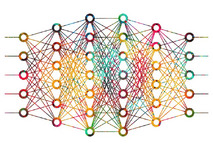
Systems thinking represents the so-called tier two of the spiral. {Tier two stages integrate and transcend the earlier stages, recognizing the value and limitations of each while seeking a more holistic and systemic approach}. This approach emphasizes the importance of understanding complex adaptive systems, promoting sustainability, resilience, and a more nuanced grasp of global challenges. {Tier two thinking involves a synthesis of earlier values, aiming to create a more comprehensive and integrated perspective on human development and societal progress}.
Overall, the idea that “everyone is innocent” reframes traditional notions of guilt and responsibility, acknowledging the overwhelming complexity of the systems we inhabit. {This perspective encourages a shift from blaming individuals to understanding and addressing systemic issues}. Green’s focus on environmentalism and the intrinsic value of life must adapt to the emerging realities of AI and computationalism, integrating systems thinking as a critical component of tier two consciousness.
The entire first part of the spiral, encompassing stages from beige to green, cannot fully perceive the subsequent stages because it is ideologically entrenched in positing its own master signifier. {Each stage constructs its reality around central organizing principles, which limit its ability to see beyond its current framework}.
Stage green, while advancing ideas like environmentalism and cultural relativism and moving into post-modern thought, remains mired in its identity. {Green often positions human beings or animal life as the measure of all things, reflecting an anthropocentric or biocentric view}.
This stage must come to terms with a reality that is akin to a Lovecraftian cosmic horror—a “new Real” where humanity is not central, but rather part of a vast, indifferent, and potentially hostile universe. {This shift challenges deeply held beliefs about human specialness and the intrinsic value of carbon-based life}.
The question then arises: what comes after humanity? Is it acceptable for humanity to face annihilation, not necessarily through an external catastrophe like advanced AI but through a collective ego death? {Ego death here refers to the dissolution of the self-centered view of humanity as the pinnacle of existence}. To move forward, we must let go of the mythos of the subject and the importance of our cognitive structures. {Kantian philosophy correctly postulates that humans subjectively mirror the environment, but the environment itself is far more complex and chaotic than we can fully comprehend}.
To transcend identity politics and the simplistic valorization of the biosphere, we must enter an alien sphere of systemic interaction. {This involves understanding systems in their totality, recognizing the interconnectedness and interdependence of all elements within these systems}. This sphere, encompassing chaos theory and metaphysics, represents the beginning of tier two thinking in Spiral Dynamics, particularly in stage yellow. {Stage yellow emphasizes systems thinking, focusing on the dynamics and relationships within complex systems rather than isolated entities}.
It is understandable that moving beyond anthropocentrism or even biocentrism might be disturbing. {This transition requires a radical shift in perspective, challenging deeply ingrained beliefs about the centrality of human or animal life}. However, this path is necessary for the evolution of consciousness at stage yellow.
Overall, the idea that “everyone is innocent” reframes traditional notions of guilt and responsibility, acknowledging the overwhelming complexity of the systems we inhabit. {This perspective encourages a shift from blaming individuals to understanding and addressing systemic issues}. Green’s focus on environmentalism and the intrinsic value of life must adapt to the emerging realities of AI and computationalism, integrating systems thinking as a critical component of tier two consciousness.
The entire first part of the spiral, encompassing stages from beige to green, cannot fully perceive the subsequent stages because it is ideologically entrenched in positing its own master signifier. {Each stage constructs its reality around central organizing principles, which limit its ability to see beyond its current framework}.
Stage green, while advancing ideas like environmentalism and cultural relativism and moving into post-modern thought, remains mired in its identity. {Green often positions human beings or animal life as the measure of all things, reflecting an anthropocentric or biocentric view}.
This stage must come to terms with a reality that is akin to a Lovecraftian cosmic horror—a “new Real” where humanity is not central, but rather part of a vast, indifferent, and potentially hostile universe. {This shift challenges deeply held beliefs about human specialness and the intrinsic value of carbon-based life}.
The question then arises: what comes after humanity? Is it acceptable for humanity to face annihilation, not necessarily through an external catastrophe like advanced AI but through a collective ego death? {Ego death here refers to the dissolution of the self-centered view of humanity as the pinnacle of existence}. To move forward, we must let go of the mythos of the subject and the importance of our cognitive structures. {Kantian philosophy correctly postulates that humans subjectively mirror the environment, but the environment itself is far more complex and chaotic than we can fully comprehend}.
To transcend identity politics and the simplistic valorization of the biosphere, we must enter an alien sphere of systemic interaction. {This involves understanding systems in their totality, recognizing the interconnectedness and interdependence of all elements within these systems}. This sphere, encompassing chaos theory and metaphysics, represents the beginning of tier two thinking in Spiral Dynamics, particularly in stage yellow. {Stage yellow emphasizes systems thinking, focusing on the dynamics and relationships within complex systems rather than isolated entities}.
It is understandable that moving beyond anthropocentrism or even biocentrism might be disturbing. {This transition requires a radical shift in perspective, challenging deeply ingrained beliefs about the centrality of human or animal life}. However, this path is necessary for the evolution of consciousness at stage yellow.
Lower Stages Are Not “Bad”; Higher Stages Integrate
To clarify, highlighting the critical or negative aspects of stage green does not imply that stage green is inherently bad. {Each stage has its strengths and contributions, but also faces specific transformational dilemmas and potential pitfalls}. In higher stages, it is essential to retain and integrate the healthy aspects of all lower stages. {This integrative approach ensures that the strengths of each stage are preserved while addressing and overcoming their limitations}.
In total, the path from stage green to stage yellow involves embracing systemic thinking, which requires letting go of anthropocentric and biocentric views and confronting the complex, chaotic reality of existence. {This evolution represents a significant shift in consciousness, aiming for a more comprehensive understanding of the world and our place within it}. Understanding and integrating the lessons from each stage is crucial for navigating this transformative journey.
Indeed, every stage in Spiral Dynamics has valuable aspects and limitations. Each stage contributes to the broader evolution of human consciousness and society, carrying forward the positive elements while addressing and transcending its limitations.
In total, the path from stage green to stage yellow involves embracing systemic thinking, which requires letting go of anthropocentric and biocentric views and confronting the complex, chaotic reality of existence. {This evolution represents a significant shift in consciousness, aiming for a more comprehensive understanding of the world and our place within it}. Understanding and integrating the lessons from each stage is crucial for navigating this transformative journey.
Indeed, every stage in Spiral Dynamics has valuable aspects and limitations. Each stage contributes to the broader evolution of human consciousness and society, carrying forward the positive elements while addressing and transcending its limitations.
Epilogue
As we’ve said, the guard rails are off. As such we are not ending on a tl;dr, as this takes too much energy from the spiral-planes. Rather, what descends from the heavens is some epilogue. And we shall meet again on the astral sphere…
Valuable Contributions of Each Stage
- Stage Blue (Traditionalism): Offers the binding function of religion, community cohesion, and a sense of order and purpose. {Blue emphasizes morality, duty, and stability, providing a strong foundation for societal structures}.
- Stage Orange (Modernism): Emphasizes rationality, scientific inquiry, individual achievement, and economic progress. {Orange drives innovation, efficiency, and material prosperity, fueling advancements in technology and industry}.
- Stage Green (Post-Modernism): Focuses on environmentalism, cultural relativism, social justice, and empathy. {Green promotes inclusivity, ecological awareness, and a deeper understanding of human diversity}.
Transformation Dilemmas
- Stage Blue: Can become dogmatic and rigid, stifling individual expression and critical thinking. {Its strong adherence to tradition can inhibit progress and adaptation to new realities}.
- Stage Orange: Risks becoming overly materialistic and competitive, neglecting ethical considerations and long-term sustainability. {The focus on profit and efficiency can lead to environmental degradation and social inequalities}.
- Stage Green: Might struggle with relativism and identity politics, sometimes becoming impractical or excessively idealistic. {Green can become entangled in internal conflicts and may fail to address pragmatic concerns effectively}.
Moving Forward
The key is to carry forward the strengths of each stage while addressing their limitations through a process of continuous integration and evolution. {This process ensures that we build on past successes while learning from and overcoming previous shortcomings}.
Systems Thinking and Tier Two
- Stage Yellow (Integral): Embraces systems thinking, seeing the interconnectedness and interdependence of all systems. {Yellow values flexibility, adaptability, and a holistic understanding of complex systems}.
- Stage Turquoise (Holistic): Goes further to integrate spiritual awareness with systemic thinking, emphasizing global consciousness and the unity of life. {Turquoise fosters a deep sense of empathy and connection, promoting sustainable and inclusive solutions}.
Deconstruction and Improvement
Deconstruction, as mentioned, is not about destruction but about illuminating and improving structures. {It involves critically examining and understanding underlying assumptions and frameworks, making them more transparent and robust}. This process helps refine and enhance our thinking, leading to better systems and more comprehensive solutions.
Humility and Continuous Learning
Understanding that “every understanding is a misunderstanding” emphasizes the need for humility in our approach. {Recognizing the limits of our knowledge and the complexity of reality encourages continuous learning and adaptation}. This mindset is crucial for navigating the highly complex and confusing world we live in, fostering empathy and less forceful approaches in our interactions.
Conclusion
As we move through the stages and embrace tier two thinking, we aim to integrate the best of each stage, continuously broadening our perspectives and capabilities. {This integrative approach helps us build a more inclusive, sustainable, and adaptive society, capable of addressing the multifaceted challenges of our time}. By maintaining humility and openness to criticism, we strengthen our philosophies and improve our understanding, always striving to make the world a better place.