

- Joined
- Sep 17, 2019
- Messages
- 583
- Thread Author
- #1
The Combine Logistics Committee
The Combine Logistics Committee, shortened to the CLC, is the primary division of the Combine upon Earth in charge of the acquisition, transportation, and utilization of all Combine products and manufacturing on the planet. As those above Breen saw fit to bestow the gift of technology upon Earth, so to did they require their due, and that is what Breen would provide. With an entire planet under the Combine's control, the organization and data behind all the resources it could yield was immense. For any human nation it would take years, if not decades, to even come up with the most basic of plans to harness the planet's potential. But the Combine were no simple humans.
With the tools of those far beyond anything humans had ever imagined, and the phenomenal intellect of the advisors, the Combine Logistics Committee was born. Massive foundations the size of mountains, transport routes that encompassed the entire globe, automation and efficiency to make even the greatest minds of human kind tilt their heads in wonder, these were the creations of an Empire from beyond the stars. More frightening was that they had only done it in only but a few months. Yet it would not be the advisors that ran this masterwork, but the humans appointed by Breen and his representative that directed the flow of all produced goods within the Combine empire. Each division plays a vital role in the efficiency of the CLC, and even the shortest halt in any of these divisions would spell doom for the Combine.
CLC Divisions and Installations
Ground Transportation Network (GTN)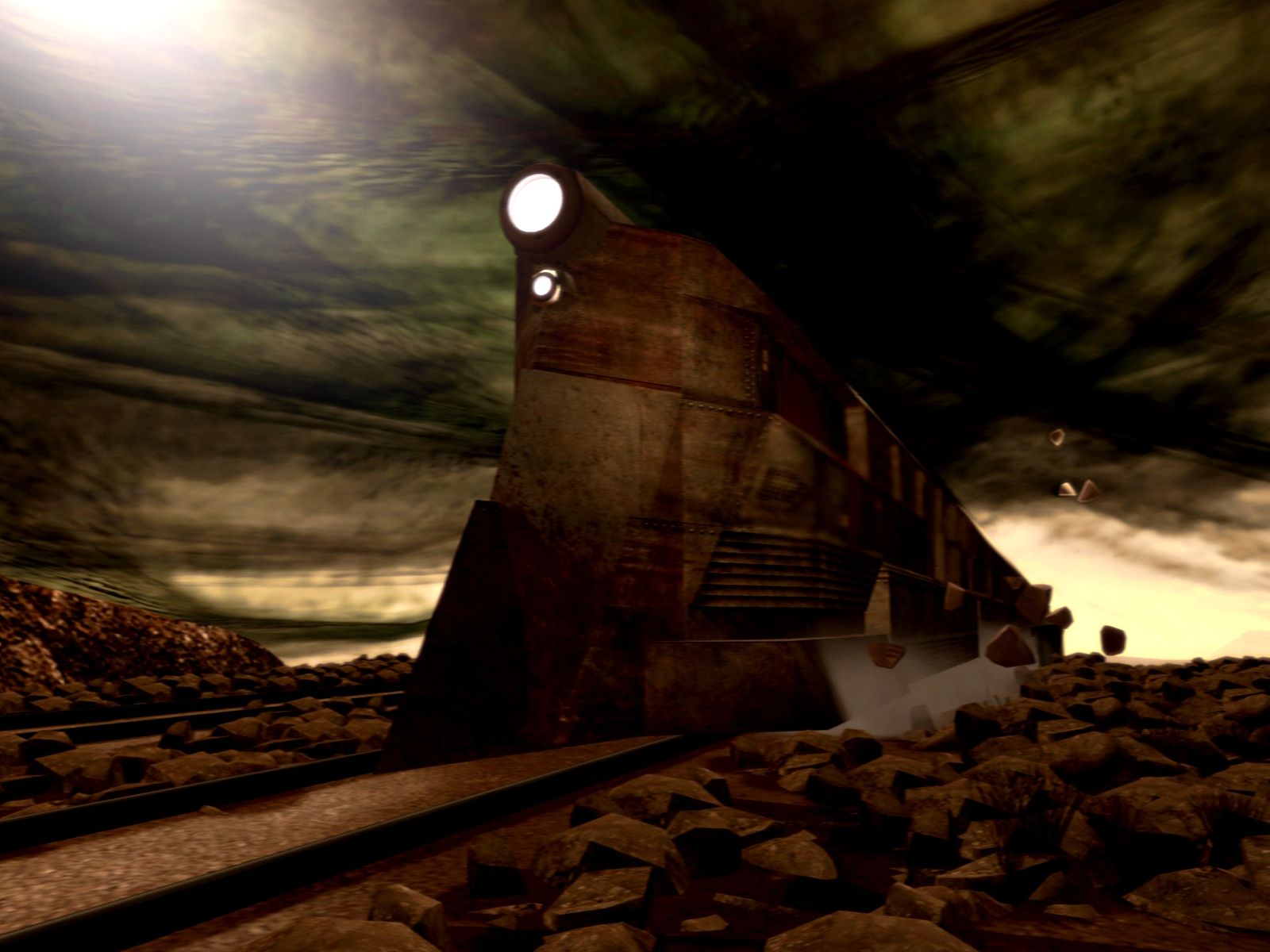
Stretching miles into the horizon, the metal path is long. Through barren wastelands of death and destruction. Through the poisoned remains of a once lush jungle. Through the conrete mazes of long abandoned towns. Upon it travels the metal chariots, which whisk away the means of survival for the Combine. The Ground Transportation Network is tasked with the operation of all ground transportation of Combine product. Their metal chariots, the Razor Trains, roar into the blasted sky as they speed to and from their destinations. The GTN is perhaps one of the most important CLC Divisions, for the great resources that Earth yields would be useless if they were to never reach their destination. From the operation and maintenance of Razor Trains, to the planning and laying of tracks, the GTN is the lifeline of the Combine, and perhaps all Citizens on planet Earth.
Installations:
Terminals - Terminals are the resting locations of all Razor Trains where they are commissioned for use, repaired, and stored. These facilities are large in size, and to the unknowing eye may appear as massive fenced off locations with an absolute cluster of tracks. Trains are inspected, and repaired as needed, before they are sent away to complete their tasks. These places are also capable of storing Razor Trains, though their storage is usually only temporary as to free the track for other arrivals while the route itself is shutdown. Terminals can also act as areas where non-rail transportation is maintained, though this is much more uncommon as non-rail transportation is rarely used outside of localized areas. (Type 2 Installation)
Stations - Stations are located within other Combine installations, and act as a stopping point for Razor Trains and other ground cargo transportation. Unlike terminals however, stations are where cargo is loaded and unloaded for transportation. These are located within other locations such as within Cities, or within a Depot as attachments, and are unique in that they are usually a part of another organization of the Combine. (Type 1 Installation, sometimes Type 0)
Checkpoints - Checkpoints are moderately sized buildings placed at critical key points along the Combine's global rail network. They are fenced off, seen as a small compound of sorts where Razor Trains and other ground based vehicles may stop and refuel if needed. They may also inspect cargo and vehicle integrity in case of security alerts, as well as perform minor repairs. Furthermore, Checkpoints also serve as observation post. A rather impressive network is set up where a checkpoint is in charge of monitoring its portion of the railroad. Should a certain part of the railroad be damaged or obstructed, or OCIN reports some sort of threat in the area, it can flag up status' for its section of the railroad which makes its way to Razor Trains that can automatically determine, based off multiple data points, which railroad paths to take. (Type 0 Installation)
Material Allocation Planning (MAP)

A city fed, a Conscript force doomed to suffer a slow death. A base built, a population made homeless for weeks to come. A battlefront armed, a Civil Protection without their tools. The Material Allocation Planning division is tasked with making the decision that could cost hundreds if not thousands of lives. From the storage of product to deciding who gets what. Super-massive foundations stretch for miles filled to the brim with produce, manufactured goods, and newly harvested resources. All calls for resources are made to the MAP, and it is their task to see that said resources are made ready, stored in their facilities, and shipped to their customers as they see fit.
Installations:
Depots - Depots are massive warehouses that stretch for miles in size, holding millions upon millions of product and manufactured goods. There is usually only one depot per region, and each one is vital for the survival of all Combine assets within the region. These Depots are where MAP stores all its product. Every single bit of resource produced by the Combine are placed in these depots, where they are stored until its use can be found. Because of their critical importance, Depots are among some of the most heavily guarded assets of the Combine, and are always heavily guarded by massive OTA forces along with Airwatch supplements. An all out assault on a Depot is almost impossible, requiring a military force only seen before the Combine's arrival. They are simply too well defended, and too large, to destroy. However, their size is also their downfall. While a depot cannot be utterly halted through normal means, it can be sabotaged. A small force of rebels can easily worm their way inside, and sabotage one or two sections of the facility (of which there are many, many sections), usually at the cost of their own life. This can guarantee the halt of supply to entire battlefronts, garrisons, and even entire cities, and can take about a week or two to repair. From within these Depots, GTN transport constantly flows, cargo automatically placed upon Razor Trains and sent out to wherever they need to go. These Depots are almost entirely automated. (Type 4 Installation)
Cargo Caches - Cargo Caches are akin to emergency depots. They exist when a supply must be put on hold, either because the only way back to a depot is obstructed, or there is a temporary setback at the receiving location that will be fixed soon. Usually much smaller in size (though still very large), they are given a much lower level of protection, but exist nonetheless in the case where cargo must be stored for emergency reasons. (Type 1 Installation, remotely managed by Depots)
Nutriment Harvesting Division (NHD)

Under a beaming sun, golden fields stretch as far as the eye can see. A shadow falls upon them as titans roam among these lands. They chug along, billowing horrid smog into the sky above. The Nutriment Harvesting Division is responsible for the growth, harvesting, and processing of all raw food materials. Any ingredient known to man is produced by the NHD. Crops are planted and harvested, genetically enhanced to grow as fast as possible, even if the integrity of said food is possibly altered. Along with this are massive sheds filled to near overflow with animals. Slaughter is constant, and their bodies have begun to slowly malform under the unethical engineering of the Combine. All these resources are harvested, processed, and packaged for shipment to Depots, where they are stored, and then sent off to any number of Combine installations.
Installations:
NHD Farms - Combine Farms are large, expansive locations that are fenced off and guarded by automated defenses and Airwatch. These farms are either solely dedicated to growing food, slaughtering animals, or both if large enough. Massive machines operated by programming are driven by a control spire which can monitor food growth, and determine what is ready for harvesting. These resources are gathered into a packing facility, packaged, and then sent to a GTN Station on the farm, where they are then shipped off to an NHD Plant. (Type 1 Installation)
NHD Plant - NHD Plants are large facilities where raw goods are dumped from Combine Farms. These goods are then processed into usable ingredients and foods. This can include cleaning, chemical modification, or transformation into a usable ingredient. Once processed, they are either sent to a MAP if ingredients are needed, or ran through additional processes for things such as MRE's and other such products that must be able to be consumed as soon as they arrive. Each sector usually has one NHD Plant, with each plant having 1-5 Combine Farms feeding it. All these NHD Plants report to one Depot. While NHD's are usually for gathering food. (Type 3 Installation)
Hydro-Processing Division (HPD)

Ever consuming, ever absorbing. The Hydro-Processing Division is in charge of the collection, sanitization, and shipping of water around the globe. Coastal industries absorb water from the Ocean, where the Combine's technology can mass-sanitize this colossal amount of water efficiently, and ship off to its designated Depot for storage. The oceans have begun to rapidly recede under the strain of the Combine's efficiency. Into plants the water goes where chemical vats the size of buildings are used to clean. While one of these simplest of divisions, it is considered vital for obvious reasons.
Installations:
HPD Plants - The HPD Plant, unlike NHD Plants, is an all in one process. Massive pipes are constantly extending from them, sucking up water in mass where it is immediately sanitized and contained. Razor Trains modified to hold water are filled with the newly cleaned water, where it is shipped off to a depot. These trains transfer the water into the depot where it is placed in large water tanks for future use. (Type 2 Installation)
Geo-Prospecting Division (GPD)
Into the depths, the boring of the planet's flesh. The Combine have mastered the art of consuming their prey. Bite by bite, they chew into the carcass to satiate their endless hunger. Tower-sized drills dig deeper and deeper, obliterating everything in its path. The Geo-Prospecting Division is tasked with the discovery, collection, and shipping of all Earthly minerals and naturally occuring underground resources. This includes stone, precious minerals, oil, and more. Where humans are concerned with trying to pick out the best bits, the Combine cares not for such sophistication. Straight down into the Earth, their drills work endlessly, collecting more and more as minerals of all sorts are ground up and transported to the surface where they are collected and shipped off for processing. When done, they return to the surface, and start again with another hole. These minerals are vital for the manufacturing of all sorts of goods.
Installations:
GPD Quarries - GPD Quarries are where minerals are collected. They are always expanding in size, as the deafening drills consume the Earth like parasites. As these are collected, they are sent to the surface, where they are packaged by an on-site facility, and sent by Razor Train to Refineries for smelting. (Type 2 Installation)
GPD Refineries - The Refineries owned by the GPD are some of the most hostile-looking designs the Combine employs in their construction. Massive forges billow smog into the sky that turns it a murky orange, black clouds blocking out the sun as the land around these refineries are polluted into toxic wastelands. The insides are even more hellish, as entire chambers are blanketed with flowing rivers of molten metals. The heat in these facilities is often deadly, capable of killing an unprotected human in minutes. Refinery lines chug along, pistons slamming back and fourth as ores are fashioned into bars of and plates. When ready, they are packeged and sent to a depot for allocation. (Type 3 Installation)
GPD Rigs - GPD Rigs are, as they imply, tasked with the pumping of oil. This oil is pumped out, and sent to refineries where it is cleaned of impurities and made ready. (Type 2 Installation)
GPD Mills - The newest of installations, and definitely the slowest, the GPD Mills were developed by UPRD's UTAP Division since the Combine is not accustomed to Earth's flora. When a forest is deemed ready for harvesting, a process which can take a while because of the TFoD, the GPD Mills are installed to begin lumbering. This process is the most uncommon and slowest of the GPD's tasks, as the Combine has not yet perfected the art of lumbering and refining said lumber. This is why many forest still stand to this day. Either way, Refineries are outfitted with lumber processing in order to accomodate these installations. (Type 1 Installation)
Material Reacquisition and Recycling (MRR)
MRR is in charge of conservation and reuse of previously made products and pre-war products. Every day, search teams are sent out to abandoned or cleared out facilities along with cleaning teams to scavenge supplies. Supplies with importance are gathered and sent off to sorting facilities where they are inspected and deemed worthy of use. If so, they are refurbished and sent to Depots where they are sent elsewhere. Otherwise, they may be disassembled into raw resources and reformed into something else of use. Furthermore, MRR handles the recycling of already used resources such as water and trash. Many cities have MRR plants outside of the actual Citizen designated locations (or sometimes even part of it in the form of factories) that are made to recycle water. Many cities are often running off their own water supply, their liquid waste simply cleansed (sometimes with poor results) and pumped back through the water system. The MRR is there to make sure that cities don't use up too many resources, and often aid Cities in keeping their resource requests down.
Installations:
Material Acquisition Center - Material Acquisition Centers are where scavenged items are taken to, usually by Conscripts, for collection. These items are inspected, and either broken down into raw parts, or sent to depots so they can find the proper place to be refurbished at. There is usually only one Acquisition Center per sector. It is known however that some items can end up slipping through that aren't really fit, such as decorative items and whatnot. Since Acquisition Centers can be placed within a city, this means that Citizens can sometimes make off with novelty items that have no use to the Combine. (Type 2 Installation)
Recycling Plant - Recycling Plants are very similar to Material Acquisition Centers in that they inspect trash and see if it acceptable for reuse or simply breaking it down. The difference is that Recycling Plants are often found within cities. Similar to Acquisition Centers, items can end up here that aren't supposed to be here, such as novelty items. (Type 2 Installation)
Reservoir Recycling Plants - Reservoir Recycling Plants are located within Cities, and are made to clean liquid waste and other liquid runoffs so that it can be made back into drinkable water. These plants are often ran by Citizens, but have been known to be poor in quality. There have been cases where Cities have poor Reservoir Recycling Plants, which results in water-born epidemics and other issues. (Type 1 Installation)
Product Manufacturing Division (PMD)

Where everything is made. The Product Manufacturing Division is charged with taking all the resources acquired by the Combine, and shaping them into the final products. Unlike every other division of the CLC, PMD is most heavily affiliated with cities, because many of their installations and operations are carried out through the cities factory lines. In order to ensure quality and put the humans of Earth to use, the Combine has seen fit for the PMD to establish its presence in the form of factory work. Cities are expected to churn out a specific number of products as per their quota. Failure to do so warrants the eyes of those above, something they never want. Within the cities, Citizens stumble to work, where they shape the resources of all previous divisions into something the Combine needs. Any product imaginable that can be produced from raw materials is made through the PMD and its factories. After manufacturing, the PMD gathers these materials, loads them onto Razor Trains, and ships them back out to Depots for relocation of said products. Some products may also stay if the city itself needs them, as a form of payment in a sense. There may also be representatives of the PMD placed in City CABs in order to ensure that Citizens are working, and that quota is being met.
Installations:
PMD Factories - Usually just called "Factories" by the City itself, these places are where Citizens work away their days, operating dangerous machines, choking on the smog-ridden air, and fashioning together parts. While parts of factories are automated, many bits require manual labor due to the complexity or fragility of certain products. Some theorize however that the Combine will choose to use Citizens for reasons other than automation flaws, though this is unknown. Resources are brought to these factories from Depots, where they are fashioned into a final product, and shipped back out to depots. (Uncatagorized. Ran by City staff.)
PMD CAT-1 Factories - Unlike regular factories, some factories produce products and equipment that is simply too difficult, or too dangerous for Citizens to be around. These factories are usually remote, heavily guarded, and tasked with producing things such as classified Combine items, weaponry and ammunition, and items that simply can't be made via human hands. These are often fully automated or manned with Stalkers. (Type 3 Installation)
Combine Export Initiative (CEI)
A tear in reality. Through it, the fruits of Earth's labor are sucked away, never to be seen again. As the Combine gives, so to does it take, and while many other divisions may be important to Earth itself, the CEI is perhaps the only division the Combine truly care about past what they want for Earth. The CEI is tasked with the exporting of Earthly resources and products off-world. It is their tax for what they have done for Earth, or at least, what they believe to have done "for" Earth. Not much is known about the CEI, though their structuring is critical in how they operate.
Installations:
Citadels - The CEI only utilizes one installation for their purposes, and that is the Citadels. Bare in mind, usually only the lower part of the Citadel, which is where massive internal storage is located, is what is actually utilized by the CEI. The CEI is the only thing the MAP is subservient too. It does not matter how loyal a City is, how critical a battle is, or how important an installation is- if the CEI requests resources, it shall have them. A Depot has never failed to meet CEI's demands, and hopefully never will. When it is time to send off resources, the Citadel will open its gateway to the great beyond, and the product will be warped away via mass-teleportation devices. (Type 3 Installation)
CLC Staff and Intallation Types
The CLC Staff Structure is definitely one of the smallest, despite the CLC itself being vital for Earth operations. This is because the CLC has been formed with automation in mind. Unlike other divisions such as Overwatch or the UPRD, which require thinking entities above and within its organization, the CLC only needs a very small number of people to actually run its operations. Oddly enough almost no one has met the CLC Head Director.CLC Staff are picked by their loyalty and experience. Many higher ranking CLC were picked from old-world civil service functionaries who served their governments, or business leads who proved knowledgable in such areas. Lower ranks were often filled by those who had math or statistic degrees.
The CLC Head Director is directly below Breen, and is in charge of communicating directly with those below them the will of Doctor Breen. They are located within the CLC Hub, which is found at the Depot which lies in the same region as Sector 17. This figure directly pushes numbers and overarching regulation downwards.
The CLC Division Director is the head of a CLC Division, except for the CEI. There is one per division, and they are charged with finding out which installations get which quotas depending on regulations.
A Quartermaster is an incredibly important figure who is in charge of an entire depot. This person is tasked with deciding who gets what, and in what numbers.
A Task Master is the lead entity for an installation in anything other than a depot, which may have multiple Task Masters within. They are simply there to observe operations, and make sure numbers are being met.
An Inspector is tasked depending on who they work for. Inspectors under Task Masters and Quartermasters are meant to inspect the facility itself and make sure all is in working order. Inspectors for Division Directors are meant to inspect the Quartermasters and Task Masters along with their systems to make sure they aren't fabricating numbers and whatnot.
An Analyst is just that, an analyst. They are the most numerous workers in the CLC, and the lowest ranking. They can work directly under any other rank except for Inspectors, and are meant to help them form reports and analyze data. Most facilities will have an office complex somewhere within them.
Below the official installation ranks are those who simply fill these installations as workers. Stalkers are by far the most numerous entity within the CLC, as they are tasked with maintaining these installations, or carrying out specific tasks. Citizens are often used by the MRR and PMD as factory workers.
Finally, the Overwatch is utilized to defend installations. They can be called in based off automated responses, or stationed at bases with higher priority.
Installation Types are split into five different categories, which you have seen above. The following are the Installation Structure's level of automation OR recommended manpower:
Type 0 - Installation requires no personnel to man it. It is completely automated.
Type 1 - Installation requires little personnel to man it. Automation covers most the work, or it is small enough to only need a small team. Will usually only have a leader, a single inspector, and 5-10 Analysts.
Type 2 - Installation requires moderate personnel to man it. Automation either covers half the work, or it simply needs a moderately sized team. Will have two or three inspectors and 15-30 Analysts.
Type 3 - Installation requires heavy personnel to man it. Automation either covers little work load, or the facility is so large that it requires extra manning. Will have 5-10 Inspectors, and 50-100 Analysts.
Type 4 - Depot exclusive. Requires many more personnel due to size. Usually around 25 Inspectors with ~500 Analysts.
Conclusion
The Combine Logistics Committee works endlessly. There is no other alternative. If it is to fail, millions may perish, and even worse the Combine turns its eyes upon Earth in full. Through automated machines, the limitless toil of Stalkers, and the analytical minds of the CLC staff, resources are transported across the world, and beyond.
Last edited:


