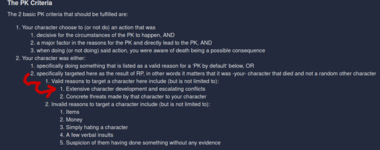
As the one who made the rule: yes. That rule exists to cover the situations where it wasn't a singular clear thing that is cause for the PK, but the reason is (a lot of) (small) things being added together. This can be over the course of a few minutes (e.g. you insult someone, fist fight start, ends with someone being shot) or stretching over months.
Just be aware of the requirements under the first criteria, the character you are killing should have had at least one chance to avert this PK (and preferably more). Example here would be that you offer him to explain himself but he refuses, or you publicly accuse him and he gets hostile rather than demonstrating he isn't a snitch. I don't want to create a loophole where if you do enough 'investigation RP' behind someone's back you can get a PK out of it.
Or just take it like this: 'extensive character development and escalating conflicts' should involve both sides, not just one side while the other has no clue of conflict escalating or getting any RP out of it.
For suspicion without evidence: you got three guys, one of which you know killed someone. You shoot all three and request PK's. Two get NLR'ed for 'wrong place, wrong time' and one gets PK'ed. The rule against 'no evidence' killings prevents that PK roulette. It also stops PK's based purely on hearsay. Being direct witness to anything that can be a good PK reason obviously means this no longer applies.
But for your example, the main matter is in how you escalate the conflict, and if you do that right the PK will come from that and not your suspicion. Even if you somehow found 'valid evidence' that the guy did something, while in fact he did not do it, you would still have no way to PK him out of nowhere.